Quick Answer

The first steps you take in a Motor Insurance Claim Process is, contact your insurer immediately after an incident and take photos of the damage. Next, arrange a professional vehicle inspection before making any repairs. Acting quickly and preserving the car's exact condition ensures fast approval and prevents the company from rejecting your claim.
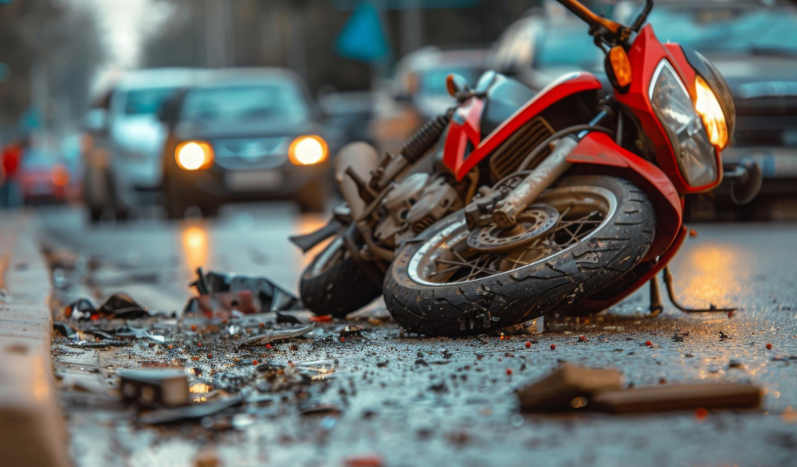
Motorcycling is a big activity in the state of California – as a means to get from place to place and also as a hobby.
Unfortunately, drivers who fail to show a proper level of care easily overlook motorcycle riders in California.
This is something that causes many incidents involving motorcycle riders, leading to serious injuries and difficult issues about who is at fault.
In this state, contributory negligence laws are implemented strictly. That means no one can easily get a financial award. For that to happen, one should seek legal representation for motorcycle accident.
They must quickly complete a full account of the incident, record all details, and hire a lawyer to win the fault dispute.
Importance Of Early Legal Review In Motor Insurance Claim Process
Key evidence can disappear within days, including skid marks, camera footage, debris patterns, and witness recall.
A prompt review helps preserve records before insurers shape the story. Riders seeking legal representation for accident claims often need fault-proof security early, especially in North Carolina, where small blame findings can block recovery.
What Liability Means
Liability means a person or company bears legal responsibility for injury caused by careless conduct.
In motorcycle crashes, that conduct may involve:
- Unsafe turns.
- Distracted driving.
- Speeding.
- Tailgating.
- Failure to yield.
The injured rider must prove duty, breach, causation, and damages through reliable facts.
Duty Of Care
Every driver should be careful not to endanger others and look out for their blind spots while driving and respond properly to traffic signs and signals.
Small motorcyclists should be taken into account as well. No one can use the lack of visibility as a legal defense for causing an accident.
Breach Of Duty
The driver is in breach of his obligations when, by his actions, he causes the car to be in violation of the standards of safe behavior
For example, texting in the car can mean a traffic citation and even a police officer giving you a ticket.
Because of this, proving this breach, even in civil claims, will usually be decided upon based upon the overall driving record of a driver.
Causation
Causation must link the driver’s unsafe conduct directly to the physical injuries. To prove this connection, the plaintiff submits several pieces of evidence to the court. These include:
- Medical records.
- Impact angles.
- Reconstruction report.
This way, the drivers cannot deny that their actions resulted in the harm.
Damages
Without proper evidence of the actual damage sustained, a claim will never be successful. Plaintiffs categorize these damages into physical, financial, and non-pecuniary types, including hospital bills, lost earnings, car repairs, and pain and suffering.
Evidence That Helps In Motor Insurance Claim Process
Useful proof often comes from ordinary details. Scene photographs, helmet damage, motorcycle damage, skid marks, debris fields, traffic cameras, repair estimates, and emergency reports can all help.
Neutral witnesses may confirm lane position, signal use, vehicle speed, braking, or a driver’s behavior before impact.
Medical Proof
Medical records do more than list treatment dates. They connect symptoms to the crash, identify diagnoses, and explain future care needs.
Delays in treatment can invite arguments that injuries were mild or unrelated. Consistent care creates a reliable timeline from impact through recovery.
Police Reports
A police report can identify drivers, insurance information, witnesses, road conditions, and officer observations. It may also include citations or statements made at the scene.
Reports can contain errors, so they should be checked against photographs, medical notes, and witness accounts.
North Carolina Rule In Motor Insurance Claim Process
When it comes to compensation, North Carolina has a strict fault-blocking defense system in place under N.C.G.S. § 1-139. A rider who caused 1% or more of the accident gets to claim no damages.
Only through the Last Clear Chance Doctrine can this defense be defeated. The other driver is supposed, based on the doctrine, to have had the last clear chance to prevent the crash.
However, he or she failed to do so, which makes it very hard to meet unless one can reconstruct in minute detail the seconds leading to the accident.
Traffic Statutes Targeting Riders
Insurers aggressively look for specific traffic code violations to pin 1% of the blame on motorcyclists:
- Lane Splitting: Driving between rows of vehicles is strictly illegal. A lane-splitting citation triggers an automatic contributory negligence bar.
- Lane Sharing: Up to two motorcycles may legally ride side-by-side in one lane (N.C.G.S. § 20-146.1). Cars are forbidden from crowding this space.
- Daytime Headlight Mandate: Motorcycles must operate with at least one headlight illuminated at all times (N.C.G.S. § 20-129).
- The Helmet Defense: All riders must wear a DOT-compliant helmet (N.C.G.S. § 20-140.4). While lacking a helmet cannot dismiss the entire case, insurers use it to reduce payouts for head and neck injuries.
Deadlines And Payout Limits
The statute of limitations under N.C.G.S. § 1-52(16) gives riders exactly three years from the accident date to file a personal injury lawsuit.
For fatal crashes, a wrongful death lawsuit must be filed within two years (N.C.G.S. § 1-53(4)).
Furthermore, the state’s minimum liability limits ($30,000 per person / $60,000 per accident) are rarely enough for catastrophic injuries, frequently forcing riders to access their own Underinsured Motorist (UIM) policies.
Witness Value And Expert Support In Motor Insurance Claim Process
Witnesses are sometimes the only source of information on the causes of an automobile accident when there are no cameras, or they have captured only very little footage.
By describing the events immediately before an incident with a motorcycle, they may disclose important facts cameras might not have recorded.
Get their names and numbers as soon as possible, and take note of sudden turns, missed signals, or lane changes made recklessly.
Complex disputes that involve a driver and a motorcycle rider usually require getting professional opinions from experts to determine fault.
Accident reconstruction specialists compute things like:
- how fast someone was probably going,
- impact forces involved,
- roadway layout.
On the other hand, medical experts and economists project things like:
- required future care,
- physical limitations,
- lost future earnings.
To establish a link between the driver’s actions and Truth is the injuries the motorcyclist suffered, a set of supporting facts that makes a compelling argument to the judge or jury is needed.
A well-coordinated set of witness accounts, the patient’s charts, and any experts’ findings to file with the court will help you win if there’s a strict liability law in place and you’re entitled to compensation.
Leave A Reply






The Motorcycle Was There So Why Didn’t The Driver See It?
Read More

7 Workplace Issues That Can Create Legal Risk For UK Employers
Read More
When Spouses Interpret Stability Differently: Marital Conflict
Read More
0 Reply
No comments yet.