Today’s topic: 126 BNSS.
126 BNSS is an integral part of the new Bharatiya Nagarik Suraksha Sanhita, 2023, which was introduced as a replacement to the colonial era’s criminal procedures codes.
This particular section empowers the Executive Magistrates to be proactive when they come across information that suggests a particular individual is capable of committing an offense that breaches the peace or is set to disturb public tranquility.
While punitive laws tend to punish an individual after committing a crime, 126 BNSS is preventive in nature in order to ensure that society is stable and peaceful for all citizens.
In this article, we will talk about the following aspects of the 126 BNSS:
- It empowers magistrates to require bonds of peace.
- Section 126 BNSS is applicable when public tranquility is threatened.
- Preventive measures act to prevent crimes before they occur in the community.
- There has to be cause shown by the individuals before the bond is finalized.
- This code section has replaced the previous Section 107 of CrPC.
- Security bonds with less than 126 BNSS have a twelve-month period.
What Is Section 126 BNSS?
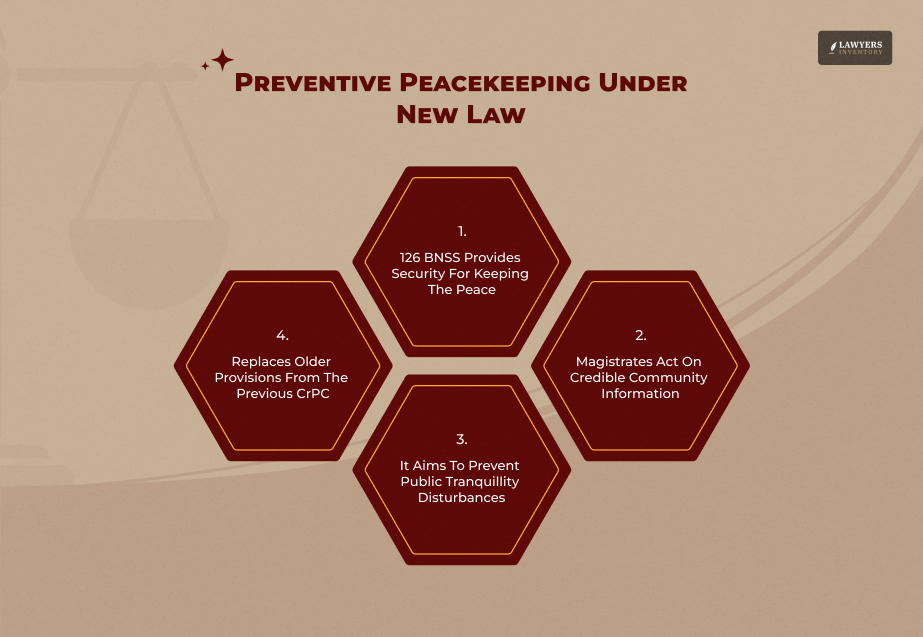
The provision of 126 BNSS is a major change in the way in which the Indian government deals with threats to public order. It gives the government the power to act early in case there is reason to believe there is potential trouble in the community from an individual.
These are some of the characteristics of the 126 BNSS:
- Preventive Justice: It prevents disturbances before they even occur.
- Magistrate Authority: Bestows particular authorities on the Executive Magistrates concerning the maintenance of law and order.
- Security Bonds: This is where people are required to sign bonds of good behavior.
- Duration Limits: The bonds issued on the basis of this section have a duration of one year only.
- Legal Continuity: Similar to previous provisions in the old CrPC.
Legislative Background: BNSS And Its Purpose
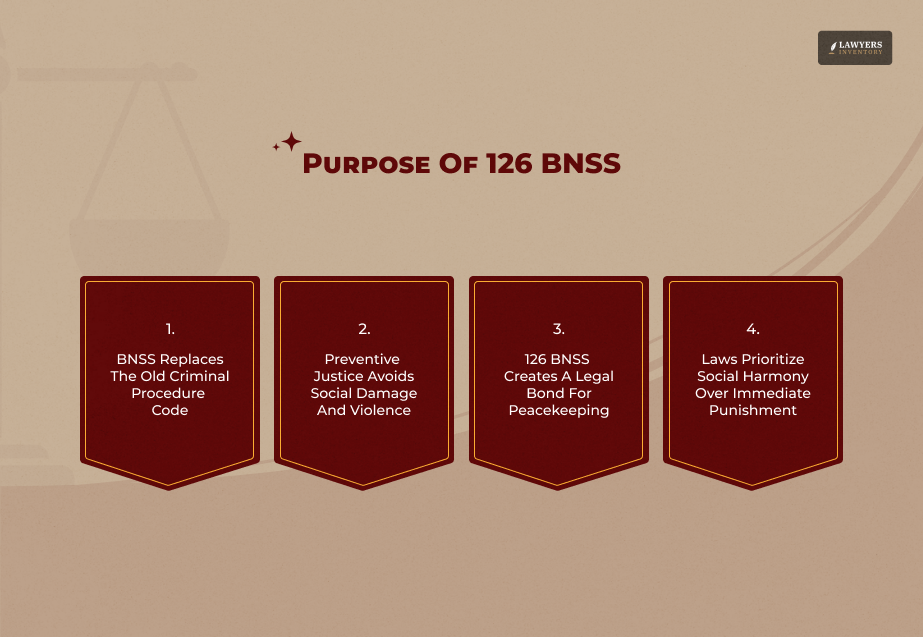
The Bharatiya Nagarik Suraksha Sanhita was brought to modernize the legal system by decolonizing the judicial system.
With the addition of 126 BNSS, the legislature confirmed the status of preventive justice as an important part of the administrative power.
What Is The Bharatiya Nagarik Suraksha Sanhita
This new act functions as the basic procedural law in handling criminal justice in India in place of the Code of Criminal Procedure.
Under this scenario, 126 BNSS is regarded as one of the preventive tools aimed at promoting social unity without necessarily relying on arrests and trials.
Why Preventive Provisions Such As Section 126
The existence of preventive laws such as 126 BNSS has been shaped by the understanding that it is better to prevent a riot or fight from occurring than to prosecute the involved parties after the incident has happened.
The law serves as a cooling-off period by holding high-risk persons liable to remain non-violent through the deterrent of financial and legal repercussions.
Legal Text Of Section 126 BNSS: Phrase By Phrase Breakdown
For a full understanding of 126 BNSS, it is necessary to examine the words of the legal document carefully.
This part clearly explains the warranted grounds and the extent to which the magistrate is empowered to require the bond from the citizen.
Order126 BNSS: When May Be Issued?
Under Order 126 BNSS, an order is triggered when a magistrate receives information about an individual being “likely to commit a breach of the peace.” It does mean that a criminal act has taken place, but it means there is a potential breach probably about to happen in the near future.
Who Can Issue An Order?
The only person holding the power of law to take action against an individual under Section 126 BNSS is an Executive Magistrate. Even the police may submit the initial report or the information; they may not demand a citizen to sign the peace bond.
What Exactly Can Be Ordered?
Under Section 126 BNSS, the magistrate has the power to compel the person to execute a bond, with or without sureties, for keeping the peace. The bond would remain in force for not more than one year from the date fixed by the magistrate concerned.
Key Legal Elements And Interpretation
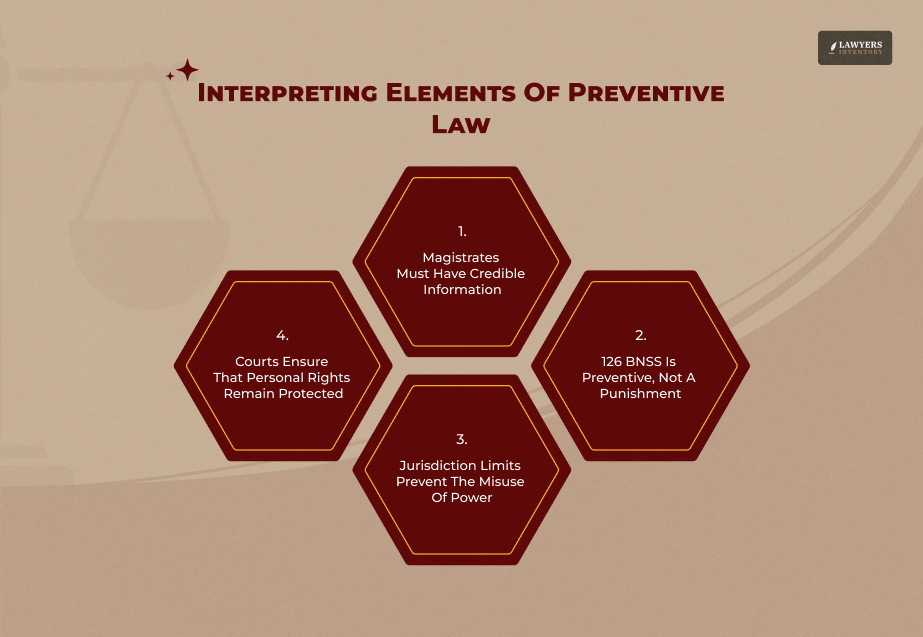
Lawyers question the line between an overreach of powers by the government as it pertains to the BNSS 126.
The courts require specific criteria in order to ensure all is well in the application of the act to the extent of its necessity.
Credible Information And Reasonable Ground
In order for the 126 BNSS Act to be applicable, the information received by the magistrate must be specific and credible.
Hearsay or outdated grudges cannot and should not form the cause for the issue of “show cause” notice, as the magistrate must be satisfied that there is a threat independently.
Peace Vs. Crime – Preventive Vs. Punitive Law
It is important to note how the reported provision, 126 BNSS, is different from punitive sections that involve real offenses, such as assault.
This is a “civil” provision within a penal code, seeking a promise of future behavior rather than branding a person a criminal.
The magistrate should exercise jurisdiction over the area likely to see the commission of the offense or where the offender resides.
This will ensure that the local authority does not use 126 BNSS as an instrument to intimidate an offender outside its jurisdiction.
Procedure Under Section 126 BNSS
The implementation of the 126 BNSS is a strict procedure to safeguard the rights of the suspect. Nobody should be compelled to enter into a peace bond without a chance to put across their side of the events.
Show-Cause Notice To The Person
The first one involves the issuance of the ‘show-cause’ notice by the magistrate. The notice asks the individual the reason why they should not be ordered to sign a bond.
This ensures that the principle of natural justice is respected by BNSS-126 because the individual has the right to be heard.
Peace Bond And Duration Of The Condition Of The Peace Bond
Once this is done, if the magistrate is still assured about the individual, they sign the bond, which is valid for a fixed time.
This bond will entail a fee of money payable by a prospective offender should they breach the peace within the fixed time.
Consequences of Violating Peace Bond
However, if the individual breaks a law that breaches the peace, they will lose the bond value according to Section 126 BNSS bond agreement.
In addition, the matter could result in harsher penalties if the individual fails to obey the law. (Basheer Moozhiyaan vs State Of Kerala on 22 October, 2025)
Practical Examples – How Section 126 Is Used In Policing
In real-life applications, the 126 BNSS concept helps police departments in India deal with local tensions on a daily basis.
Whether it’s the time of elections or religious festivals, the above-cited section keeps the high-risk conditions in control.
Hyderabad Police Bind Over Gang Members
For instance, in Hyderabad, 126 BNSS is often employed to “bind over” known agitators ahead of large public gatherings.
By compelling these agitators to sign peace bonds, the police establish a legal preventive measure to deter any form of planned violence.
Mangalore Preventive Bonds Under 126 B.N.S.S
The Mangaluru Police have very recently placed 126 BNSS on dozens of people in connection with some cases of communal tension in the region.
It is pertinent to note that such proactive measures taken under the law have been instrumental in reducing tension among the potential agitators.
Arrest Warrants Mentioning 126 BNSS
Now, police registers reflect daily arrests or summoning of people under Section 126 BNSS.
These registers indicate that this section is an integral part of modern Indian policing strategies aimed at maintaining order in Indian cities.
Section 126 BNSS vs Similar Provisions In CrPC
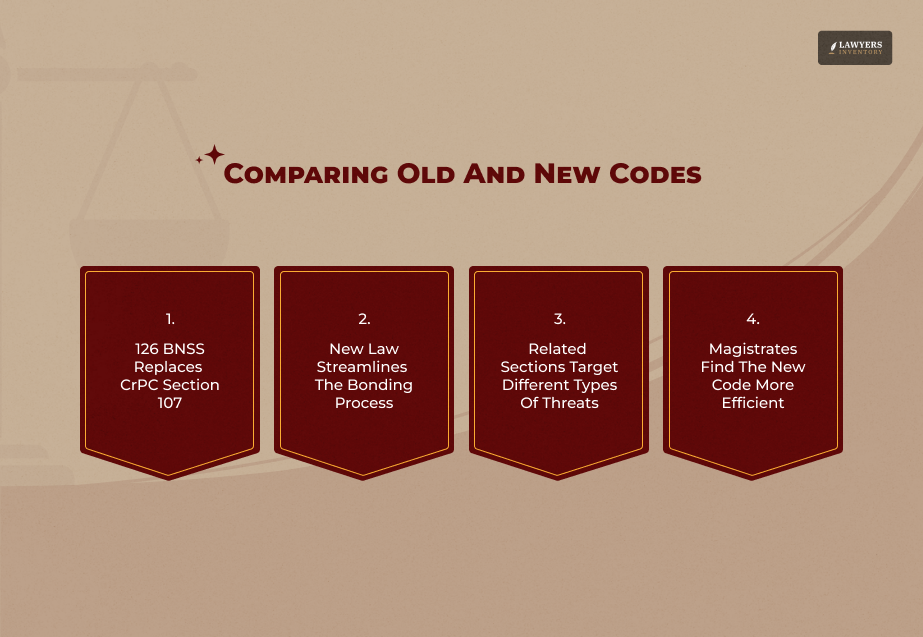
Although the 126 BNSS is familiar to persons familiar with the old law, there exist minor variations in the implementation and legislative intention.
In adapting to the BNSS from the CrPC, the education of thousands of judges and police personnel was needed.
Section 107 of the CrPC – The Predecessor
Under the previous system, the function was performed by Section 107, whereas under the previous Ordinance, it was carried out by 126 bnss. The new Act retains the function in a more modernized format.
Other Preventive Sections (127, 129)
It would be helpful to read 126 BNSS in the context of other surrounding sections, such as 127, dealing with the security for good behaviour of any person publishing seditious matters.
These sections, taken together, constitute a “safety net” for the state to anticipate threats even before the threat develops into an actual crime.
Legal Challenges And Safeguards
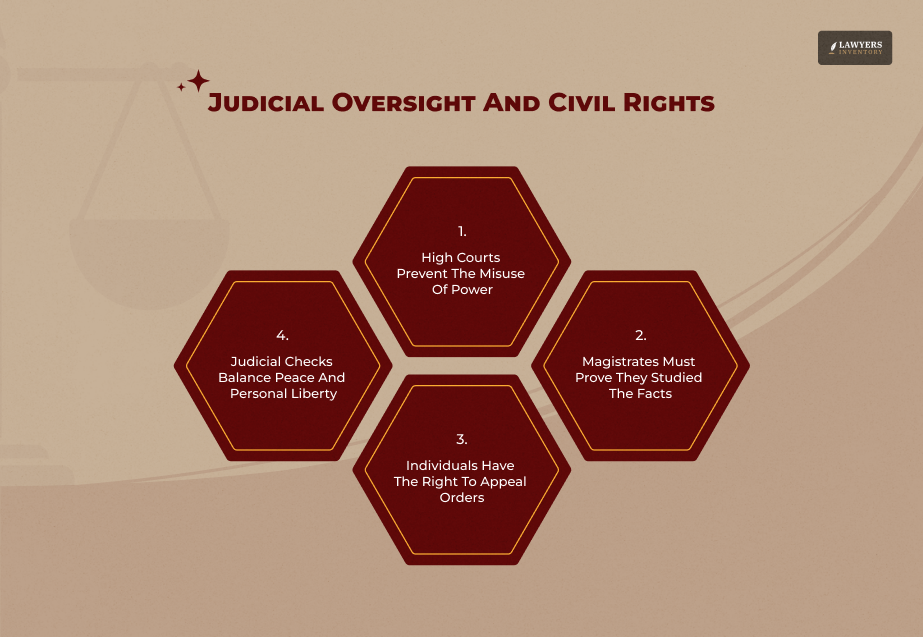
Despite 126 BNSS being a social welfare, the judiciary at large intervenes to prevent them from becoming political harassment or a means for personal vendetta.
High Courts throughout India have laid down clear guidelines on the invocation of such powers.
Kerala High Court On Limitations Of Magistrate’s Power
The Kerala High Court has held that the magistrate cannot behave mechanically while invoking 126 BNSS.
They must show that they applied their minds to the facts and did not go by the police recommendations, but leered at the evidence.
Individual Rights Vs. Powers Of Peacekeeping
The right of appeal acts as the most important check on the 126 BNSS being abused. If a person feels they have been objectively singled out for receiving a peace bond, then this might infringe on their good name and liberty because they could apply to the courts above the said magistrate’s order.
Why Section 126 Matters in Modern Law Enforcement
At the end of the day, 126 BNSS touches upon the fine line between the freedom of the individual and the need as a group to have a peaceful society.
With the rule of the Preventive Component clearly defined by the Bharatiya Nagarik Suraksha Sanhita, the nation is able to safeguard its citizens without becoming too pushy.
As the laws of the new India are enforced, rest assured that 126 BNSS will continue to be at the forefront of maintaining public order.
Frequently Asked Questions (FAQs):
The questions below address the most frequently asked questions from the citizens in relation to the application and effect of preventive bonds in the new legal system.
However, being placed in a peace bond is not considered a conviction, nor is it a criminal record.
You may, if a magistrate so orders a bond after hearing and you refuse, be taken into custody until the bond period expires.
According to the law, a bond for keeping the peace in such a case shall continue in force for a period not exceeding one year.
Surety binds your good behavior and is usually a friend or relative who agrees to pay the amount in case of violation of the bond.
Yes, this section is often used by the authorities to bind over protest organizers so that demonstrations do not disturb public order and remain peaceful.
Leave A Reply






Hung Jury vs. Mistrial: What Is The Difference And Why It Matters
Read More
NarodniyDimUkraina: An Overview Of The Kyiv-Based Brand Preserving Ukrainian Craftsmanship
Read More
What Is A Mistrial? Legal Definition, Causes, And What Happens Next
Read More
What Is A Sequestered Jury? Legal Definition, Process, And Everything You Need To Know
Read More
What Is A Hung Jury? Legal Definition, Causes, And What Happens Next
Read More
0 Reply
No comments yet.