Summarize using AI





Prompt copied. Paste it into Gemini.
Today’s topic: Jones Act lawyer.
State-mandated protective coverage deprives workers on vessels that are set for the sea or in areas where normal state laws concerning workers’ compensation might not apply.
Generally, their work poses hazards, and even if they do not experience a serious accident, they may still suffer injuries from repeated strain. Additionally, their exposure to chemicals can also cause them illness.
The Jones Act serves as a bridge for injured workers or unfortunate individuals who fall ill as a result of offshore injuries. It covers medical expenses and compensates them for the time they are away from work during their recovery.
In this blog, we will break down the following things:
- What is the Jones Act?
- Who is a Jones Act lawyer, and what do they do?
- How long will it take to resolve the claims?
- How can a Jones Act lawyer help you receive the damages?
Therefore, if these are a few things that you want to know, keep on reading this blog till the end…
What Is The Jones Act?
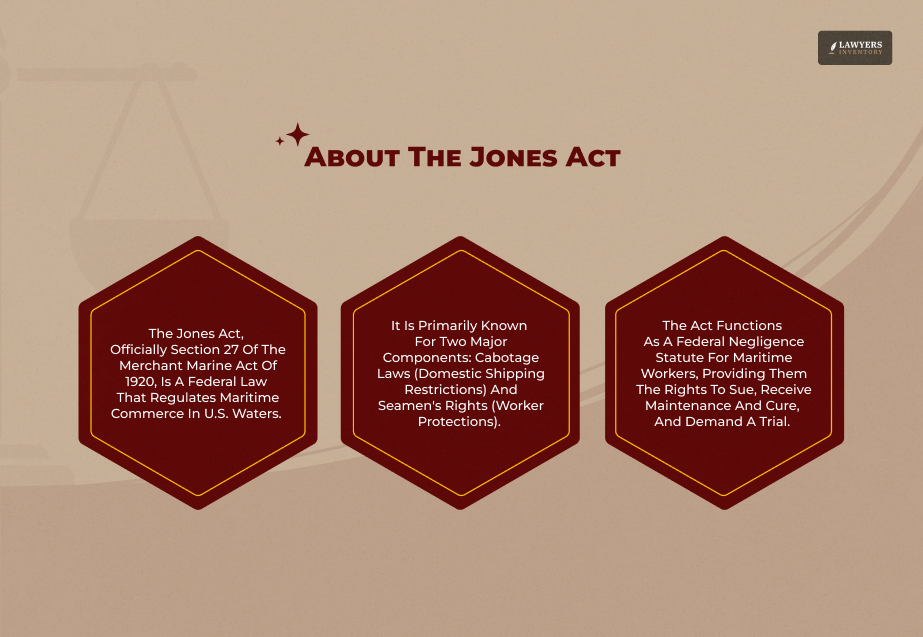
The Jones Act is a United States federal legislation and a part of the Merchant Marine Act of 1920. Falling under 46 U.S. Code §30104, it grants an injured seaman the right to sue their employer for negligence if the injury resulted from working on a vessel in navigation.
Essentially, it gives injured workers the right to compensation for lost wages, medical costs, pain and suffering, and other damages.
People generally file Jones Act negligence claims together with claims for maintenance and cure. These include the living expenses and medical care, which the seaman will receive irrespective of fault.
Additionally, it also includes claims for unseaworthy vessels. The victim can bring this up regardless of whether the employer or vessel owner had notice or knew about the unseaworthy condition.
What Are Your Rights Under The Jones Act?
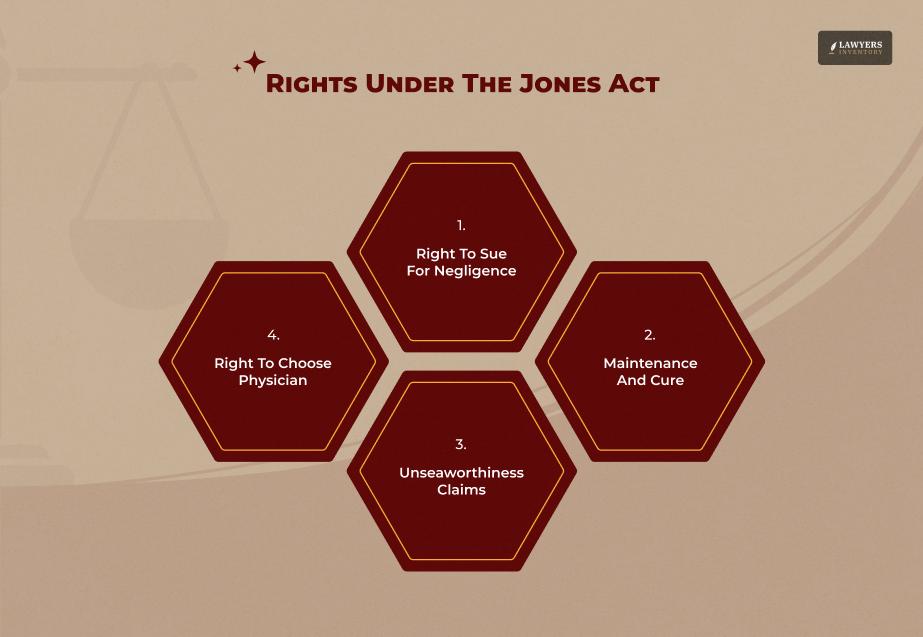
The Jones Act governs shipping vessels and the people who work on them. This explains the inclusion of oil rigs, ships, barges, small fishing boats, and vessels of the same category.
The law opens a gateway for financial compensation if a worker from among these categories happens to suffer:
- Accident and injury on the vessel
- A work-related injury that becomes chronic
- A work-related illness due to exposure or another cause
An injured or sick employee may file a lawsuit and seek compensation if he or she was working on a voyage, capable vessel at the time of the accident, or if the incident/activity leading to the injury renders him/her incapable of work.
In these situations, the employer, the vessel’s captain, the owner of the vessel, or some other party could be the defendants.
Compensation for damages may cover medical expenses, including situations in which a patient has to be airlifted from a vessel, lost wages, and non-economic losses.
What Is The Statute Of Limitations For Jones Act?
The limitation period for bringing a Jones Act case is generally three years from the date of injury or death.
This federal statute of limitations is set forth in 46 U.S.C. 30106. The vast majority of negligence and unseaworthiness lawsuits should be initiated within three years of the accident.
Nevertheless, under the Discovery Rule, if an injury (e.g., a disease caused by exposure to toxic substances) is not immediately visible, the three-year limitation period may only start at the time when the injured party becomes aware or reasonably should have become aware of the injury.
Where the incident took place on a vessel owned or operated by the U.S. Government, the limitation period is normally two years.
Travel contract terms embedded in cruise line passenger tickets may contain clauses binding the parties to shorten the time-limit for filing a claim to as little as one year or even six months.
How Long Does It Take To Resolve A Jones Act Claim?
The timeline varies from one case to another. The court settles most claims within 6 to 18 months through negotiation or mediation. If a case gets to trial, it can take 18 to 36 months or more.
Usually, no one can confidently predict a date when a particular claim will be settled. Factors that can impact the duration of the resolution process include:
- Injured worker’s treatment duration with medical providers.
- Quality of evidence backing the worker’s claims.
- Court scheduling.
- Insurance company tactics & strategies.
All of these things can impact the timeline of the resolution of your claims for the Jones Act.
Who Are Jones Act Lawyer?
A Jones Act lawyer specializes exclusively in maritime law to help injured seamen and their families navigate the complex federal laws and pursue compensation for injuries or death sustained while working on a vessel.
These attorneys are essential for proving employer negligence and securing fair settlements or trial verdicts.
Read Also: Frank Azar Law Firm Can Help You with THESE Cases
Role & Responsibilities Of A Jones Act Lawyer
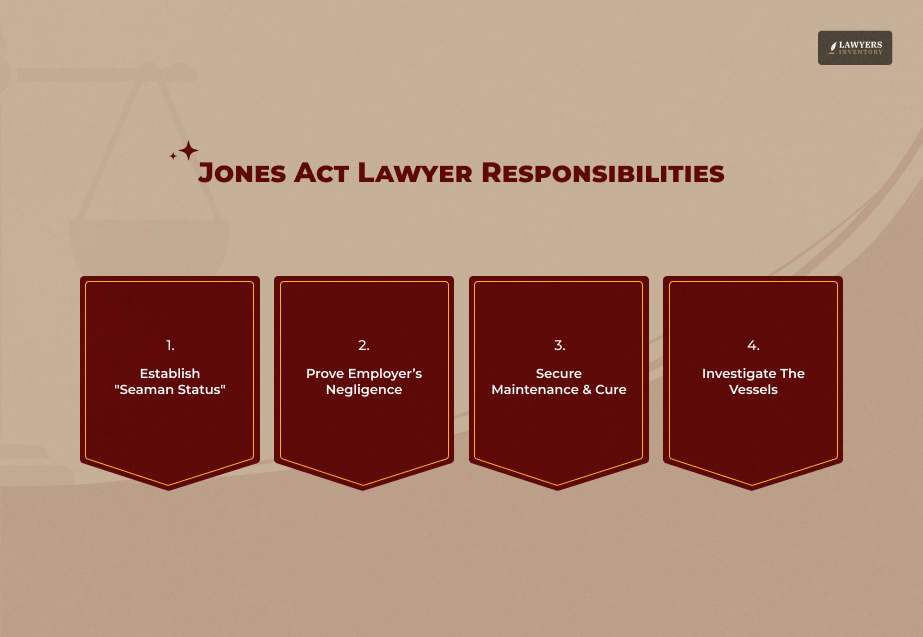
Here are the primary responsibilities of a Jones Act lawyer:
Case Review:
Decide whether the injured worker qualifies as a “seaman”. Usually, a seaman spends at least 30% of his work time on a vessel in navigation.
Additionally, also figure out if the Jones Act or other maritime laws like the Longshore and Harbor Workers’ Compensation Act (LHWCA) cover the injury.
Investigating:
Secondly, secure vital evidence such as:
- witnesses’ accounts
- accident reports
- vessel maintenance records
These can disappear very soon after an incident.
Showing Employer Negligence:
Make a case that even a slight negligence of the employer was the cause or one of the causes of the injury.
This covers cases where the work environment was unsafe, and the equipment was inadequate. And when the workers did not receive enough training.
Claim Submission:
The law provides only a three-year period for filing claims. Moreover, your attorney will ensure that the claim is submitted on time to keep the case alive.
It is up to the plaintiff to choose whether to file a claim in state or federal court to have the greatest chance of recovery.
Discussing and Court Actions:
The insurance companies sometimes mislead the victims. They persuade them to accept low settlements, not even close to the cost of the injury. If the injured worker decides to refuse such offers, the defendants may take them to court.
Obtaining Compensation:
Finally, the damages generally consist of the costs of medical treatment and hospital care, the value of the earnings lost and diminished earning capacity, and disfigurement comprising both physical pain and mental suffering.
How Can A Jones Act Lawyer Help You Claim Potential Damages?
Punitive damages are generally far more than those typically granted in a lawsuit. The main reason is that they are intended to punish the defendant and to change the defendant’s behavior.
You may have a chance of recovering punitive damages through a Jones Act lawsuit. However, this is generally only the case when the shipowner’s or employer’s behavior is extremely bad.
For instance, one particular issue is the failure to give a seafarer maintenance and cure. This is often the basis for awarding punitive damages.
To assess whether you can claim punitive damages, it is crucial that you first understand the phrase maintenance and cure.
People use this term whenever they are injured, irrespective of the employer’s fault. As a result, it includes a daily allowance for living expenses. These include room and board.
As well as the employer’s liability to pay medical expenses until the treating doctor determines maximum medical improvement (MMI).
Leave A Reply







How To Choose The Right Oil Rig Injury Lawyer For Maximum Compensation?
Read More
How Can A Construction Accident Attorney Help You?
Read More
Sonoma County Costco Lawsuit: Read All About It!
Read More
Slip And Fall Lawyer: Famous Cases And Expert Hiring Tips
Read More
What Happens When An Employee Goes On A Long-Term Disability?
Read More
0 Reply
No comments yet.