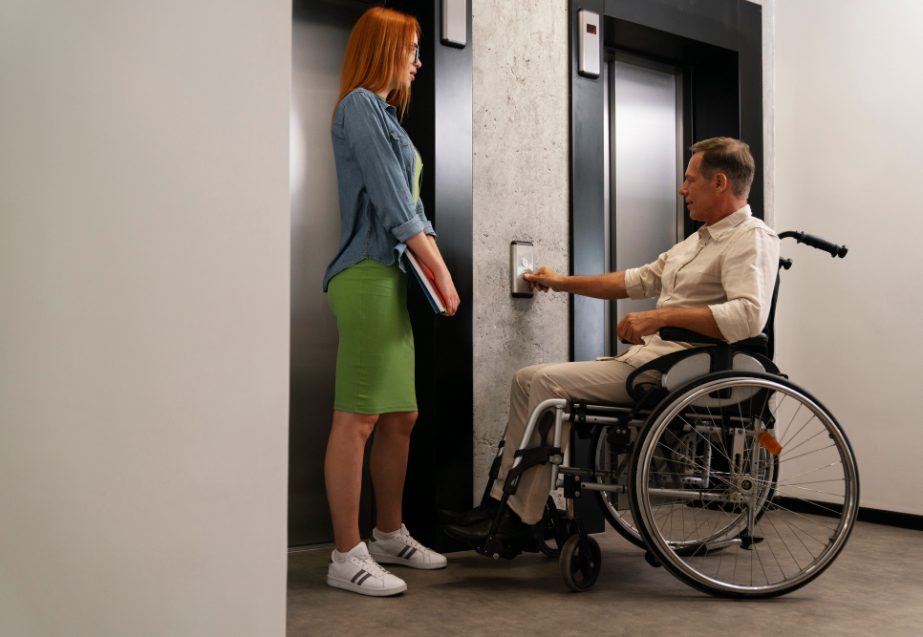
Today’s topic of discussion is: Elevator Accident Injury Claims.
Elevator accident cases across New York buildings are rarely simple, and the stakes for injured riders are always high.
Especially in a city that depends on elevators every day, one mechanical failure can change your life in seconds.
So, you need a law firm that understands both the legal and technical sides of these incidents. That is, someone who has more legal expertise than just a general personal injury practice.
And, Tomkiel & Tomkiel focus on proving exactly how an elevator failed and who is responsible under New York law.
Their team knows how to turn—
- engineering details,
- inspection records, and
- code violations into clear evidence for your claim.
So, when you are facing bills, lost wages, and serious pain, they focus on one outcome— securing the maximum compensation you deserve.
So, if you are wondering how to handle the elevator accident injury claims, I have got you covered. In this blog, I am going to explore diverse aspects of these compensation claims.
So, keep reading to know more!
Key Mechanical Risks Before Elevator Accidents Occur
Many New York elevator accidents happen after small warning signs that most riders and even building staff overlook.
That is, it can be diverse symptoms—
- strange noises,
- misleveling at floor stops,
- sudden jerks, or
- doors that repeatedly fail to open or close.
When the authorities ignore these red flags, building owners and maintenance companies can be held accountable for the injuries that follow.
Moreover, a New York elevator accident attorney must know how to track these indicators through logs, work orders, and witness testimony.
Tomkiel & Tomkiel use these early warning signs to prove that your accident was preventable, not just “unlucky.”
Some Common Symptoms For Legal Investigation
- Repeated misleveling that causes trips or falls at the elevator threshold
- Sudden stops or drops between floors, even if no one was hurt earlier
- Doors that slam, bounce back, or fail to detect passengers properly
- Frequent “out of service” events without clear documented repairs
- Complaints from tenants or employees that were ignored or delayed
What Maintenance Protocols Can Impact The Elevator’s Working?
After an elevator injury, the real question is usually not whether something went wrong, but who failed to prevent it.
That is, maintenance schedules, service contracts, and repair logs often reveal gaps that shift liability from one party to another.
So, if maintenance protocols were incomplete, irregular, or simply not followed, that becomes powerful evidence in your favor.
Also, insurance companies will try to blame anything else: user error, “unforeseeable” breakdowns, even your own conduct.
Tomkiel & Tomkiel push back by exposing missing inspections, skipped repairs, and rushed service work.
How Maintenance Failures Improve The Compensation Claims?
- Proving missed or overdue inspections that violated contracts or industry standards
- Showing that temporary fixes were used instead of proper repairs or part replacements
- Identifying unqualified or poorly supervised technicians who worked on the elevator
- Demonstrating that management knew about recurring issues but did not act
- Linking each maintenance failure directly to how your accident occurred
How Do Codes Determine The Liabilities In Elevator Accident Injury Claims?
New York elevator safety is governed by strict building codes and evolving regulations, including new rules taking effect in 2026.
When an elevator does not comply with these codes, it can dramatically shift liability toward the owner or maintenance provider.
Code compliance audits, both before and after an accident, provide a roadmap of what should have been fixed and when.
These findings can be the difference between a denied elevator accident injury claim and a strong settlement offer.
Tomkiel & Tomkiel know how to translate technical code language into clear, persuasive proof of negligence.
How Expert Investigations Help With Evidence Collection?
In elevator accident cases, expert inspections often decide which side the jury believes.
Engineers, elevator specialists, and safety experts can pinpoint the exact failures that led to your injuries.
Their reports become “anchors” that support every part of your claim: liability, causation, and damages.
Insurance companies hire their own experts to minimize fault and argue that the system was reasonably safe.
Tomkiel & Tomkiel works with independent, highly qualified experts who focus on the truth of what happened, not protecting corporate interests.
How Tomkiel & Tomkiel Use Expert Evidence For The Case?
- Conducting post-accident inspections before evidence is altered or destroyed
- Preserving critical components, such as door sensors, cables, and control systems
- Reconstructing the sequence of events leading to the malfunction
- Challenging biased defense expert opinions with stronger technical analysis
- Presenting complex engineering details in simple, understandable terms
How Lawyers Find The Elevator Accident Injury Causation?
Proving that the elevator defect actually caused your specific injuries is essential under New York law.
That is, in the tight, confined space of an elevator, injuries can come from—
- sudden drops,
- door impacts,
- crushing hazards, or
- violent jerks.
So, defense teams often argue that injuries were minor, pre-existing, or unrelated to the malfunction.
But clear causation analysis connects the forces involved in the accident to your medical findings and long-term consequences.
Tomkiel & Tomkiel work closely with medical and biomechanical experts to lock down this link.
How To Connect The Causation With Your Injuries?
- Documenting exactly how you moved your body during the malfunction
- Matching that movement with fractures, ligament tears, spinal injuries, or head trauma
- Differentiating new injuries from any pre-existing conditions in your records
- Showing how pain and limitations affect your work, daily life, and independence
- Using treating doctors and specialists to support ongoing care and future costs
How Owners And Service Providers Share Responsibility?
Elevator accidents often involve multiple responsible parties, each trying to shift the blame onto someone else.
That is, building owners may point to maintenance companies, who then point to manufacturers, subcontractors, or even inspectors.
Moreover, sorting out this web of responsibility is critical because it determines how much insurance coverage is available for your injuries.
But a skilled New York elevator accident injury lawyer must identify every liable party and hold them to account.
That is, Tomkiel & Tomkiel are adept at cutting through finger-pointing and building a clear, multi-defendant case.
Finding The Liability Parties For Your Elevator Accident Injury Claims
- Building owners, landlords, and property management companies
- Elevator maintenance and service contractors
- Manufacturers and designers of defective elevator components
- Third-party repair vendors or installers who performed specific work
- Inspection agencies that failed to detect or report serious hazards
How Hiring A Lawyer Helps With Settling Elevator Accident Injury Claims?
New and upcoming New York regulations, including those tightening in 2026, are changing how lawyers should evaluate and treat elevator cases.
Stronger enforcement and higher safety expectations make it harder for owners and contractors to excuse non-compliance.
When regulators become involved, insurers often see greater trial risk and become more willing to negotiate serious settlements.
These regulatory shifts can significantly increase the leverage of a well-prepared injury claim.
Tomkiel & Tomkiel follow these changes closely and use them to strengthen your bargaining position.
Why Choose A Lawyer For Elevator Accident Injury Claims?
- Evidence of code violations and maintenance failures can disappear quickly
- Witnesses’ memories fade, and staff turnover can erase key internal knowledge
- Early legal action allows experts to inspect the elevator before alterations
- Timely claims preserve your rights under New York’s strict deadlines
- Having Tomkiel & Tomkiel handle insurers from day one prevents lowball offers and damaging statements
If you hurt yourself in an elevator anywhere in New York, you do not have to untangle liability, codes, and technical reports alone.
Tomkiel & Tomkiel can step in quickly, secure evidence, and build the strong, detailed case that your injuries deserve.
So, reach out today to speak directly with a knowledgeable attorney, get clear answers about your options, and start moving toward the compensation and security you need.
Leave A Reply








What Is A Business Entity? A Simple Guide For New Business Owners
Read More
When Should You Take A Criminal Charge Seriously?
Read More
Who Is Responsible For Pest Problems In Dallas Rental Properties
Read More
Considering A Sexual Abuse Claim? Know What Legal Support Offers
Read More
0 Reply
No comments yet.