Today’s topic: Anon Vault!
With the growing number of users who want to hide their personal information from hackers and other unwanted viewers, the legal framework under which these services operate is becoming increasingly stringent. It is important to understand the nexus between these services and the federal and state laws.
As of February 2026, the legal framework is quite dynamic.
The Federal Trade Commission (FTC) is presently conducting workshops on age verification and data transparency, which affects the Anon Vault’s need to verify its users (FTC, Jan 2026).
Moreover, new amendments to the California Consumer Privacy Act (CCPA) took full effect on January 1, 2026.
These amendments require that businesses give a clear indication of completion when an “opt-out” request is made, thereby introducing a new accountability element for even the most private storage services.
In this article, we will elaborate on the following:
- The intersection of anonymous storage and state privacy laws, like the CCPA.
- How Section 230 protects or penalizes vault providers for user content.
- The reality of government subpoenas and the limits of encryption.
- Consumer protection risks and how to avoid deceptive “privacy” apps.
Data Privacy And Anonymity Laws In The US
The legal status of an Anon Vault may depend on whether it complies with the strict privacy regulations of each state. The CPRA/CCPA model in California is the benchmark for such regulations.
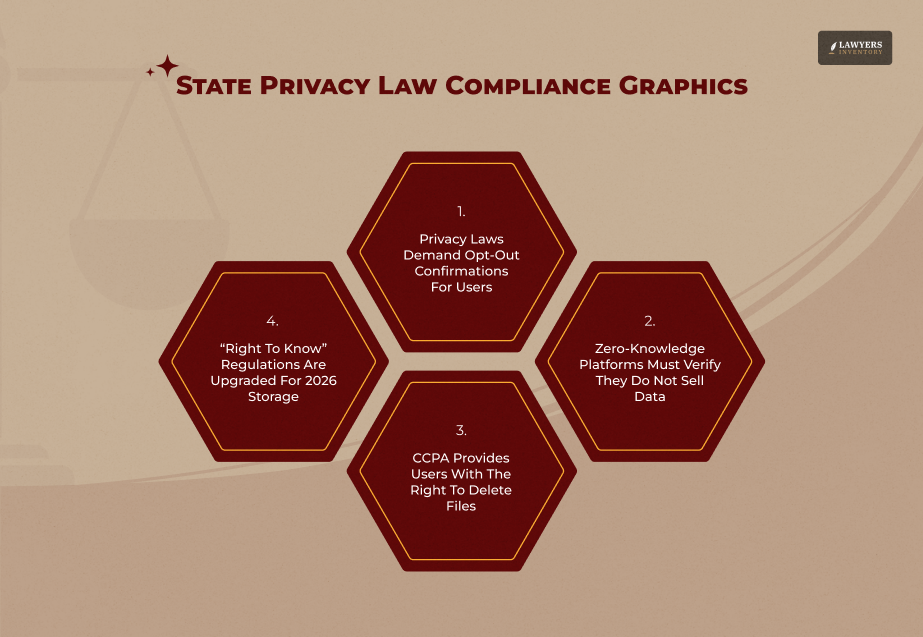
CCPA Compliance For Anonymous Storage
Anon Vaults must handle California users in a particular way with their data. Although the platform does not know what is in your files, it still has to comply with requests to delete your account completely.
With the 2026 CCPA changes, businesses are required to ensure that opt-out signals are being complied with in real-time. (Source: VinciWorks, 2026)
Metadata Gathering And Legal Trouble
Most users think that an Anon Vault gathers no data at all, but IP addresses or login times can be traced. When a provider promises 100% anonymity and gathers such information, they can be sued for fraud.
According to the Atlantic Council (2024), the FTC is still the chief federal agency that enforces “unfair and deceptive acts” in consumer data security.
Liability Regarding User-Uploaded Files In Vaults
The most important issue regarding the law is whether the owner of an Anon Vault can be held liable for the illegal files that a user may store within it. This usually falls under the coverage of Section 230 of the Communications Decency Act.
Section 230 Protections
Anon Vaults are typically “service providers” and not “publishers.” This means that the company is not automatically sued if it is found to be hosting copyrighted movies or stolen files.
Nevertheless, Section 230 does not offer a “get out of jail free” card for federal criminal law violations.
Copyright And The DMCA
If a copyright owner discovers their material on an Anon Vault, they can send a takedown notice. Since the vault is anonymous, it may be difficult for the provider to identify the user.
However, they are still required to deny access to the file. Obeying the Digital Millennium Copyright Act is still required for all US-based storage sites.
Encryption Rights Vs Government Access
One of the most popular fears is that of the FBI or police gaining access to an Anon Vault. This is where there is a conflict between the Fourth Amendment and the Electronic Communications Privacy Act (ECPA).
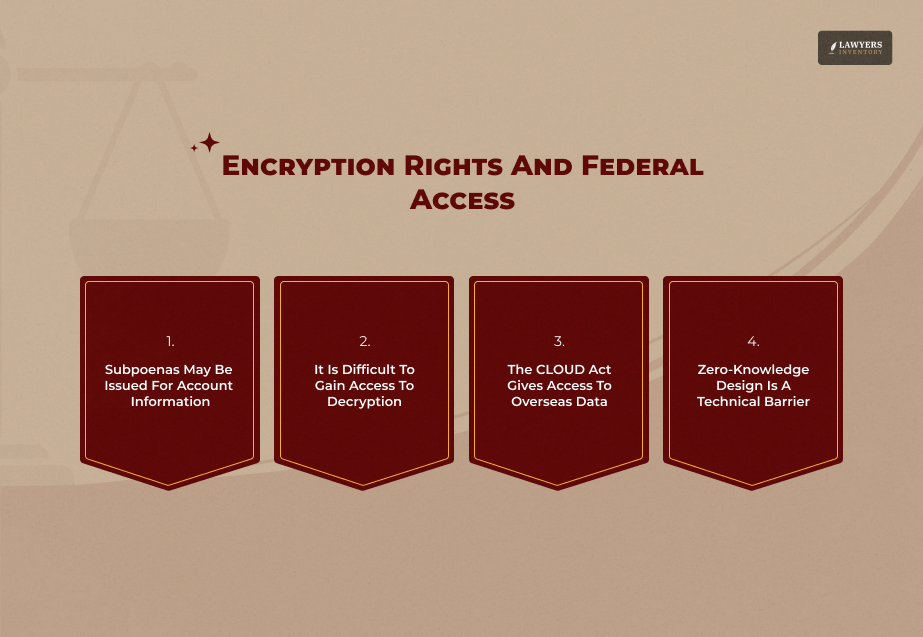
Subpoenas And Metadata
The government can serve an Anon Vault with a subpoena to obtain information. Although they cannot view the files, they can view the creation date of the account and the email address used.
Law enforcement often uses “secret orders” under the CLOUD Act to obtain user data from tech companies.
The “Backdoor” Legal Controversy
There is no existing US law that compels a company to create a “backdoor” in its encryption. This means that if the Anon Vault is telling the truth and does not possess the keys, they cannot hand over the documents to the government.
Privacy activists claim that any attempt to break the encryption system would contravene the right to privacy under Article 8.
Consumer Protection And Fraud Risks
Not all Anon Vaults are as advertised. Some apps are “privacy-washing” their services to fool users into a false sense of security.
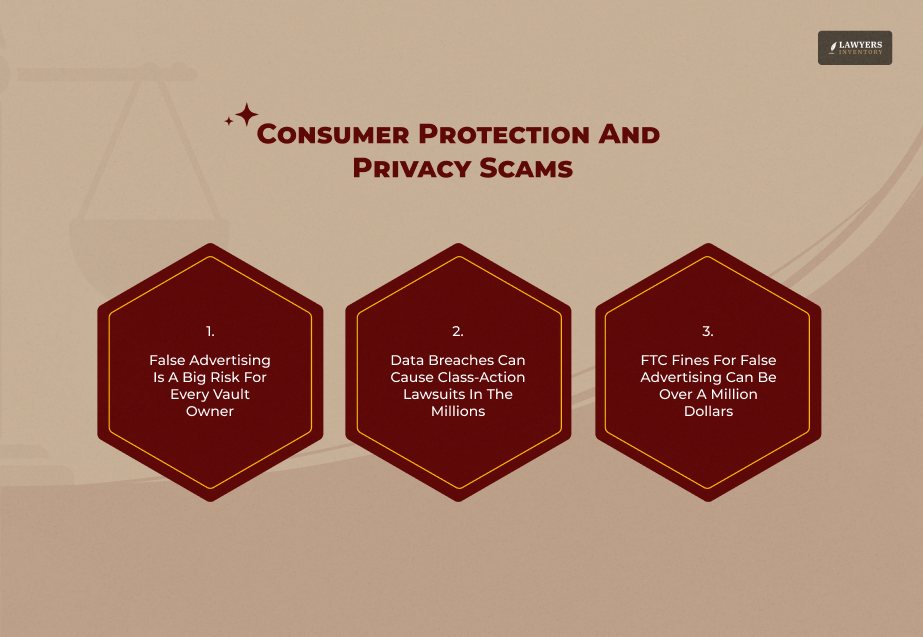
Deceptive Marketing Risks
When an Anon Image Vault claims absolute privacy but is known to have a security weakness it refuses to correct, this is deceptive marketing.
Consumers in 2026 are increasingly taking firms to court for “Type Confusion” attacks that compromise data. The FTC has just finalized orders against large firms for collecting geolocation data without users’ consent.
Data Breach Liability
When an Anon Vault is compromised, the firm is required to notify consumers. In 2026, several states have reduced the time frame for notification to only 72 hours.
Judges are now awarding compensation for a breach of privacy even if there is no direct evidence of economic damage.
Read Also: Ticketmaster Data Breach: Impact And Regulatory Implications In The Ticketing Industry
Frequently Asked Questions (FAQs):
Selecting the appropriate Anon Vault involves being up-to-date on the latest legal and technical traps. These answers will help you remain informed about your rights as a US citizen in the digital age.
Yes, many journalists and whistleblowers employ an Anon Vault to shield their sources and evidence. Employing secure storage for evidence of corporate or governmental wrongdoing is protected under the First Amendment and whistleblower protection statutes, as long as the original gathering of the information did not involve hacking.
Yes, but they have a high hurdle to overcome for “authentication.” Because the vault is anonymous, an attorney must be able to demonstrate that the file is what it says it is and has not been altered.
The absence of a clear “chain of custody” because of anonymity makes such files problematic to use in court.
It is legal, but it puts you on the radar of the Financial Crimes Enforcement Network (FinCEN).
If the Anon Vault service you are using allows you to send or receive payments, it could be considered a “money transmitter” and will be subject to Anti-Money Laundering (AML) laws, which will inevitably conflict with the desire for complete anonymity.
Leave A Reply







What Happens In A Mistrial? And What Every Defendant Needs To Know Immediately After
Read More
What Happens If A Jury Is Hung Twice? The Legal Answer Explained
Read More
Voyeurism As A Crime In The UK: Law And Legal Consequences Explained
Read More
What Is Wanton Endangerment? Is The Breonna Taylor Case Related To It?
Read More
How Can Criminal Identity Theft Occur And Your Legal Standing
Read More
0 Reply
No comments yet.