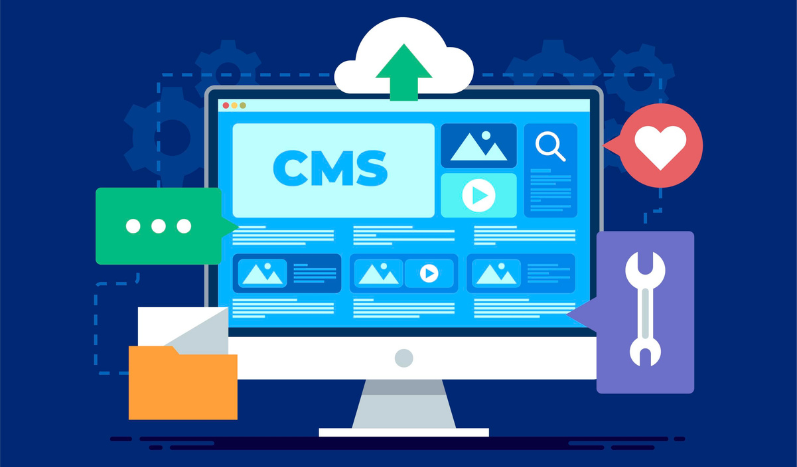
Today’s topic: Headless CMS benefits from a legal perspective.
Friction in business processes is often the most overlooked aspect of overall business efficiency.
Friction can result in missed marketing campaigns, teams working against each other, and customers having an inconsistent experience with the products and services a company offers.
As businesses develop digital presences for their products and services, friction often increases.
Teams working on content for their digital presence include marketing, development, product, and leadership.
These departments all rely on the content for the digital presence of the company, but often struggle to work together effectively.
A headless content management system can help to alleviate these issues regarding operational friction within the teams.
By decoupling content from the platforms that display it, the headless CMS can help reduce friction between departments.
How? By enabling streamlined processes for each team.
Moreover, by implementing a headless content management system in its digital infrastructure, a company can streamline its processes.
Also, the company can enable each team to focus on its individual tasks more efficiently.
On that note, today, I am going to examine the different benefits of a headless CMS from a legal perspective.
Headless CMS Benefits From A Legal Perspective:
A headless CMS separates content from the front end. So you decide where data is stored and how it moves.
This helps with laws that depend on location, like data residency rules. Moreover, you can host content in specific regions and stay aligned with local laws.
As a result, you can enjoy better control over where your data lives.
On that note, let’s check out the most significant headless CMS benefits for law firms.
1. Easier Compliance With Privacy Laws:
Privacy laws focus on how you collect and use data. A headless setup lets you control that flow more tightly.
Moreover, you can manage consent, tracking, and storage without changing the whole system.
This makes it easier to align with rules like user consent and data access requests.
2. Reduced Risk Of Data Exposure:
Traditional systems often mix content and user data, which increases risk.
A headless CMS keeps things separate. As a result, even if one part has an issue, the impact stays limited.
This reduces the chance of large-scale data exposure.
3. Cleaner Audit Trails:
Legal teams often need clear records. Who changed what? When did it happen? This is where a good headless CMS tracks content changes in detail. That makes audits simpler and faster.
You don’t have to dig through multiple systems to find answers.
Headless CMS Benefits From A General Perspective:
Now that I have highlighted the specific headless CMS benefits for law firms, I’m going to break down all the major advantages of using a headless CMS – stay tuned!
1. Eliminating Content Silos Across Departments:
Content fragmentation is prevalent in organizations. Marketing teams may manage the content for the organization’s website.
Moreover, the product teams may manage the content for the organization’s various applications. The support teams may manage the content for the organization’s help center.
These content silos result in a lack of content consistency and coordination between the different teams, which is one reason many businesses ask Why choose headless CMS over WordPress when looking for a more unified and flexible content setup.
Teams often duplicate content and use outdated content to fulfill their team responsibilities.
Also, a headless CMS eliminates these silos by centralizing all the content in one repository. All teams have access to this content repository.
Consequently, all the teams have access to the same content, eliminating content inconsistencies between departments.
By eliminating content silos between departments, organizations can work together more efficiently.
Teams can coordinate their efforts better to deliver the same message and resources to their audiences.
This improved coordination between departments reduces operational friction in the organization.
2. Enabling Parallel Workflows For Faster Execution:
In traditional content management systems, teams must follow specific sequential workflows to complete projects.
For example, developers must complete the templates for the teams before the content teams can add content to the templates.
Similarly, marketers must wait until developers have completed their work before launching digital advertising campaigns for the organization’s products.
A headless CMS enables teams to work in parallel on the same project.
For example, content teams and developers can work simultaneously on the same project. Content teams can prepare and structure the content that the developers will feature on the organization’s digital platforms.
This simultaneous work by teams reduces the time required to deliver a project to completion.
Furthermore, teams can make changes to a project without affecting other teams involved in it.
This improved flexibility between teams results in efficient collaboration between team members.
Teams can work in parallel on projects when a headless CMS is in use. This capability of a headless CMS enables teams to overcome operational friction and complete projects smoothly.
3. Reducing Dependency On Technical Teams:
Organizations often experience operational friction caused by their dependency on the organization’s technical teams.
For example, the content teams may require developers’ assistance to make changes to the content on the organization’s web platforms.
Such a dependency creates bottlenecks in the content teams’ work and prevents them from working as efficiently as possible.
A headless CMS reduces the dependency on the technical teams by providing user-friendly content management interfaces.
These interfaces allow non-technical team members to edit and publish content to the organization’s digital platforms.
The content teams no longer need to wait for the developers’ assistance to make changes to the content.
The dependency of teams on technical teams to edit content disappears when using a headless CMS.
This change significantly reduces operational friction between teams.
4. Standardizing Content Through Structured Models:
Another major source of friction in content management is the lack of standardization in how teams and departments create their content.
Because there is no standardization in the content creation process, teams encounter inefficiencies and complexities in their content management efforts.
A headless content management system introduces the idea of content models.
These models provide structure to the content that is already live on the website and ensure that all content is consistent.
By standardizing how content is created and managed, teams can greatly reduce the complexities that would otherwise present themselves in their efforts to create and manage their content.
Structured content models are a foundational element in reducing operational friction.
5. Improving Cross-Team Communication And Alignment:
Effective communication between the different teams involved in publishing content on a website is crucial for reducing friction in the content management process.
Yet, current communication systems between these teams can contribute to friction.
Teams can improve their communication by aligning with other teams and the content management system.
A headless content management system creates a platform for all teams to collaborate on the content that is live on the website.
Content models provide a language for all individuals involved in the publishing process to communicate and ensure that everyone is on the same page.
With effective communication between the teams, there will be better decision-making within each project.
This improved communication will reduce friction between teams and create an environment in which everyone is working towards the same goals for the company.
6. Streamlining Content Updates Across Channels:
Another major problem for many organizations with content-heavy websites is the complexity that teams encounter when updating the content that is published across different channels.
Teams must update the same content on multiple platforms, which introduces the potential for errors and friction into the content management process.
A headless content management system streamlines the content update process by enabling teams to manage content from a central hub for all channels.
This content management system allows teams to update content in one location, and that content will be automatically published across all channels.
This significantly reduces the complexities of content management. When content management is streamlined, teams operate more efficiently in their content management efforts.
This streamlined content update process is essential for any organization operating in a fast-paced and dynamic environment.
7. Supporting Scalable Collaboration In Growing Organizations:
As organizations grow, the number of teams that work together to produce the goods and services for their customers increases significantly.
Without a scalable infrastructure in place, the growth of these organizations can create chaos in the organization.
A headless CMS provides the infrastructure for scalable collaboration within growing organizations.
By centralizing content and the processes teams follow within an organization, the headless CMS ensures that all teams can work together efficiently to produce the goods and services the organization offers its customers.
It allows them to grow their operations without creating unnecessary friction among the growing teams.
8. Errors And Rework Through Automation:
A significant source of operational friction within organizations is the reliance on manual processes.
These processes are likely to result in errors that impact the efficiency of the teams involved in them.
Automation is the key to overcoming these challenges, and a headless CMS allows organizations to automate their processes effectively.
Tasks such as content validation and publishing can be automated, significantly reducing the need for teams to perform these processes manually.
The automation of these tasks results in fewer errors and a significant improvement in the speed at which teams can execute their processes.
Furthermore, minimizing errors and the need to undertake rework directly impacts a company’s efficiency and productivity.
Automating as many processes as possible within the marketing campaign will improve the effectiveness of a company’s resources and its ability to complete projects on time.
Automation powered by a headless CMS will ultimately allow the organization to minimize the friction caused by its operations.
9. Simplifying Approval Workflows And Content Governance:
Within organizations, there is often an amount of friction associated with the content approval process.
Content created by an organization must often pass through several individuals before being published online.
Content may have to be approved by the legal department, compliance department, marketing leads, and product owners.
The lack of structure in this process can create operational friction within the organization and result in the publishing of incorrect content.
A headless CMS allows organizations to simplify the approval process for content.
Based on the structure and content of the website, various individuals can be given approval permissions to review and approve content.
Headless CMS Benefits For Law Firms: Enabling Reusable Content To Reduce Redundancy
Another common issue for many organizations is redundancy in the content they create. Different departments may create the same content for different platforms or teams.
This not only increases the workload for these teams but can also create inconsistencies in the content that is published by the organization.
A headless CMS allows teams to create content that can be used elsewhere in the organization.
Instead of having different departments create the same content for different teams or platforms, the content can be created once and reused across teams and platforms.
This not only eliminates redundancy but also the workload for the organization’s content creators.
Leave A Reply








What Is A Business Entity? A Simple Guide For New Business Owners
Read More
When Should You Take A Criminal Charge Seriously?
Read More
Who Is Responsible For Pest Problems In Dallas Rental Properties
Read More
Considering A Sexual Abuse Claim? Know What Legal Support Offers
Read More
0 Reply
No comments yet.