Summarize using AI





Prompt copied. Paste it into Gemini.
Today’s topic: University of Metaphysical Sciences lawsuit
The University of Metaphysical Sciences Lawsuit was terminated with prejudice on May 12, 2025. In Case №4:21-cv-08066-KAW, the matter was settled by dismissal. UMS was not held liable for any damages or monetary judgment. No public trial verdict was entered. Nevertheless, some online articles misrepresent the situation.
If you have come across the University of Metaphysical Sciences lawsuit cases trending on reddit and are curious about what it is, we are here to help!
While we were investigating and preparing to write this blog, which would serve as a detailed guide to the lawsuit, we found out that this case has been around for the last nine years, going back to 2017.
Based on the reports and the UMS community, the plaintiff is said to have dropped $1.5 million in a lawsuit against the institution. The reason?
Some claim that it is due to incorrect tax records, whereas the institution asserts that it is nothing but “predatory litigation” from the competitors. So, what is the truth?
University Of Metaphysical Sciences Overview
The University of Metaphysical Sciences (UMS) is an unconventional educational facility that centers its attention on metaphysical studies, spirituality, and personal growth.
Situated in Arcata, California, UMS provides degree programs in metaphysical topics to individuals who want to investigate spirituality deeply. The courses embrace a wide range of topics, including meditation, energy healing, awareness studies, and spiritual counseling.
By having online and on-campus programs, UMS has attracted those who are looking for non-traditional education. Its curriculum is designed not only to impart academic knowledge but also to facilitate students’ personal growth.
Students can acquire certificates, bachelor’s, master’s, and even doctoral degrees in metaphysical fields. Those who wish to immerse themselves in the metaphysical sciences or become spiritual counselors or metaphysical practitioners can achieve their dreams through UMS.
Nevertheless, the university, while acknowledged for its distinct offerings, has experienced legal controversies in which it has been caught. Thereby, it attracts the attention and concern of students, educators, and metaphysical enthusiasts, respectively.
All About the University of Metaphysical Sciences Lawsuit
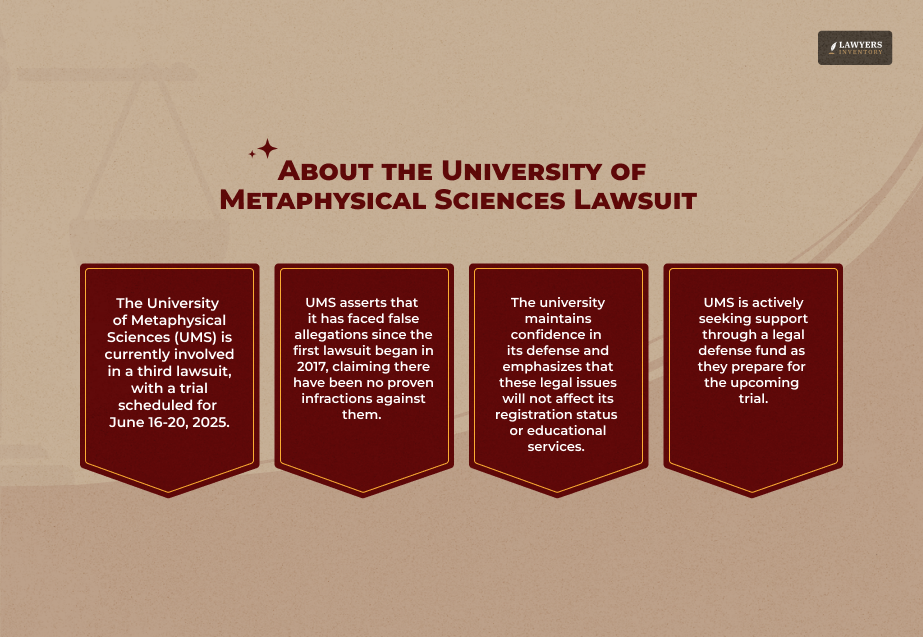
The University of Metaphysical Sciences has been facing legal battles for several years, primarily involving allegations of unfair competition and intellectual property disputes.
These lawsuits, initiated by a competitor in the same niche, have drawn attention to the challenges small institutions face in niche education markets.
The primary lawsuit, titled International Metaphysical Ministry vs. Wisdom of the Heart Church (the parent organization of UMS), has been ongoing since 2017.
UMS has described the case as an example of predatory litigation, a term used to define legal actions taken with the intent to harm competitors financially and reputationally rather than to address legitimate grievances.
UMS asserts that these lawsuits are part of a broader strategy to disrupt its operations and tarnish its reputation.
What Are the Lawsuits About?
The lawsuits focus on accusations that UMS infringed on certain intellectual property rights and engaged in unfair competition. Additionally, they stated that they were facing allegations of running ads using the name of another institution.
However, UMS has consistently denied these claims, maintaining that it operates transparently and ethically.
The university has stated that the accusations are baseless and merely an attempt to create legal and financial hurdles for the institution.
People often use predatory litigation in competitive industries, especially when one player seeks to dominate a market.
For UMS, these legal battles have meant allocating significant resources to legal defense rather than academic growth.
Response From University Of Metaphysical Sciences
Apart from maintaining their innocence, the University of Metaphysical Sciences mentions that the lawsuits are “ridiculous.”
They continue to say that UMS never ran advertisements featuring another school’s name. They also emphasize that “someone” is stating that the case is about something else, but it’s not.
UMS sticks to the point that this entire lawsuit saga results from Google Ads. This has to do with advertisements. UMS thinks someone else ran these advertisements to frame them. “We believe someone ran these ads in order to frame UMS.”
What made them think so?
Well, it’s because they found out that UMS had and still has their names on what we know as a “negative keyword list” on their Google Adwords account. Any name or word phrase that appears in a negative keyword list cannot be used to advertise.
Therefore, they claim that they couldn’t run advertisements using the names of other schools.
According to US law (the Lanham Act), Google’s policy is that businesses may bid on a trademarked name as a keyword, but the trademarked name cannot appear in the advertisement. (Source: Jurin v. Google, No. 2:09-cv-03065-MCE-KJM, Jolt Law).
UMS looks forward to presenting the evidence that they never used their name as a “bidword” or even in an advertisement.
The Impact on UMS
The University of Maine System (UMS) has repeatedly emphasized that its activities have not been affected by the lawsuits. It is still providing its educational programs and services to its students.
Furthermore, the university has moved forward with measures to counter the adverse publicity resulting from the suits, such as the creation of a legal defense fund specifically for this purpose.
UMS states that in addition to the legal issues, it has been the victim of a concerted campaign comprising fabricated articles and spam attacks intended to harm its reputation on the internet.
This has complicated the university’s endeavors to uphold its credibility and the trust of its students and supporters.
University Of Metaphysical Sciences Lawsuit Update
The recent and final phase of the lawsuit was on May 12, 2025. UMS has expressed confidence in its ability to prevail, citing a lack of evidence supporting the claims against it before the trial.
As of now, the federal court has dismissed the case with prejudice. Which means that UMS cannot refile with the same claims. Additionally, there was no settlement or payout to the plaintiff (IMM).
Why Does This Lawsuit Matter?
For those outside the metaphysical sciences niche, this legal saga highlights the broader issue of predatory litigation.
Small organizations often lack the resources to defend themselves against prolonged legal battles, which can stifle innovation and competition.
The University of Metaphysical Sciences Lawsuit serves as a reminder of the importance of fair competition and the challenges niche institutions face in maintaining their operations and reputations.
Understanding Predatory Litigation: Is the University of Metaphysical Sciences Lawsuit Predatory?
Most of us have seen instances on TV or heard about scenarios where one party sues another, just to harm them. Mostly, these are the outcomes of unfair competitions, where one tries to bring another down.
This is a classic example of predatory litigation.
Berkeley Law explains that this is the deliberate and calculated use of the legal system to harm or take advantage of opponents, to coerce a business rival, or to carry out a secret, illegal plan, instead of getting a lawful legal remedy.
In most cases, this kind of operation comprises the initiation of a lawsuit that lacks merits, fending off the adversary imposing upon them inordinate expenses, delays, and generally uncomfortable situations.
As implied by the term, predatory litigation is a kind of legal action whereby the suing side seeks to injure the defendant (their competitor) by employing unfair tactics.
Moreover, it may comprise the use of threats and unfounded lawsuits. This is some sort of calculated strategy. It directly results in two things:
- Reputational damage.
- Delay in recovery.
Therefore, according to the majority of the data that we have investigated, the founders and others involved in this type of litigation are of the opinion that UMS did not run any ad (chief allegation) which was directed at the other school in the same niche. As a consequence, the court decided to dismiss the case in 2024.
The people of UMS are saying that the rival party tried to hurt the university rep. How? Well, by manipulating Google’s algorithm and using keywords that reached numerous people online.
Besides, they claimed that it was nothing but a pretense to harm the image of UMS. They said, “it [was] pretty circumstantial that it all started immediately after certain disparaging webpages were put online.”
Steps to Take Against Predatory Litigation
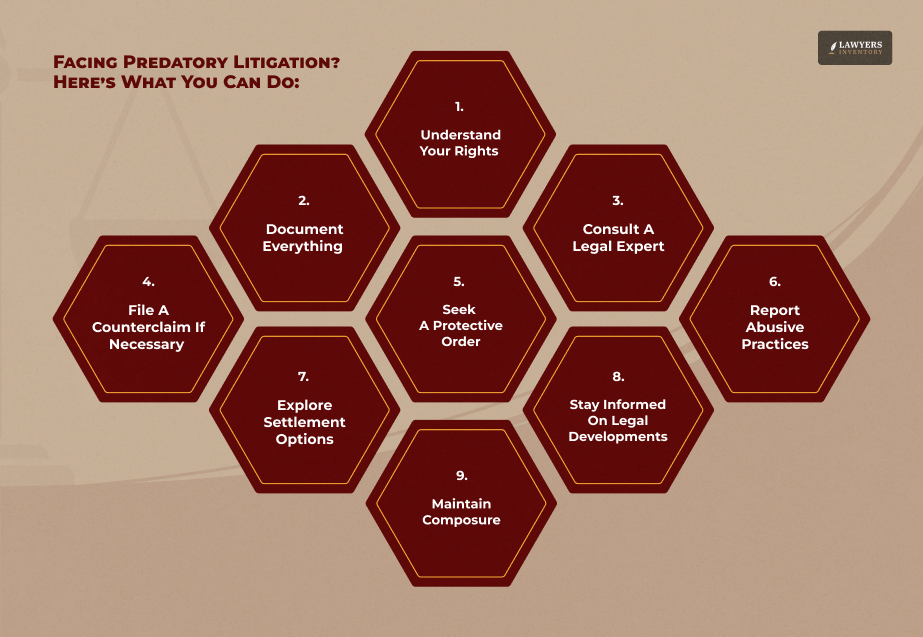
Facing predatory litigation can be overwhelming, but there are effective steps you can take to protect yourself and your interests.
As we have mentioned above, predatory litigation refers to the misuse of the legal system to harass or intimidate individuals or businesses, often for financial gain.
If you find yourself in this situation, here’s how to navigate it.
- Understand your rights.
- Document everything.
- Consult a legal expert.
- File a counterclaim if necessary.
- Seek a protective order.
- Report abusive practices.
- Explore settlement options.
Stay Informed On Legal Developments
Laws regarding predatory litigation are constantly evolving. Stay informed about changes in laws that might affect your case or provide new avenues for defense.
Joining support groups or forums related to legal issues can also provide valuable insights and shared experiences from others facing similar challenges.
Read Also:
Leave A Reply







Power Stick Deodorant Recall FDA: Your Complete Safety Guide
Read More
Is It Legal To Use True People Search? What Are Its Restrictions?
Read More
Case Is Being Actively Reviewed By USCIS – Meaning And Timelines
Read More
Refund Risk Under Income Tax Demand Notice Section 143(1) Summary Adjustments [A Complete Legal Assessment]
Read More
2026 Rules For The Legal Age Of Marriage In India
Read More
0 Reply
No comments yet.