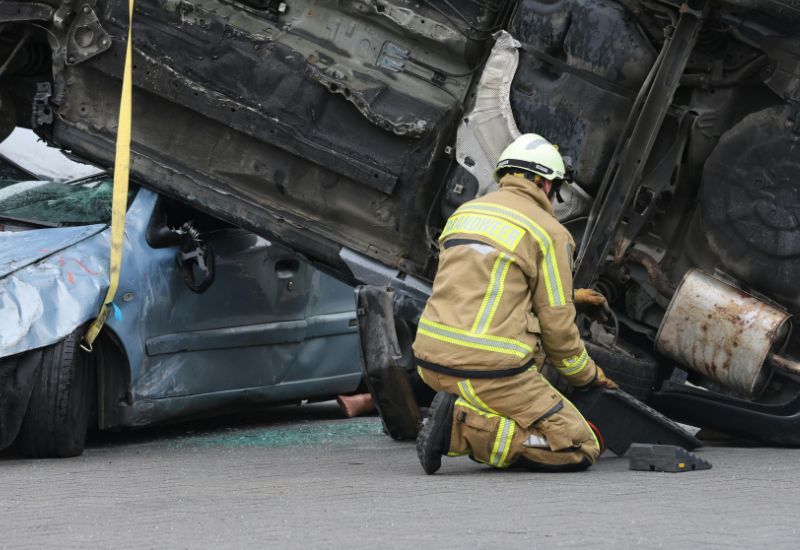
Today’s topic: Why you need a truck accident lawyer.
You spot those huge commercial trucks rumbling along the highway every single day, loaded up with cargo and crossing state lines.
Sure, most make it without a hitch, but when one collides with a passenger car, it’s a whole different story, devastating, really.
Figuring out why these crashes lead to such awful injuries shows just how truck accident claims stand apart from your run-of-the-mill car wrecks.
It’s the physics involved, plus all the regulations and who’s to blame, that turn these into tricky legal messes needing real expertise.
If a commercial truck has smashed into you and left you hurt, talking to a truck accident law firm in Sterling Heights right away gets you clued in on the special angles of your case.
This includes all those parties who could be on the hook for what happened. Read this article, as we explain that you need to know in detail!
The Physics Of Mass And Momentum Behind It!
The answer to why you need a truck accident lawyer lies actually in physics.
Picture a fully loaded semi: up to 80,000 pounds, that’s like 20 times the weight of your average 4,000-pound sedan.
That sheer mass gap means physics always sides with the truck in a crash. It’s just how it works.
Say a truck’s barreling along at highway speeds and hits a car; the energy slams over mostly one way.
The truck barely slows down, thanks to its bulk, dumping all that force into mangling the car’s frame and flinging it ahead wildly.
Where does that energy end up? Smashing through the smaller vehicle, that’s where.
Think momentum, it’s mass multiplied by speed, and it rules these impacts. At 65 mph, a truck’s got so much of it that cars barely nudge its path.
Rear-enders? The truck shoves the car like it’s a plaything, sometimes rolling right over or pinning it against a guardrail or another rig.
And don’t get me started on centers of gravity.
Trucks ride high, so they often clip cars at window height instead of a nice, even bumper match. That skips past the safety bits built for car-on-car hits, you know?
Reasons Why Truck Accidents Cause More Severe Injuries Than Car Crashes
Once you know the reason behind the truck accidients cause more severe injuries than any sort of car crash, you would also understand why you need a truck accident lawyer!
1. Stopping Distance Realities
Trucks need way more room to stop than cars—it’s no secret. A sedan at 65 mph on a dry road might halt in 300 feet. Same truck, same setup? You’re looking at 525 feet or better, almost twice as far.
That’s why truckers can’t dodge pileups that a car driver would skate through. Traffic jams up suddenly ahead?
Even if the truckers kept a safe gap, for car standards, it might not be enough to brake in time.
Loaded rigs slow down even more than empties; extra weight amps up momentum without boosting the brakes’ power, stretching those distances out further.
Drivers have to tweak their tailing based on the load, weather, and traffic. It’s constant math in their heads.
Then there’s brake fade on those endless downgrades. Hammer the brakes over and over.
They heat up and lose bite. That’s why you see runaway ramps—they’re for when a truck turns into a runaway beast on a steep drop, unstoppable.
2. Underride And Override Collisions
Underrides happen when a car dives under a truck’s trailer in a rear or side smash. This is exactly why you need a truck accident lawyer, as these collisions involve complex safety regulations.
Trailer’s up high, so the car slips beneath instead of hitting something solid. The truck’s edge slices into the roof.
Fatal most times, roofs just aren’t built for that kind of pounding. Rear underride guards are required now, which helps.
However, the sides? Not so much, leaving folks exposed in those nasty T-bone intersection crashes.
Overrides are the flip: truck rear-ends a car and climbs right over it. The front bumper’s higher than the car’s back end, so it crunches the trunk, maybe the whole cabin too.
Either way, these cheat the crumple zones and safety tricks meant for equal-height wrecks.
Airbags, beefy pillars, all that controlled crush? Useless if the hit’s way off-level against a truck.
3. Cargo-Related Injuries
Badly tied-down cargo adds whole new ways to get hurt, stuff you don’t see in car crashes.
The truck tips or slams the brakes, and loose loads punch through the sides, spill everywhere, or thrash around inside.
This complexity is exactly why you need a truck accident lawyer to navigate the various liability and safety regulations involved.
Hazardous hauls make it worse, think chem spills, blazes, booms that hurt not just crash victims but firefighters and folks nearby. Messy scenes needing special care, no doubt.
How the weight’s spread affects control, too. Overloaded or lopsided trucks flip more easily, jackknife, or veer off. In traffic? It chains into a multi-car nightmare, piling on the hurt.
4. Jackknife And Rollover Dynamics
Jackknifing’s when the trailer’s at a wild angle to the cab, swinging wide and clipping cars left and right while jamming the road shut—hello, pileup city.
It kicks off with trailer tires slipping while the cab holds; hard braking on slick roads does it every time. Once it’s going, good luck wrestling it back—drivers can’t, usually.
Rollovers come from speeding curves, sharp swerves, and top-heavy stuff. High centers of gravity make trucks tippy compared to cars. They barrel into oncoming traffic or curbsides, flattening anything.
The mess from a rollover? Debris everywhere, hundreds of feet—twisted metal, spilled cargo, fuel slicks turning the road into a hazard zone for everyone else.
5. Blind Spot Dangers
Trucks have these huge blind spots, right behind the trailer, down the sides by the back, even dead ahead of the cab, where cars just vanish from the driver’s sight.
Crashes there? The truck swings a lane into you or misses a stopped car. Truckers check mirrors hard, but with spots that big, you need fancy cams to see it all—no getting around it.
Cars hanging in those zones? Recipe for trouble. Drivers think, “I see the mirrors, so he sees me”—wrong, and it kills when the truck merges or turns without a clue.
6. Tire Blowouts And Road Hazards
A truck tire popping hits different—way worse than a car flat. Rubber and metal fly out, shredding nearby rides; the truck veers wildly, crossing lanes easily.
This is exactly why you need a truck accident lawyer to investigate whether maintenance protocols were ignored.
Retreads are fine if maintained, but they give out more than fresh ones. Cheap outfits skimping on tires? They jack up blowout odds.
Highway’s littered with the fallout, “road gators,” those big tire chunks that wreck cars at speed. Maintenance slip-ups keep hurting long after the truck’s gone.
7. Driver Fatigue And Hours Of Service
Truckers get slammed with deadlines, pushing them to drive tired—it’s the job. Feds cap hours to fight that, but dodgy enforcement and log cheats let some go way over.
Fatigue hits like booze: slow reflexes, foggy calls, zoned out. After 18 awake hours, you’re at drunk-driver levels, BAC around 0.05%. Shift grind puts many there regularly.
It’s not just lag—microsleeps zap you out for seconds, letting tons roll unchecked for football fields.
Multiple Liable Parties
Truck cases rope in more than the driver. Companies that hired, trained, pushed ’em? Vicarious blame. Skimped on upkeep or rules? Straight negligence.
Loaders mess up securing? Their fault. Makers of bad parts or shoddy repair shops? In the mix, if it caused the crash.
Tangled web, sure, but more pockets mean bigger payouts. Corps have deep insurance, unlike solo drivers scraping by with peanuts. This is exactly why you need a truck accident lawyer!
Insurance Coverage Differences
Feds mandate $750K minimum for trucks, beats car policies’ $20K-$50K floors. Lots carry a mil or higher.
Still, mega-injuries from trucks blow past that: brain trauma, spine snaps, fractures, lifelong cripple-ups rack up millions in bills and lost pay.
Dig for umbrellas or excess layers; it takes sleuthing corporate setups, leases, and hidden policies.
The Claims Investigation Process
Evidence vanishes quickly. Thus, you must move fast on probes. Black boxes, logs, maint records spill the cause, but companies don’t hold ’em forever.
FMCSA files show if outfits or drivers got violation raps, hinting at bad habits for liability and punitives.
Reconstruction needs truck pros on brakes, loads, dynamics—beyond what most injury lawyers see day-to-day.
Long-Term Impact On Victims
Survivors grind through years of recovery, not months, surgeries, rehab marathons, life overhauls. Costs snowball past ER tabs into forever care.
No more heavy jobs? Or career pivots from limits? Lifetime wage hits need figuring for fair comp.
Mental scars match the physical: PTSD from the bang, road dread, depression over changes—all needing fixes that drag on life.
Protecting Your Legal Rights
These cases scream for truck-savvy lawyers from jump. Cochran, Kroll & Associates, P.C. gets how they differ from car stuff—in causes, blame, payoffs.
So, just grab evidence quickly, nail every at-fault party, peg long-haul costs? Takes know-how on regs and trucking ways, pronto.
With injuries this brutal, your money tomorrow rides on solid prep and hard pushes against big-money corps who fight these tooth and nail.
Seeing why trucks wreck so badly? Explains why you need a truck accident lawyer who do ’em all the time, not once in a blue moon.
Leave A Reply








What Is A Business Entity? A Simple Guide For New Business Owners
Read More
When Should You Take A Criminal Charge Seriously?
Read More
Who Is Responsible For Pest Problems In Dallas Rental Properties
Read More
Considering A Sexual Abuse Claim? Know What Legal Support Offers
Read More
0 Reply
No comments yet.