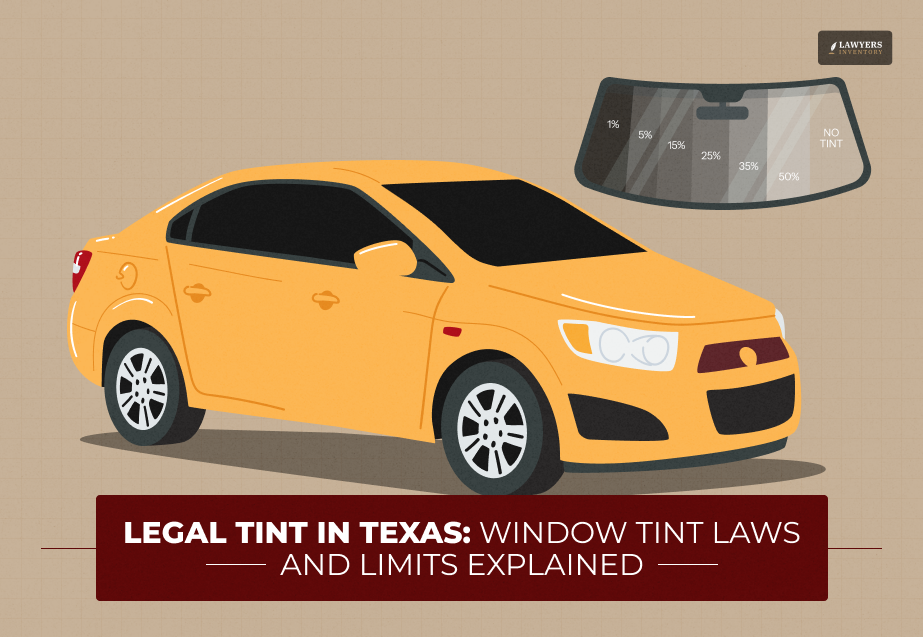
The legal tint in Texas is an important balance between the comfort of the driver and the safety of the public. For the residents of Texas, window film has been an effective solution for the hot southern weather and the UV rays.
It allows you to stay cool while driving while also allowing law enforcement officials to stay safe during traffic stops.
It is important that you understand the legal tint in Texas to avoid fines and make sure your vehicle passes the annual safety inspection.
The amount of light passing through the window is referred to as the VLT. In this article, we will elaborate on the following:
- The definition of VLT and how it applies to different vehicle types.
- Specific VLT limits for the windshield, front, and rear windows.
- The restrictions on reflectivity and prohibited tint colors.
- The process for obtaining medical exemptions and the penalties for violations.
What Does “Legal Tint” Mean In Texas?
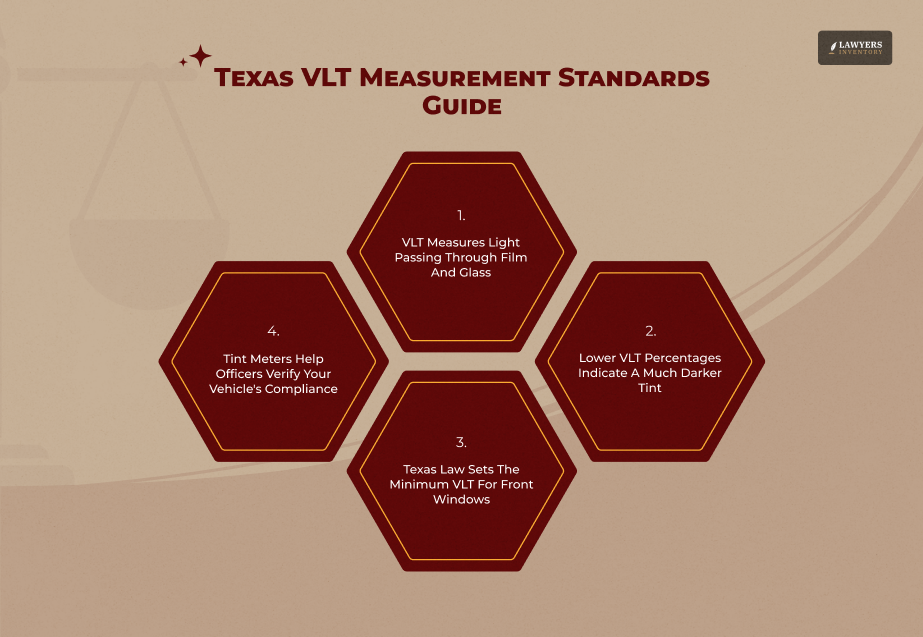
The term legal tint in Texas refers to the specific percentage of light that must pass through your car windows. The state measures this using a metric called Visible Light Transmission, or VLT.
Understanding Visible Light Transmission (VLT)
VLT is the most critical factor to consider while choosing a film for your car. If you choose a 25% VLT, you would only allow a quarter of the visible light to pass through to your car’s interior.
If you type what the legal tint in Texas is, you would actually want to know the least VLT required for your windows.
Why Texas Regulates Window Tint
Texas regulates the darkness of windows to ensure the safety of law enforcement officers, especially at night. While darkness protects against heat, it can also conceal dangerous items or movements of a driver. Thus, it prioritizes safety above all while driving.
Texas Legal Tint Limits By Window
The legal tint in Texas varies significantly depending on which window you are tinting. The front of the vehicle has the most restrictions, while the back is generally more flexible.
Windshield Tint Regulations
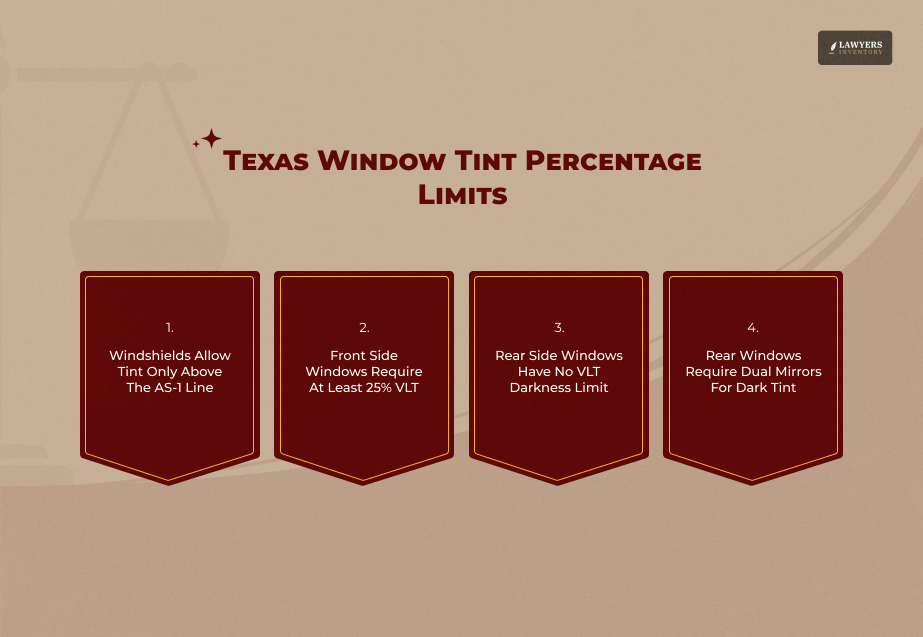
In Texas, the law is very strict about the front windshield. The only area where you can apply a tint is the top five inches or above the manufacturer’s AS-1 line.
This area is also required to be 25% VLT in order to comply with the Texas law (Texas Transportation Code).
Front Side Window Restrictions
For the windows beside the driver and the front passenger, the legal limit of the tint in Texas is exactly 25% VLT. This means that if your film is too dark, you will not pass your state inspection.
Some people wonder what the darkest legal tint is for the front side windows. The answer is that the darkest legal tint is 25% VLT with the film and the windows combined.
Reflectivity And Tint Color Rules
Even if your VLT is correct, your film must follow reflectivity standards to be considered a Texas legal tint. Excessive reflection can create a dangerous glare for other drivers on the highway.
Limits On Solar Reflectance
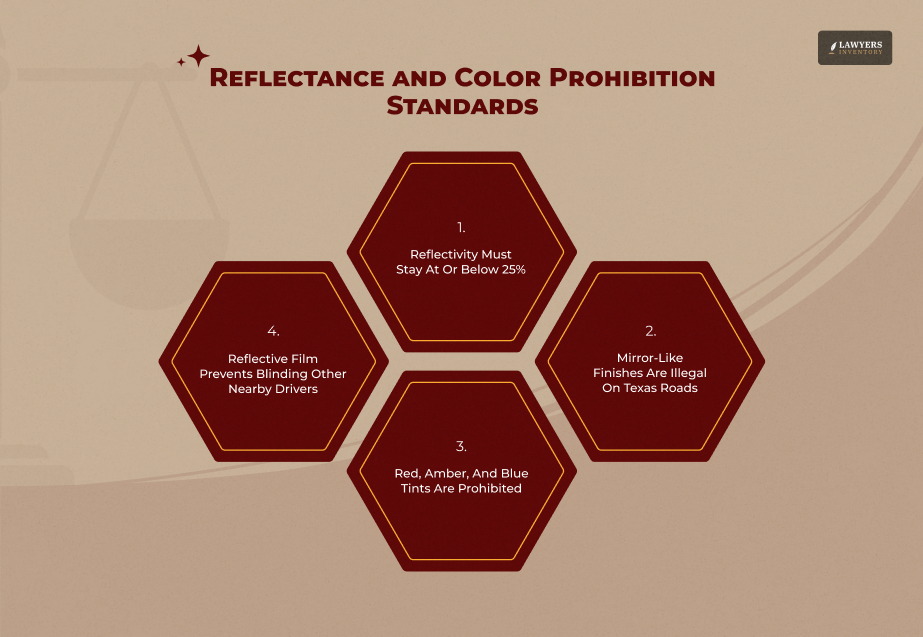
Texas restricts any type of tint that is more than 25% reflective. This is to ensure that your car is not mistaken for a mirror in the Texas sun. If your windows are too shiny, then you do not have legal tint here.
Prohibited Window Tint Colors
There are certain colors that have been banned by the state, especially if you want them to be legal.
You cannot have any red, amber, or blue tinting on your windows. This is because these colors interfere with emergency signals.
The legal tint in Texas may vary depending on the type of vehicle. For instance, the tint may vary for sedans and larger vehicles such as SUVs. The law offers more leniency for vehicles classified as “multipurpose.”
Read Also: Texas Built Construction Lawsuit Explained: Rights, Remedies, And Legal Truths
Tint Rules For Sedans And Coups
The front side windows of regular passenger vehicles must comply with the 25% VLT. Although the rear window may be darker, it must allow for visibility when the vehicle does not have dual side mirrors. It is important to have a legal tint for such vehicles.
Standards For SUVs, Trucks, And Vans
Multipurpose vehicles may have the rear window tinted by the manufacturer and may be quite dark.
The law allows for this type of vehicle to have any darkness for the rear side and back windows. The front side window must still comply with the legal tint under the Texas standard.
Texas Window Tint Laws For Different Vehicles: Medical Exemptions For Window Tint
Certain drivers may have medical conditions that necessitate them to be away from the direct rays of the sun. There is a legal solution for such people in the state of Texas to have a darker film compared to the legal tint in Texas.
Conditions Qualifying For Exemptions
You may have medical conditions such as lupus or a sun allergy that may qualify you for an exemption.
A medical practitioner must state that the legal tint in Texas is not sufficient for your medical requirements. This allows you to have a film that is below the standard 25% VLT limit safely and legally.
Documentation Requirements
You must have a signed statement in the vehicle to be able to claim an exemption. This statement must be presented in case you are stopped by an officer for verification of legal tint in Texas.
Penalties For Illegal Tint In Texas
Driving without a legal tint in Texas may result in a number of adverse consequences. Police officers are actively searching for dark windows during routine patrols and traffic stops.
Traffic Stops And Citations
If the police officer suspects that the tint is too dark, they may use a tint meter to test the VLT. If the VLT is below the legal tint limit in Texas, you may be issued a citation.
Transition words such as “consequently” or “furthermore” are sometimes used by legal experts to explain how you may be issued additional legal problems.
Impact On Vehicle Inspections
You must pass a vehicle inspection every year in order to renew your vehicle’s registration. You must also have your windows inspected. If you do not have legal tint, you must remove the film before the state will clear your vehicle for the road.
Best Legal Tint Percentages For Texas Drivers
The right film can help you achieve a legal tint in Texas while rejecting as much heat as possible. Many professional installers recommend certain films that look great and remain legal.
Why 30% Film Is Often Recommended For Front Windows
While the Texas legal tint is only 25%, it is recommended by many installers that you use a 30% or 35% film. This is because your glass already has a slight tint from the factory. This way, you can be sure that it will remain a legal tint in Texas when installed.
Recommended Combinations For Privacy
Many people opt for a “staggered” look. They use a legal tint in Texas of 25-30% on the front, but a much darker film on the back. This gives you the most privacy for passengers while maintaining a legal tint in Texas for the driver.
Types Of Window Tint And Their Benefits
Not all films are created equal if you are looking for a legal tint in Texas. The film material is what gives you an indication of how much heat is blocked and how long it lasts.
Dyed And Carbon Window Films
Dyed film is the most cost-effective but will eventually fade. Carbon film is longer-lasting and does not interfere with cell phone signal transmission. Either film is good for getting a legal tint in Texas and providing you with some level of privacy.
Ceramic Tint – The Best Choice For The Texas Climate
Ceramic film is the crème de la crème for the Texas climate. This film blocks up to 99% of the UV rays and IR heat without having to be “limo dark.” This means you can have a legal tint in Texas and still keep your car cool in the July heat.
Federal And State Laws
The legal tint in Texas is determined through state laws as well as federal safety regulations. State laws regulate VLT limits, but federal laws regulate the manufacturing of the glass.
Texas Transportation Code Section 547.613
This is the main state law that determines the legal tint in Texas. This law clearly indicates that a person commits an offense if he/she drives a motor vehicle with treated windows that have a light transmission of less than 25%. This law also indicates the AS-1 line requirements on windshield windows.
Federal Motor Vehicle Safety Standards (FMVSS)
The federal government has regulations regarding automotive glass through FMVSS 205. This law does not determine the legal tint in Texas. However, it ensures that every window of a vehicle meets minimum clarity as well as strength requirements.
This means that manufacturers have to ensure their products meet safety thresholds before they are available to customers.
FAQs: Window Tinting In Texas
Drivers often have particular questions about how to have legal tint in Texas. These answers provide solutions to common questions about this topic.
Yes, you can have 5% tint on the back side and back windows of any vehicle, as long as you have dual outside mirrors. This gives you maximum privacy while adhering to legal guidelines about legal tint in Texas.
Yes, if you don’t fix your illegal tint, you’ll have a permanent record of driving without legal tint in Texas. However, if you get rid of your illegal tint and show proof to the court, your ticket will be dismissed.
No, Texas is quite strict about using uniform tints, meaning there should not be any kind of pattern that could interfere with a driver’s line of sight. Therefore, using such a tint would not only go against what is required to have a legal tint, but it would not be legal.
Leave A Reply






Hung Jury vs. Mistrial: What Is The Difference And Why It Matters
Read More
NarodniyDimUkraina: An Overview Of The Kyiv-Based Brand Preserving Ukrainian Craftsmanship
Read More
What Is A Mistrial? Legal Definition, Causes, And What Happens Next
Read More
What Is A Sequestered Jury? Legal Definition, Process, And Everything You Need To Know
Read More
What Is A Hung Jury? Legal Definition, Causes, And What Happens Next
Read More
0 Reply
No comments yet.