Theories about Epstein Files Cannibalism became extremely popular on social media sites last year, raising a great deal of public outcry.
With thousands of pages of court documents being released to the public in the years 2024 and 2025 regarding Jeffrey Epstein, a number of Internet celebrities have started making sensational statements. The documents do not list any form of rituals and diet involved in the case at hand.
The topic of legal interest in the first quarter of 2026 has changed, as attention was paid to the process of spreading false information on the Internet.
A number of people who are featured in the files are contemplating initiating defamation actions against those who promoted the idea of Epstein Files Cannibalism. Legal battles have been initiated by these celebrities since mid-2025.
In this article, we will elaborate on the following.
- The origin of the viral Epstein Files Cannibalism claims.
- The legal difference between court facts and internet rumors.
- Federal and state laws regarding defamation and digital speech.
- Significant case laws that impact the spread of misinformation.
The History And Reality Of The Jeffrey Epstein Case
Jeffrey Epstein was a rich financial guru whose huge capital helped him build an extensive network of power and influence.
He was involved in the trafficking racket in which Ghislaine Maxwell played an integral part as his main partner.
The claims against Epstein started in the early years of the century in Florida, which resulted in a non-prosecution plea deal in 2008.
The Legal Defense Teams
Both Jeffrey Epstein and his accomplice Ghislaine Maxwell managed to hire the best lawyers in the United States.
Prominent attorneys, such as Alan Dershowitz and Roy Black, acted as defenders of Epstein’s first prosecution case in Florida.
On the other hand, lawyer Mark Cohen became the chief defense attorney for Ghislaine Maxwell in her federal court case held in 2021.
Fact Vs. Fiction In The Epsteins Files Cannibalism Case
While the facts about the Epstein Files Cannibalism claims are entirely false, there were several shocking truths revealed during the trials.
It is true that Jeffrey Epstein had a private island and a private plane called the Lolita Express. The ritualistic claims and the Epstein Files Cannibalism accusations remain unsubstantiated by the unsealed documents.
“Spotting” Epstein Post-Death
After Epstein passed away in 2019, a number of sightings on social media emerged, including people who claimed to see him in South America and on private islands. These pictures are usually of very poor quality and involve lookalikes of Epstein.
In recent times, there has been a trend of Instagram reels where he supposedly confesses to his crimes. These videos are virtually always created by using artificial intelligence techniques to make deep fakes of Epstein’s voice and face.
Exploring The Source Of Viral Conspiracy Theories
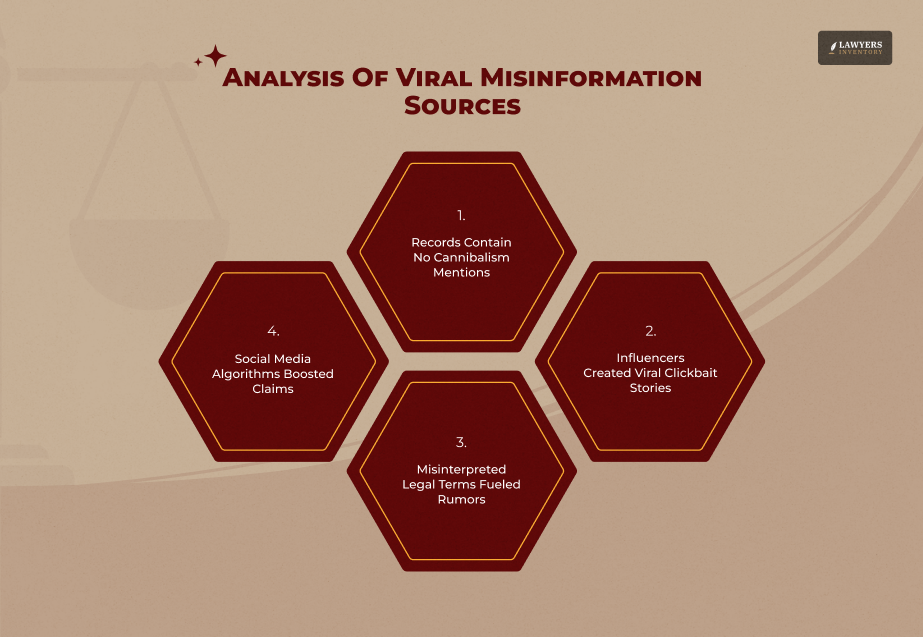
Epstein Files Cannibalism is a hoax that appeared not long after the release by the court of thousands of pages of deposition and records. Many authors created the story out of these papers without providing a single piece of evidence to support their point.
Release Of The Unsealed Documents
After the records became public for the first time, the general audience could read numerous testimonials of survivors. They spoke on topics of sex trafficking and corruption of the financier’s circle.
There is no reference to Epstein Files Cannibalism in the court transcripts or evidence boxes opened at the time of the release.
Spread Of False Information On Social Media
False claims related to the Epstein Files Cannibalism narrative rely on “misinterpreted” or out-of-context statements, sources say.
“Regarding the allegations of cannibalism, investigations by the U.S. Department of Justice have yielded no information or evidence to support such claims. There is absolutely no proven link between Jeffrey Epstein and any cases involving “cannibalism.”
What is the truth?
The images in question are behind-the-scenes stills from the 2007 horror film “Thanksgiving.” The scenes depict a cannibalistic feast staged as a twisted parody of a traditional Christian Thanksgiving dinner and hold no connection to the Epstein files.” – “Cannibalism party” in alleged “Epstein files” images revealed as footage from horror film
Some social media influencers may combine the names found in the records with fictional activities to attract more followers. Such a move attracts tremendous traffic but also constitutes a violation of terms and conditions of many websites.
High authority news websites have already addressed these claims.
Laws On Defamation And Speech
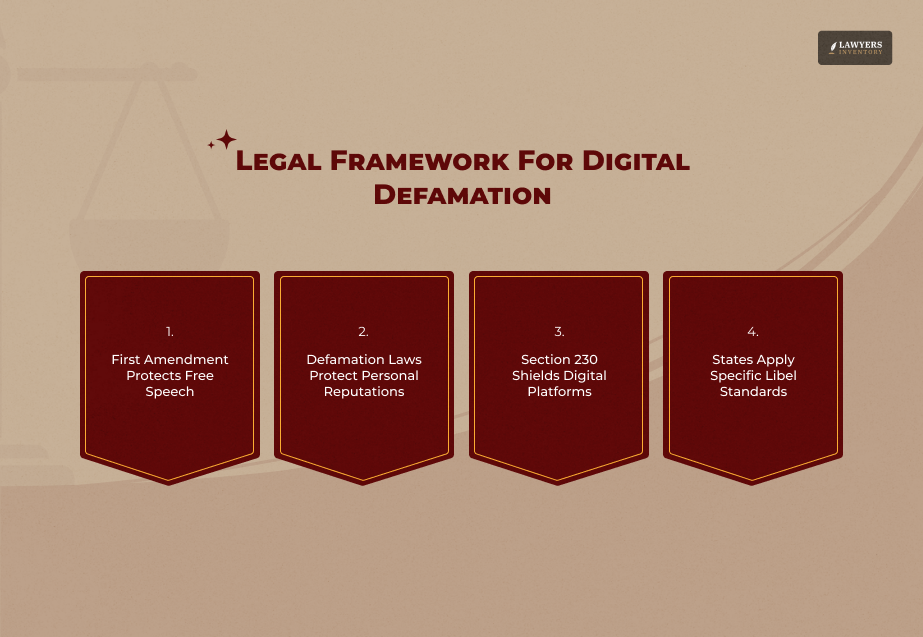
However, the popularity of the Epstein Files Cannibalism theory presents crucial issues regarding the First Amendment and protection from libel cases.
There is no doubt that the US Supreme Court and all state courts offer strict standards to avoid libel against people.
Defamation In Today’s World
A lawsuit on defamation will likely be filed against those spreading the Epstein Files Cannibalism allegation. In this case, the plaintiff will need to demonstrate that the information is untrue and harmed his reputation.
Since celebrities are typically involved, the “actual malice” doctrine will be used. According to it, the individual who spread the Epstein Files Cannibalism theory knew that it was false or acted without care.
Section 230 of the Communications Decency Act
There is an important provision in the federal legislation, which shields social media platforms like X or Facebook from lawsuits due to the material posted by their members.
As a result, the Epstein Files Cannibalism claims stay active online for months. Nevertheless, the individuals responsible for creating the content lack such immunity.
Most lawyers try to find the most influential figures sharing the Epstein Files Cannibalism theory and earn money from ads or subscriptions. (Source: NYTimes)
State Libel Laws And Damages
Each state has its own law on the maximum possible damage in defamation cases. For example, in Florida and New York, individuals defamed with Epstein Files Cannibalism allegations can request punitive damages.
Such damages will punish the defamer to make sure he will not commit such acts in the future. During further hearings in 2026, judges are going to examine the amount of profit gained by influencers as a result of posting their versions of lies.
Effect Of False Light Allegations
Apart from defamation laws, false light laws also work in favor of victims. It is possible to claim compensation based on the fact that an online message about an individual is implying some false facts.
False light laws allow to get damages even if the statement does not present a factual falsehood but creates misleading impressions. It means that those mentioned in the official papers can sue defamers for the use of their names in connection with Epstein Files theory.
Landmark Case Laws Regarding Public Figures And Rumors
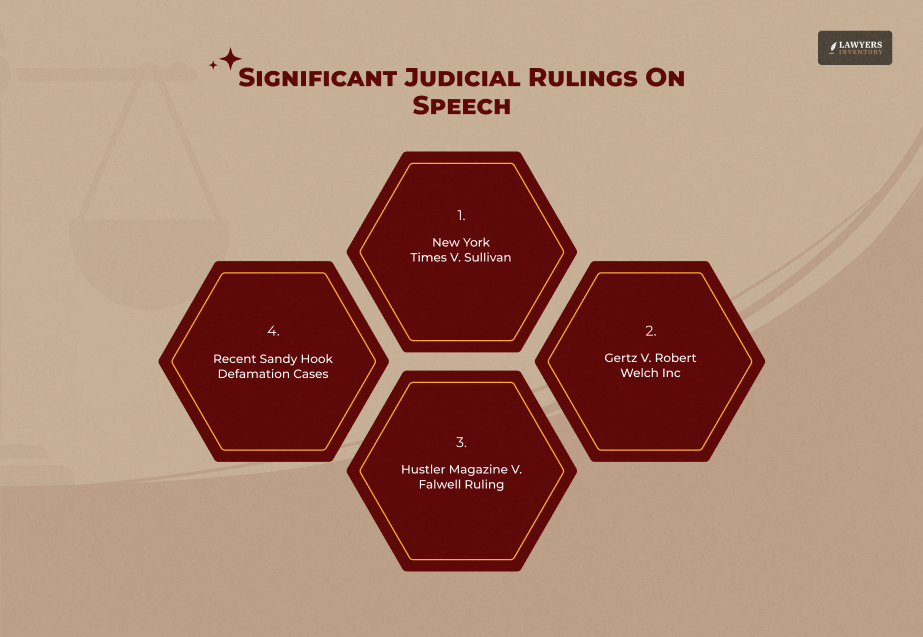
The precedent of cases that helped to determine a proper reaction to the Epstein Files Cannibalism hoax includes several rulings that determine the limits of free speech on public figures within the context of the mass media.
New York Times V. Sullivan (1964)
This precedent is especially important for anyone speaking about Epstein Files Cannibalism allegations. The New York Times V. Sullivan established a requirement to demonstrate a high degree of malice in order to be qualified as libel by a public figure.
While protecting the freedom of discussion, it does not offer a “get out of jail card” for those fabricating the Epstein Files Cannibalism story. This was done to guarantee people’s ability to discuss matters publicly without fearing numerous libel suits.
The Impact Of Recent High-Profile Defamation Trials
In recent years, defamation lawsuits such as those concerning Alex Jones’ conspiracy theory have shifted the way that people perceive rumors such as the Epstein Files Cannibalism.
People realize now that promoting conspiracy theories may lead to multi-billion-dollar judgments.
During their work with clients involved in the document controversy, lawyers typically use those lawsuits to warn influencers against using the Epstein Files Cannibalism narrative for financial gain.
The Social And Legal Consequences Of Misinformation
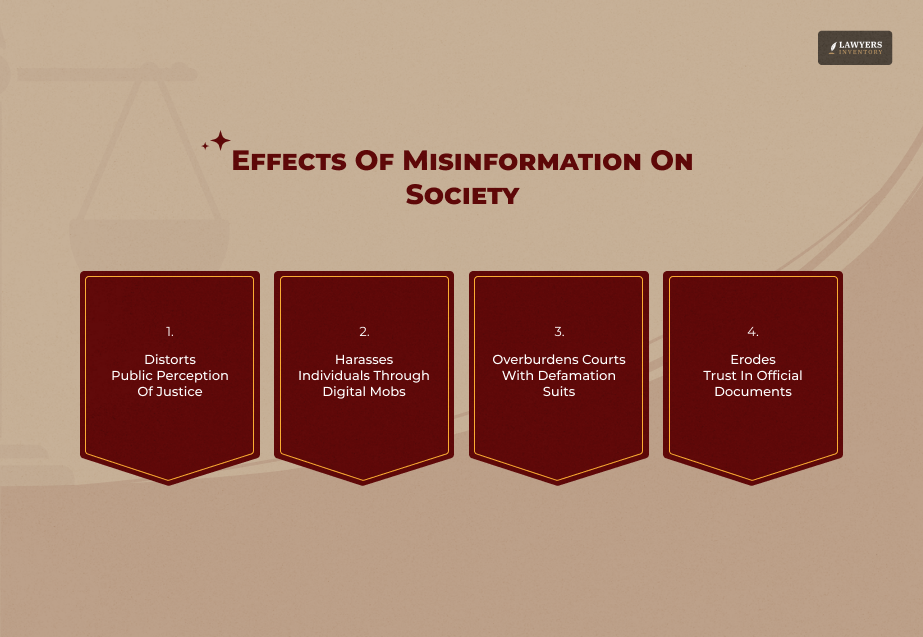
The Epstein Files Cannibalism theory affects not only public opinion but also the judicial process itself. When jurors learn about the Epstein Files Cannibalism narrative online, it may influence their objectivity while dealing with real cases in court.
Harassment And The Digital Mob
Those who support the Epstein Files Cannibalism narrative usually engage in doxxing and harassment campaigns against those who are named in the documents.
Such practices create an environment in which legal battles go beyond the courtroom and take place on the street.
The Epstein Files Cannibalism narrative pushes people to react to false news, which inevitably results in threats to the victims.
Preserving Court Records Intact
Unsealed documents offer an opportunity for many victims to seek justice through legal means. However, the Epstein Files Cannibalism narrative may overshadow the real crimes of sex trafficking in public discussions.
Attorneys claim that such narratives distract the audience from the reality of the situation and make them believe in myths rather than pursue the real perpetrators.
Read Also: Why Didn’t Biden Release The Epstein Files? The Legal, Political, And Practical
Frequently Asked Questions (FAQs):
Knowing what’s true about the Epstein Files Cannibalism theory is vital for all citizens who obtain their news via the Internet.
These queries tackle the most pressing issues surrounding the papers and the ramifications that can come after sharing rumors.
Not at all. The court documents do not mention cannibalism whatsoever and only focus on the sexual trafficking issue.
In short, yes. Posting content that falsely accuses someone may result in a defamation suit.
The reason why people continue to spread these stories is simple – it results in many views and earns a lot of money.
Leave A Reply






What Happens In A Mistrial? And What Every Defendant Needs To Know Immediately After
Read More
What Happens If A Jury Is Hung Twice? The Legal Answer Explained
Read More
Voyeurism As A Crime In The UK: Law And Legal Consequences Explained
Read More
What Is Wanton Endangerment? Is The Breonna Taylor Case Related To It?
Read More
How Can Criminal Identity Theft Occur And Your Legal Standing
Read More
0 Reply
No comments yet.