Summarize using AI





Prompt copied. Paste it into Gemini.
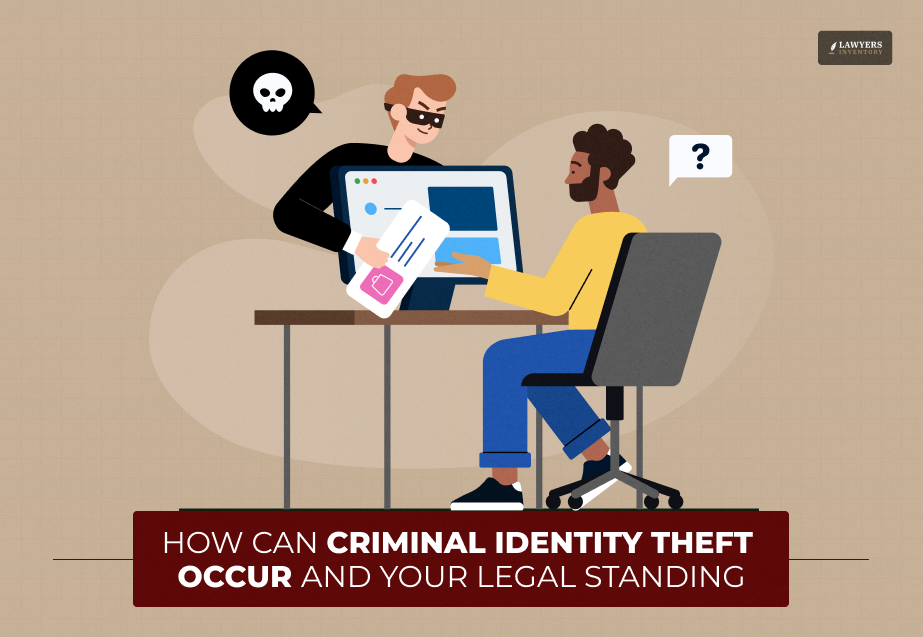
Understanding how criminal identity theft happens will be one key to securing your liberty and reputation from being violated.
The occurrence of criminal identity theft occurs whenever a person gives your personal details to law enforcement officers upon being apprehended for a certain crime.
In this manner, they manage to create a fraudulent criminal history in your name for a crime that you did not commit at all.
As a matter of fact, there are changes happening in the law scene with regard to the enactment of the 2026 “Stop Identity Fraud and Identity Theft Act”.
In this article, we will elaborate on the following:
- The fundamental mechanics of how can criminal identity theft occur during police encounters.
- Federal and state statutes governing identity crimes in the United States.
- Real-world case laws involving misidentification and police records.
- Practical steps for victims to petition the court and clear their identity.
The Mechanics Of Criminal Misidentification In Law Enforcement
The perpetrator will steal an ID or remember personal data in order to avoid his/her previous crimes when arrested.
Here is precisely how can criminal identity theft take place if there are no physical documents, only data that belongs to you.
When the police officer books a criminal, he uses all the information available in the case. When the criminal mentions your name and date of birth, your identity is used for this booking process.
Stolen Physical Papers And Driver License
Theft of physical papers such as a driver’s license is perhaps the clearest example of how can criminal identity theft be committed.
It happens in traffic stops because the photo might not be noticed by the officer, and your citation will appear in your record.
Verbal Deception By Mentioning Personal Information
It happens that criminals remember social security numbers or addresses of people they know and use these credentials to cover themselves up.
That is one of the ways how can criminal identity theft be committed without any physical documents being taken.
The Role Of Silent Warrants In Victim Discovery
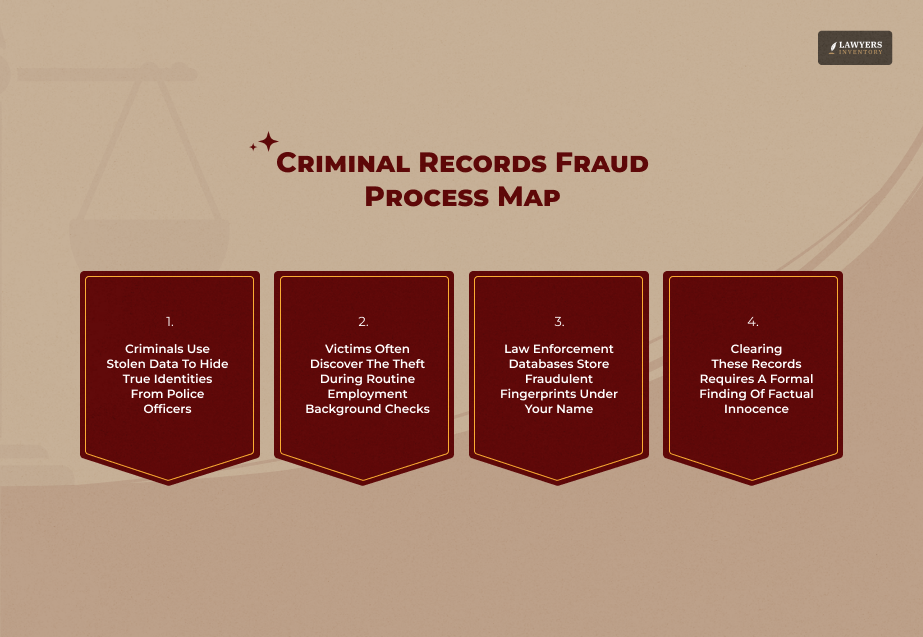
Many victims only learn about the theft when they are rejected for a job or arrested during a routine stop. These “silent warrants” exist because the imposter failed to appear in court for the original fraudulent charge.
Federal And State Laws Regarding Criminal Identity Theft
There are different ways in which the American legal system defines how can criminal identity theft take place.
The legislation aims at deterring fraudsters and ensuring that victims have legal options when seeking restitution.
The federal laws are mainly geared towards dealing with the abuse of identity documents, whereas the state laws tackle the correction of the local registries.
Identity Theft And Assumption Deterrence Act
According to the Federal Trade Commission, the identity theft and assumption deterrence act is a federal statute that criminalizes the transferring and utilizing an individual’s identification data. This statute is codified under section 18 U.S.C. § 1028.
Specific State Statutes And The Victim’s Rights
Most states have their respective code laws that deal with identity theft according to the peculiarities of their jurisdictional regions. The statutes also include clauses that ensure that any record related to identity fraud is expunged.
Illinois Identity Theft Act Provisions
According to the Illinois statute, 720 ILCS 5/16-30 deals with the criminalization of the obstruction of justice through the use of another person’s identification data. The act allows the victim to apply for a finding of factual innocence to clear their record.
Comparison Of Legal Definitions Of Factual Innocence And Expungement
While expungement normally hides information about one’s record, a finding of factual innocence establishes that the record was wrongfully kept in the first place. This aspect is crucial when fighting against the effects of criminal identity theft.
Analysis Of Precedents In Court Cases Regarding Criminal Identity Theft
Cases serve as examples of the damage caused by criminal identity theft and reveal how can criminal identity theft happen due to errors made by authorities. Such precedents assist in proving that false information needs to be purged from all governmental records.
Recently filed suits emphasize the need for verifying the identity of arrested individuals, both by the government and private organizations.
People v. Crawford
In the case of People v. Crawford (131 Cal. App. 3d 591), an unusual issue concerning identity and possession was discussed. This case exemplifies how can criminal identity theft happen when officers arrest a suspect based on circumstantial evidence obtained in the process of searching someone’s premises.
Graham v. State
In the case of Graham v. State, the court clarified how can criminal identity theft happen during criminal trials by discussing the burden of proving that the defendant was the perpetrator.
2025 And 2026 Class Action Litigation
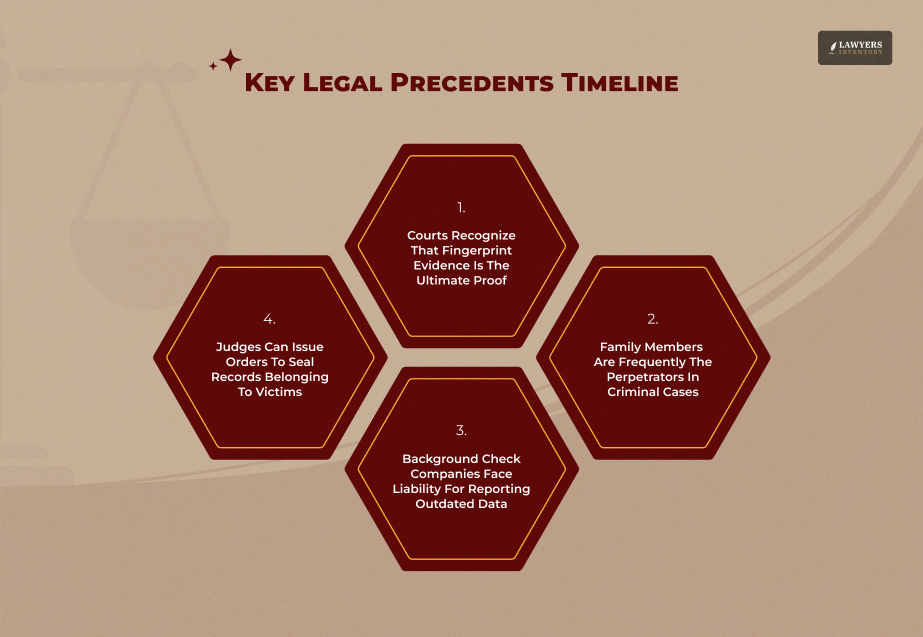
In early 2026, several class-action lawsuits targeted background check firms for failing to update records after a victim proved identity theft.
These cases show how can criminal identity theft occur as a persistent digital shadow even after police clear the name.
The Intersection Of Employment Fraud And Criminal Records
How can criminal identity theft take place when the perpetrators use job opportunities in an attempt to circumvent employment screening processes?
They may commit crimes related to Social Security theft to secure positions that they would not qualify for otherwise.
Your employer may see the crimes committed at your place of work by a person using your name, resulting in the addition of a “ghost” criminal record to your official file that surfaces whenever you try to apply for a job.
Effects On Professional Licenses And Security Clearance Applications
Victims of such criminal identity theft often only realize the extent of the crime once they try to join health care or educational facilities where such information is screened beforehand.
Tax Consequences Due To False Wages
The Internal Revenue Service will notify you if any taxes become outstanding as a consequence of your false earnings reported to the agency by a person impersonating you through criminal identity theft.
Biometric Security And The Future Of Identity Law
Technological developments that occurred in 2026 have affected how can criminal identity theft occur because of the use of deepfakes and artificial intelligence. Law enforcement is turning towards biometrics due to how easily someone’s identity can be verbally misrepresented.
The new government policies, like the “Combatting Cybercrime” executive order in 2026, put emphasis on punishing AI-based fraudulent activity. This approach is intended to limit the possibility of an individual posing as another person online or in real life.
The Rise Of AI And Synthetic Identity Theft
In synthetic identity theft, real personal information is mixed with false data to create an entirely new profile.
This technique is becoming more common in how can criminal identity theft occur since it manages to fool the employer’s digital onboarding process.
Facial Recognition Technology Requirements At The Federal Level
Government organizations are introducing liveness checks to guarantee that the digital identity actually belongs to a living human being.
These new requirements are necessary for preventing the propagation of identity theft within federal benefits programs.
Legal Procedures For Victim Recovery And Name Clearing
To be exonerated from your case, it entails the filing of a legal petition within your local courts.
It starts by knowing how can criminal identity theft take place to help you put together a petition for the “Certificate of Innocence.”
It includes going through the process of comparative fingerprint identification to prove that you did not commit the crime.
Petitioning For A Certificate Of Factual Innocence
In some cases, such as in California, one can file a case requesting the judge to issue an order that one was “factual” innocent.
In addition, this court order instructs all government agencies to destroy or seal their records on identity theft.
How Can Criminal Identity Theft Occur Using The FTC Affidavit?
It is important for the victim of identity theft to have a copy of the Federal Trade Commission’s identity theft affidavit.
Frequently Asked Questions (FAQs):
Understanding how to navigate after an identity theft involves knowing specific information related to the legal process and police practices.
Below are several questions that address issues of how can criminal identity theft happen and its consequences legally.
Criminal identity theft is a crime wherein the perpetrator does not even have your ID card but manages to use it against you.
This is possible because the identity thief might have purchased your Social Security Number on the dark web and used it to answer during a booking procedure.
It is possible for someone to clear their name even when the thief was never caught. All you need to show is that you are not the individual charged.
You should immediately hire a lawyer and ask for a comparison between your fingerprints and those of the individual whose name was used to issue the arrest warrant.
In criminal identity theft, you may be stopped at the airport when you go through the security check or when crossing national borders. In such cases, you need to seek an Identity Theft Passport from your state.
You might have a case against your employer if he or she did not take the necessary steps to verify the identity of the thief before employing him or her.
You will have to attend a judicial proceeding to prove your factual innocence by presenting evidence to demonstrate that you never committed the criminal activity.
Though you may apply for a new Social Security number, the process is extremely complicated. It is highly recommended to get a permanent fraud alert and security freeze on your credit reports, rather than applying for a new number.
Leave A Reply







What Is Reckless Driving In Texas: Legal Consequences You Need To Know!
Read More
ROC Nation Kansas City Police Lawsuit: Exposing Police Misconduct And Corruption
Read More
Why Didn’t Biden Release The Epstein Files? The Legal, Political, And Practical
Read More
What Is The Epstein Files? A Primer On The 2025 Releases
Read More
Understanding The Core Differences Between Criminology Vs Criminal Justice
Read More
0 Reply
No comments yet.