
Summarize using AI





Prompt copied. Paste it into Gemini.
Listen to this article
Clio legal technology has emerged as the gold standard for lawyers wishing to digitize their processes by using cloud computing and safe handling of their data.
By April 2026, the whole digital legal tech community has been closely following the case of Clio vs. LegalTech Solutions, where Clio is suing for the rights related to the API system since late 2025.
The current court case points to the need for portability of data and open ecosystem access among other things.
Moreover, federal authorities have also been examining “Cybersecurity for Legal Services” principles which have an impact on how such platforms are working. Knowing this background is vital for any lawyer willing to remain competitive.
In this article, we will elaborate on the following:
- The historical evolution of cloud-based legal management.
- Core features and technical capabilities of the platform.
- Current litigation and federal regulatory impacts in 2026.
- Strategic benefits and competitive analysis for law firms.
- Future trends in legal automation and AI integration.
Quick Answer – What Is Clio Legal Software?
Clio is a web-based practice management application that streamlines operations at a law firm. This includes billing services, document storage, and customer acquisitions.
It maximizes productivity by reducing administrative burdens while providing secure access to client files from any location.
The History And Evolution Of Legal Tech Platforms
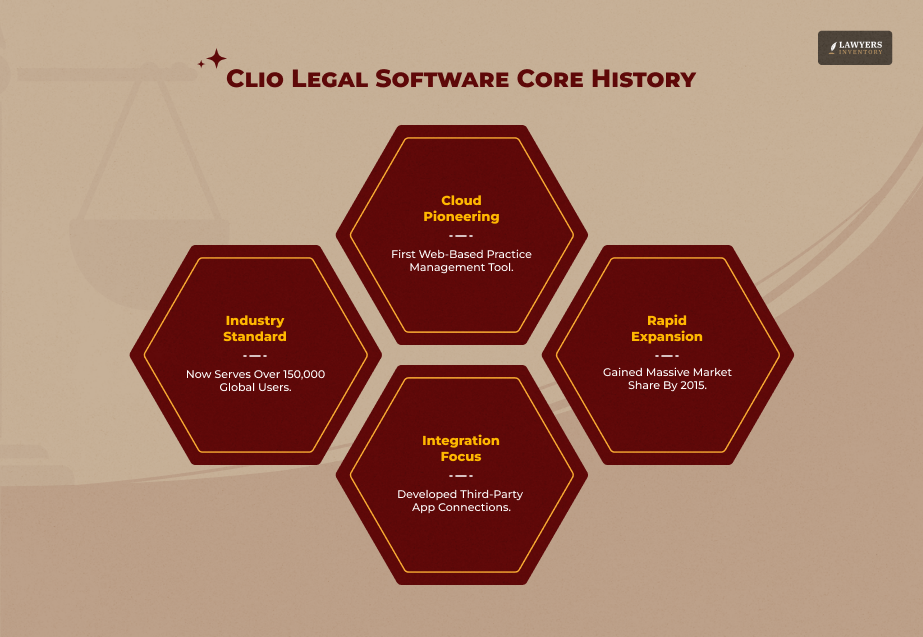
In addition to just having a desk and telephone to serve their clients, today’s legal practitioners require more tools to do this job well amid a rapid environment.
Clio legal software became available to the legal market in 2008 as a pioneer among other online services designed to solve the problem of chaotic operations in paper-oriented law offices.
From Physical Servers To Secure Data Storing In The Cloud
Law offices in their early days had to use pricey physical servers that required continuous technical assistance and maintenance.
The invention of Clio legal software revolutionized the industry by introducing the concept of using remote encrypted servers through subscribing to their services.
A Revolution In Legal Services: The Age Of Web-Based Practice
Lawyers could access information about a particular case or edit their billing information without being physically located in their offices.
How Firms Benefit From Clio Legal Software Usage
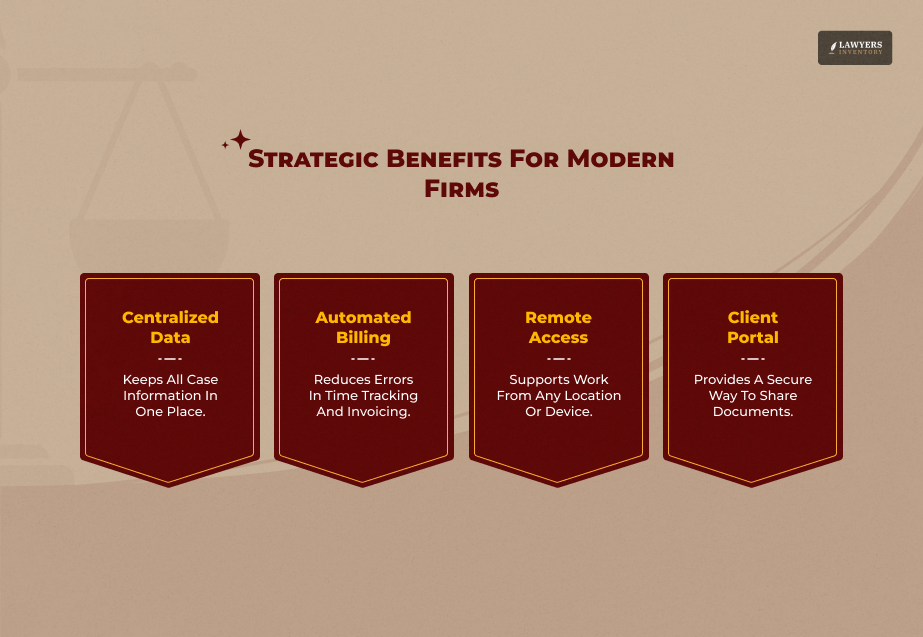
Legal firms use Clio legal software to ensure that their internal processes are more efficient while improving the client experience. This software serves as the central repository where all information about a particular case is collected and documented.
Increasing Efficiency By Automating Non-Billable Work
Legal professionals may spend most of their days engaging in activities that cannot be billed to their clients.
These non-billable activities lead to lower income and higher stress levels. However, Clio legal software helps automate administrative activities such as scheduling and time reminders.
Billing Accuracy And Higher Rates Of Collections
Time tracking manually may result in inaccuracies when billing clients or disagreements with clients over the actual amount of time invested in a particular case.
Time tracking capabilities included in the Clio legal software ensure that all billable time is documented instantly.
Legal Software Regulations

Using the Clio legal software is required to adhere to strict ethical standards set by state bar associations in terms of confidentiality and security of the information.
Federal laws such as the Electronic Communications Privacy Act also regulate the way in which cloud-based services should protect data.
Ethics Opinion On Cloud Computing By State Bar Associations
All state bar associations have issued guidelines for the use of cloud computing by attorneys. The majority of states permit the use of Clio legal software if a firm carries out due diligence on its protection protocols. (Source: Stanford)
Cybersecurity Measures In Line With The Gramm-Leach-Bliley Act
Law firms dealing in large-scale financial transactions for their clients are generally bound by financial privacy laws. Clio’s legal software uses the best encryption methods to ensure that the firm meets all federal regulations without setting up an infrastructure.
Case Law And Current Litigation In 2026
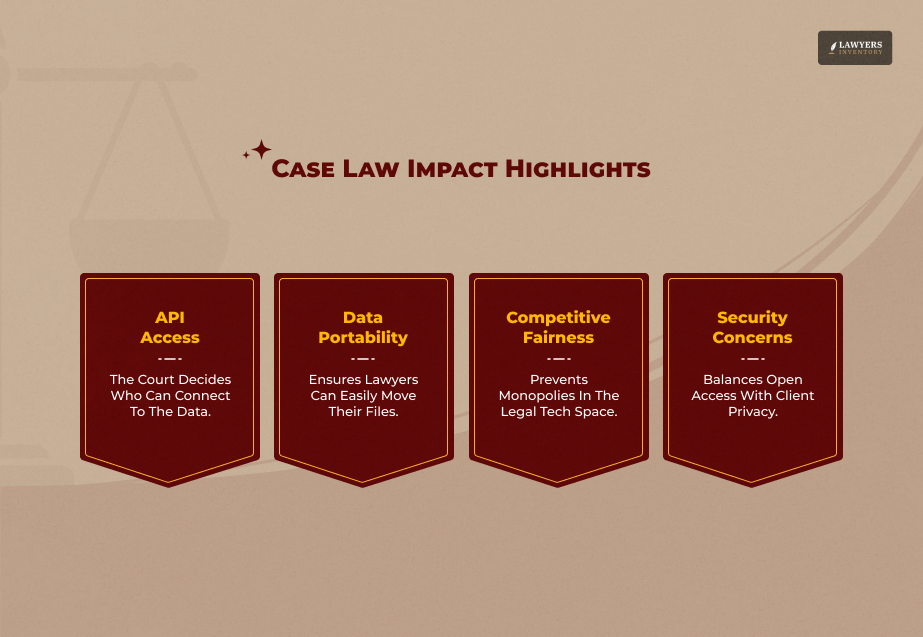
At the moment, there is increased debate on issues relating to software compatibility and user data sharing. It should be noted that Clio legal software is in the eye of the storm, with the court defining the future of the “open legal web.”
Analysis Of Clio V. LegalTech Solutions (2025-2026)
The legal action filed against the firm by a rival took place late in 2025. The legal battle involves examining whether a dominant platform has an option of restricting third-party integration as a result of the risk of losing the customer base.
Precedents In The Software Industry
The case is analogous to the case between Apple and Epic Games. The only difference is that this particular case involves sensitive issues in relation to data.
The ruling will have a bearing on whether Clio legal practice management software will allow all developers equal access to the platform backend.
Comparing Competitors In The Legal Practice Market
Even though Clio legal software is the market leader, there are several alternatives that have similar functionalities but cater to different practice areas or different sizes of the firm.
Selecting an appropriate platform demands thorough knowledge about the differences between them based on their pricing models and functionalities.
Analysis Of The Mycase And PracticePanther Competitors
The competitors like MyCase emphasize the importance of customer engagement, whereas PracticePanther highlights the customizability of the user interface.
Clio legal software distinguishes itself by having a huge “App Directory,” which enables thousands of integrations.
Specialized Legal Practice Software Programs
There are some law firms that rely on specialized legal software programs designed for personal injury or immigration practices. Still, most law firms choose Clio legal software because of its versatility to manage multiple cases in the same firm.
Clio Legal Software – Intelligent Workflows And Federal Compliant 2026
At this moment, Clio legal software is undergoing one of its largest transformations since going into the cloud.
This legal software shifts towards becoming a new-age, highly intelligent, artificial intelligence-based system.
Such development helps businesses process more cases while still complying with federal regulations.
It is essential to remain on top of these changes to stay ahead in the game for dominating the 2026 legal market.
An Intelligent Legal Work Platform And The Incorporation Of vLex AI
By early 2026, Clio rebrands itself as the “Intelligent Legal Work Platform”. This rebranding demonstrates how deeply integrated the vLex AI has become into the business’s everyday workflow.
Lawyers will be able to conduct sophisticated legal research right inside their matter files.
This upgrade of Clio legal practice management software gives lawyers a huge advantage.
With the help of this feature, the software suggests the relevant case law based on the document you are working on. Thus, firms gain hundreds of research hours per month.
Fulfilling Federal CIRCIA Requirements With Security Logging At The Core Of Your Practice
The new requirements introduced by CIRCIA in May 2026 mean that law firms will now have to report any major cyber incidents that occur within a 72-hour period to the federal authorities.
With Clio legal software, it becomes easy to comply with this new rule since it offers you an advanced system of security logging.
The software keeps track of all data access points, and every time a staff member tries to log in.
It has become necessary to monitor this information in order to report any cybersecurity breach in accordance with the federal mandates.
Clio For Enterprise: A Step Above “All-in-One” Apps for Large Law Firms
While there are a lot of other apps available on the market, Clio legal software stands out for a reason. When scaling up, many small firms find themselves unable to continue using simple applications with low data silos.
The same goes for managing users’ permissions. Clio legal practice management software has what “all-in-one” solutions do not: scalability and customizable settings that allow you to use your system effectively for many years to come.
Frequently Asked Questions (FAQs):
It is important to consider the technical and ethical implications associated with cloud computing services when working as a lawyer in today’s world.
These questions cover all the most common inquiries about Clio legal software at the present stage of its development in 2026.
Yes, the majority of state bars approve the use of cloud-based practice management, provided that there are guarantees from a law firm about its security.
The software uses bank-grade encryption and frequent audits to ensure the safety and confidentiality of client information in accordance with industry standards.
The company provides special migration managers who assist in transferring all cases and contacts stored previously on other systems.
All data remains fully yours, no matter what decision you make. It is possible to export your data in forms such as CSV or a PDF file. This is one of the main features that makes your data portable and does not allow organizations to become “locked in”.
The software uses 256-bit SSL encryption along with redundant server storage that avoids any data loss or illegal access. The service also provides 2FA for all customers. It is usually much more advanced than security on an ordinary local office server.
vLex integration makes it possible to find cases in your matter files.
Yes, the software offers centralized logging and can report any incident within 72 hours.
It provides better scalability and user-level permissions than its basic rivals.
An intelligent work platform automates research and decision-making through AI, rather than merely storing information.
Leave A Reply






Docketwise Cloud-Based Legal Case Managment Solution: Pricing, Features, And Benefits You Need To Know
Read More
Strategic Criminal Defense Marketing For Modern Law Firm Growth
Read More

Creating Engaging Legal Explainer Videos to Attract More Clients
Read More

0 Reply
No comments yet.