Summarize using AI





Prompt copied. Paste it into Gemini.
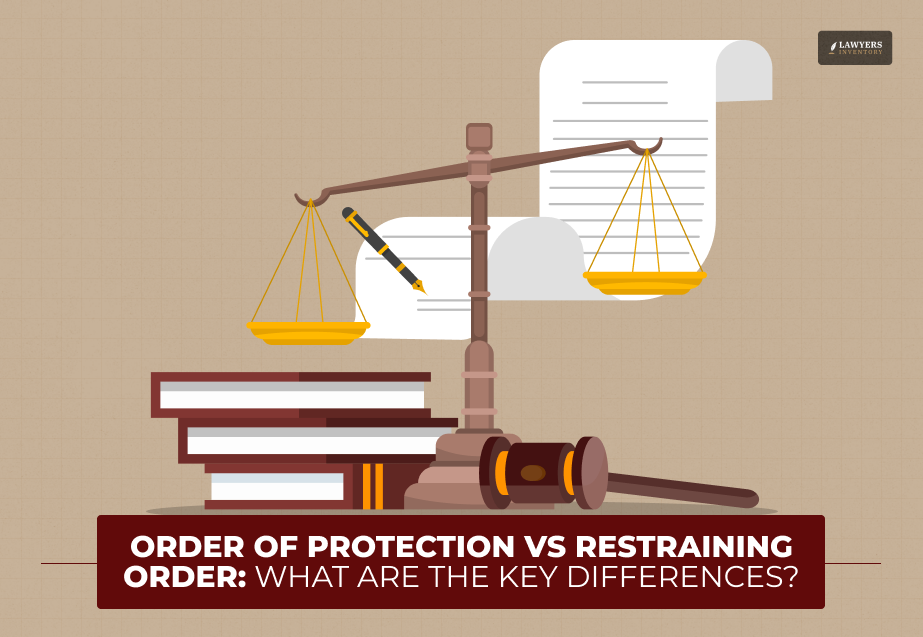
Quick Answer: Order Of Protection Vs Restraining Order

An order of protection is a specialized legal recourse that mainly targets victims of domestic abuse harassment stalking by family member, romantic partner, or a household member. A protective order however comes into play for those facing issues from people they are not relatives or close acquaintances of. For instance, in cases of conflicts between neighbors, coworkers, or even strangers, it can be issued. Besides, such orders are often linked to civil or criminal court matters.
A restraining order or an order of protection is a legal tool to protect individuals from threats, harassment, and harm.
However, people often use these terms interchangeably, and that is a mistake.
These two have different legal purposes, and their enforcement mechanisms are different. Also, these orders apply to different types of relationships.
Furthermore, Family law and civil harassment codes are governed at the state level. So, these orders depend on the application processes and definitions of where you stay.
While the orders and regulations vary by state, here are some order of protection vs restraining order differences.
Quick Summary:

An Order of Protection and a Restraining Order differ primarily in relationship requirements, the type of misconduct addressed, and the penalties for violations.

• Order of Protection: This order explicitly addresses domestic violence, stalking, or sexual assault. It requires a specific domestic or familial relationship between the parties. Violating it is usually a criminal offense.
• Restraining Order: This order generally handles civil disputes, financial matters, or property issues (such as during a divorce). It does not require a personal relationship. Violating it typically results in civil contempt rather than immediate criminal arrest.
What Is An Order Of Protection?
An order of protection is a specific type of court order that protects the victims from the following threats or attacks.
- Domestic Violence
- Sexual Assault
- Stalking
- Human Trafficking
Furthermore, this is a legal mechanism focusing on safety within familial, intimate, and household contexts.
Also, the § 812 Family Court Act (FCT) CHAPTER 686, ARTICLE 8, PART 1 mentions,
“Factors the court may consider in determining whether a relationship is an ‘intimate relationship’ include but are not limited to: the nature or type of relationship, regardless of whether the relationship is sexual in nature; the frequency of interaction between the persons; and the duration of the relationship.”
The Household And Family Requirement
Relationship requirement is the primary characteristic of an Order of Protection.
You cannot file an Order of Protection against a distant acquaintance or a random stranger.
To qualify, you have to share a specific domestic connection with the respondent. Usually, to qualify, you have to establish any of the following relationships.
- Current or former spouses.
- Individuals who are dating or used to date.
- People who share a child in common.
- Family members related by blood or marriage (parents, siblings, children).
- Roommates or individuals who currently or previously cohabitated.
Legal Grounds For Filing An Order Of Protection
To become eligible to file or obtain an Order of Protection, you have to demonstrate that a specific type of harm has happened or is imminent.
The evidence courts look for is:
- Physical Abuse
- Severe Emotional Abuse
- Patterns of Stalking
- Sexual Assault
- Harassment
- Credible Threats of Violence.
Overall, the core intent of the law is to break the cycle of domestic abuse by creating a legal barrier between household or family members.
What Is A Restraining Order?
A restraining order is a broader civil court directive. It commands an individual to maintain a designated physical distance from another entity or person.
The order can also ask you to stop a specific behavior.
Unlike the order of protection, it is essential to manage disputes between individuals who do not share a familial bond or intimacy.
“An injunction or temporary restraining order is an order from the court prohibiting a party from performing or ordering a specified act, either temporarily or permanently.
Also, the court may issue a protective order, including restraining orders or injunctions, to preserve the availability of property subject to civil forfeiture and to protect the interest of the United States in property subject to forfeiture.” (Source: U.S. Marshals Service).
Civil And Harassment Boundaries
As I have mentioned, a restraining order addresses non-domestic conflicts.
So, suppose you are facing harassment, stalking, or threats from someone outside your family or anyone you have had a romantic relationship with.
Then, a restraining order is the perfect legal exercise.
Moreover, the common scenarios involving restraining orders include disputes between:
- Neighbors are conflicting over property boundaries, noise, or intimidation.
- Coworkers or employers dealing with workplace harassment or threats.
- Landlords and tenants outside of normal eviction proceedings.
- Unrelated acquaintances, online stalkers, or business competitors.
Broader Non-Domestic Applications
Civil restraining orders are flexible. So, you can file them against entities and individuals.
For example, you run a business, and there is a disgruntled former employee or just an aggressive wrongdoer.
You can obtain a restraining order to stop that individual from entering your property.
The primary legal ground is proving a continuous pattern of harassment, distress, or financial and property interference that lacks a legitimate purpose.
Order Of Protection Vs Restraining Order: Direction Comparison And Key Legal Differences
There are major operational differences between an order of protection vs restraining order. There are also differences in filing fees, court venues, and what a judge can order.
The table below further gives you a clear idea about the differences.
| Legal Feature | Order of Protection | Restraining Order |
| Relationship Requirement | Intimate partner, family, or household member | Any individual, neighbor, coworker, or business |
| Primary Statutory Grounds | Domestic abuse, sexual assault, stalking | Harassment, property disputes, financial harm |
| Court System Venue | Family Court, Domestic Relations, or Juvenile Court | Civil Court, District Court, or Small Claims |
| Filing Fees and Costs | Free for victims of domestic violence or assault | Varies and requires civil filing fees and service fees |
| Violation Consequences | Immediate criminal arrest in most jurisdictions | Often requires a civil contempt hearing first |
| Child Custody Remedies | Can grant temporary custody and child support | No authority over child custody or family support |
| Firearm Restrictions | Federal and state laws routinely mandate firearm surrender | Firearm restrictions are rare and vary by judge |
Financial Accessibility: Filing Fees and Deferrals
While the comparison table notes financial variances, understanding the out-of-pocket reality is vital before approaching the court clerk.
Under federal guidelines, victims pursuing an order of protection for domestic abuse, sexual assault, or stalking face zero court fees.
However, filing a civil harassment restraining order routinely requires an upfront civil filing fee, often ranging between $200 and $400 depending on your jurisdiction.
Petitioners must also cover an administrative fee for the county sheriff or a licensed professional to execute service. If these expenses present a financial hardship, you are not locked out of the legal system.
You can submit a low-income fee waiver request alongside your petition, which prompts the judge to defer or eliminate all immediate legal costs. [Source: WomensLaw]
The Three Stages Of Court Orders
| Stages | Order Type | Timing and Issuance | Duration | Core Purpose | Due Process Level |
| First | Emergency Order (Ex Parte) | A same-day review by a judge, and the order is issued without notifying the respondent. | Typically 14 to 21 days (until the full hearing). | Provides immediate crisis intervention for active danger. | Minimal: Granted based solely on the petitioner’s paperwork. |
| Second | Temporary Order | Issued if the full evidentiary hearing must be delayed or rescheduled. | Short-term extension, and it bridges the gap to the next court date. | Maintains continuous safety if paperwork service or legal hiring takes longer. | Intermediate: Extends emergency terms while court logistics are finalized. |
| Third | Plenary / Permanent Order | Issued after a formal, evidentiary court proceeding. | Lasts 1 to 5 years (can often be renewed before expiration). | Establishes long-term, durable legal protection against the respondent. | Full: Both parties testify, present evidence, and call witnesses under oath. |
Service Of Process: Activating Your Legal Protection
An order of protection is not legally binding at first. It becomes active only after service. Most victims rely on these orders.
According to guidelines from WomensLaw, here are some of the rules:
- The certified server must deliver the court order.
- A law enforcement officer can do this.
- A deputy sheriff can also do this.
The respondent must receive the court order. This order provides formal notice. It states what they cannot do. It states how long the order lasts.
The police cannot make an immediate arrest for a breach before service. Service authorizes the police to act under the law.
The server must file the Proof of Service with the court. Only then does the legal protection begin.
Enforcement, Violations, And Consequences
The real-world protection offered by the order of protection and the restraining order depends on how the law manages the violations.
This is where the Order of Protection and Restraining Order become very different from each other.
Criminal Vs. Civil Enforcement Mechanisms
A judge signs an Order of Protection. Then, the copies enter into local and national police databases.
In almost every state of the USA, violating an Order of Protection is seen as an automatic criminal offense.
Furthermore, when the restrained person contacts the petitioner or comes within the prohibited distance, law enforcement has the statutory authority, and often a mandatory legal obligation, to arrest the violator on the spot, even if no new physical harm has occurred.
On the other hand, standard civil Restraining Orders often rely on civil enforcement mechanisms.
Suppose a neighbor violates a civil harassment restraining order. The police may not have the immediate authority to arrest them.
However, an immediate arrest by the police can happen if a state law specifically attaches criminal penalties to that type of order.
Usually, the petitioner returns to civil court and files a “Motion for Contempt.”
The court then schedules a hearing to determine if the violator should face fines or jail time for disobeying a judge’s directive.
Order Of Protection Vs Restraining Order: Remedies Beyond Physical Distance
The Order of Protection or the Restraining Order is not just an order to “Stay Away.” Judges can include specific conditions designed based on the nature of the dispute.
Family Court Interventions
Because Orders of Protection operate within the family court ecosystem, judges possess broad powers to stabilize a household crisis. A protective order can include remedies such as:
| Granting temporary exclusive possession of a home | Forcing the abuser to pack their belongings and leave, even if their name is on the lease or mortgage. |
| Temporary child custody and visitation schedules | Establishing strict boundaries to prevent the children from being used as leverage. |
| Ordering financial support | Requiring the respondent to continue paying rent, utilities, or temporary child support so the victim is not financially stranded. |
| Mandatory counseling | Ordering the abuser to attend anger management or domestic violence intervention programs. |
Civil Harassment Restrictions
Civil Restraining Orders stop problematic behavior and separate individuals.
However, a civil judge cannot award you the following:
- Child Custody
- Child Support Mandate
- Complex Domestic Property Issues
Rather, the judge orders remedies such as stay-away orders, meaning maintaining a specific distance or block from an individual’s home, workplace, or school.
They will also order an end to specific behaviors, such as recording video of a neighbor’s yard, posting defamatory content online, or calling a business repeatedly.
Moreover, they will direct individuals to stay off specific plots of land or commercial property.
Seeking Legal Assistance Safely
Navigating the court system while dealing with harassment or threats can be difficult. It is important to access the right resources to stay safe throughout the filing process.
For those facing domestic abuse, intimate partner violence, or control issues, the National Domestic Violence Hotline provides confidential support, safety planning, and local legal referrals.
To locate the correct court venue or understand local filing processes, individuals can use the National Center for State Courts Finder to connect with civil, family, or district court administrators in their specific area.
Leave A Reply







Is It Legal To Use True People Search? What Are Its Restrictions?
Read More
Case Is Being Actively Reviewed By USCIS – Meaning And Timelines
Read More
Refund Risk Under Income Tax Demand Notice Section 143(1) Summary Adjustments [A Complete Legal Assessment]
Read More
2026 Rules For The Legal Age Of Marriage In India
Read More
What Is A Wet Signature? Legal Guide And 2026 Rules
Read More
0 Reply
No comments yet.