Today’s topic: What does embezzlement mean?
Most of us are already aware that there are several types of crime one can commit. One of them is embezzlement. It is a specific type of white-collar crime in which a person who has access to someone else’s money or financial property steals or misuses it for their personal gain.
As per Britannica, “embezzlement occurs when a person gains possession of goods lawfully and subsequently misappropriates them.”
While this might look like a simple theft, it is, in fact, very different. That is because, in such a crime, the perpetrator generally has lawful access to the owner’s property. Therefore, when he/she commits the crime, it is basically a breach of trust.
In this article, we will break down the following things:
- What does embezzlement mean?
- How is Embezzlement detected?
- How to get out of an embezzlement charge?
- Expert tips and best practices when it comes to embezzlement charges.
Therefore, if these are a few things that you want to know, keep on reading this blog till the end…
What Does Embezzlement Mean?
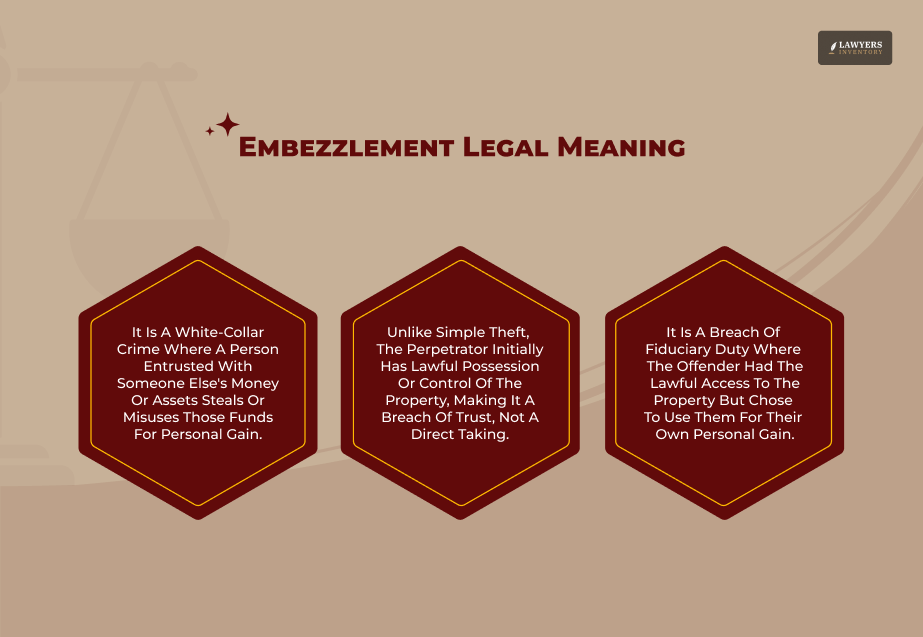
Embezzlement occurs when a person (or group) takes funds or property that is entrusted to them for one purpose and uses it for a different purpose. The person (or group) that takes the funds or property from the trusted party knows they are committing a crime.
However, the primary reason they commit the fraudulent act is to gain the benefit of having additional funds or property without the knowledge of the trusted party.
Embezzlement can occur in varying amounts of money or property, and therefore there are also varying criminal penalties, including substantial fines and imprisonment.
Embezzlement can have many negative impacts on the business’ financials, including the following:
- Loss of total assets.
- Disruptions in normal business operations.
- Unbalanced financial reporting.
- Breakdowns in the level of trust between the company and its stakeholders.
Ultimately, the financial crime of embezzlement negatively affects the company, and the breakdown of trust can often have a long-lasting impact on the business.
According to the Legal Information Institute, it “can occur regardless of whether the defendant keeps the personal property or transfers it to a third party.”
Trust is one of the foundations of business and customer relationships, so once that trust is broken, it can be extremely difficult to repair. Therefore, it is important for businesses to have a thorough understanding of their customers and employees.
Understanding Embezzlement Charges
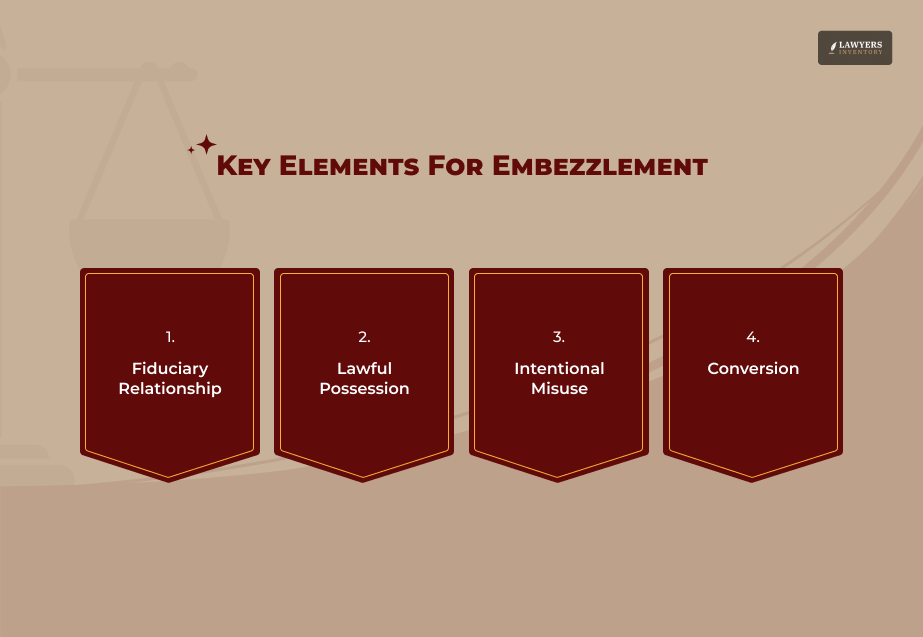
Embezzlement is an act of theft where a person takes money or property belonging to someone else that they have been given the responsibility to look after. This is done by breaking the trust given to them, as opposed to stealing.
It generally involves an employee, a senior manager, or someone in a position of responsibility, such as an accountant or financial adviser, who steals from the employer or other clients.
Furthermore, embezzlement is very different from stealing something in simple terms. For instance, an employee might remove money from a company bank account and then alter the financial records to hide the unauthorized removal of funds.
According to Hager & Schwartz P.A., the offender could face charges of a federal offense and be classified as a white-collar criminal if embezzlement involves the misappropriation of the following:
- Public funds.
- Banks.
- Employee benefit plans.
Therefore, they have much harsher penalties. A conviction for embezzlement can lead to several years in jail, large fines, and a requirement to pay back the embezzled money.
In addition to the legal ramifications, a convicted embezzler could face permanent damage to their reputation and limited career options, especially in jobs that involve overseeing money or other people’s assets.
Detection Of Embezzlement
There are several possible marketing flags to look for in your business that could create awareness about embezzlement issues that may arise in your company. Some of these items would include the following:
Changes in financial records without accounting for where the money has gone. A change in how someone handles records raises suspicion that they may be involved in embezzling funds.
- Employees who may act overly protectively of their job and prefer to work alone, and refuse to provide employee files or other employee records.
- Financial difficulties may be a strong indicator that there may be an issue that will arise in the near future, when a person finds themselves in need of funds and desperate for money.
- Lack of satisfaction with work, which may lead to a person believing they are justified in taking money to increase their income and support themselves.
- Missing or corrupted transaction records that cannot be explained by accident or by employee error.
The above items are just some red flags that need to be monitored. It is important to monitor multiple factors for verification of possible embezzlement, rather than focus on just one factor alone.
Employees often display different behaviors when there is more than one cause for concern. Moreover, behaviors that change over time are a clear indication of a more concerning trend than does normal behavior.
Penalties For Embezzlement
Penalties for embezzlement are vastly different according to the situation and the nature of the crime. Minor cases of embezzlement, in which an offender steals smaller amounts of money, may receive:
- A sentence of up to 1 year of imprisonment.
- Fines.
- Probation.
On the other hand, when it comes to serious cases, where large amounts of money were embezzled from municipalities or banks, offenders would receive substantial prison time (e.g., 20–30 years).
Additionally, penalties for federal embezzlement (Title 18 § 2125, 18 § 3722) can be up to a maximum penalty of 30 years in prison and large fines.
Not only are there legal ramifications from embezzlement. However, the damages done to the individual’s life go far beyond the punishment given.
Usually, a conviction results in a permanent criminal record and significantly restricts the ability to secure employment, especially in trusted positions such as finance or management.
Also, the stigma of being convicted of embezzlement may create emotional and financial difficulties. This often results in less-than-desirable relationships and economic hardship. Furthermore, in many cases, the offender needs to pay restitution to the victim.
How To Get Out Of An Embezzlement Charge? Legal Grounds
It can be difficult to understand your path when you face an embezzlement charge. However, knowing what the accusations are and understanding the legal implications can help you get out of it.
Here are some of the reasons or legal grounds on which your embezzlement charges can be dropped:
- Insufficient or weak evidence.
- Procedural errors.
- Plea bargains.
It is always best to get in touch with a skilled embezzlement lawyer. These legal professionals can help you identify the weaknesses in the defense that the prosecution has presented. Additionally, they will be able to negotiate with prosecutors regarding dismissal or reductions in charges.
Leave A Reply






ROC Nation Kansas City Police Lawsuit: Exposing Police Misconduct And Corruption
Read More
Ultimate List Of Criminal Defense Strategies To Win A Case
Read More
What Is The Difference Between Assault And Battery In Criminal Law?
Read More
How Will The Sean “Diddy” Combs Trial Affect The Rapper’s Future
Read More
Understanding the Romeo and Juliet Law: What is the Age of Consent in Texas?
Read More
7 Reply
Your Handy Guide To Disability Lawyers Pittsburgh PA!
March 30, 2024 at 7:07 am
[…] be it a case of embezzlement or for drafting a vendor contract, a lawyer is your best […]
ReplySeeking Justice In Kansas City: How To Choose The Right Medical Malpractice Lawyer
March 27, 2024 at 7:33 pm
[…] What Is Embezzlement, And When Do You Need A Lawyer For It? […]
ReplyWhat happens if you appear in court without a lawyer
March 26, 2024 at 10:51 am
[…] What Is Embezzlement, And When Do You Need A Lawyer For It? […]
ReplyHow To Successfully Navigate The Legal Process For Slip And Fall Compensation
March 16, 2024 at 6:59 am
[…] What Is Embezzlement, And When Do You Need A Lawyer For It? […]
ReplyDifference Between Negligence And Malpractice?
March 15, 2024 at 12:07 pm
[…] What Is Embezzlement, And When Do You Need A Lawyer For It? […]
ReplySolicitor Vs Barrister: What’s The Difference?
December 26, 2023 at 10:48 am
[…] Thus, these professionals are fully qualified as solicitors. So, you can hire them to look into an embezzlement claim or for business litigation. Moreover, they possess the same rights as barristers to represent […]
ReplyHow A Personal Injury Law Firm Can Help
October 28, 2023 at 11:28 am
[…] What Is Embezzlement, And When Do You Need A Lawyer For It? […]
Reply