Summarize using AI





Prompt copied. Paste it into Gemini.
Today’s topic: GM L87 Engine lawsuit!
The GM L87 Engine Lawsuit is a major legal challenge for General Motors following reports of engine failure.
Owners of vehicles with the 6.2-liter V8 engine report sudden stalling and total engine seizure. A safety hazard for drivers on the highway. Legal experts are pointing toward manufacturing defects.
They hold that the connecting rod bearings are the primary cause.
In early 2025, the NHTSA looked into about 900,000 vehicles. The result? An automotive recall in April 2025.
As of March 2026, the court has set a deadline of March 30, 2026, for GM to file defense motions. This timeline suggests that many owners remain in a state of uncertainty.
In this article, we will elaborate on the following:
- The core mechanical defects driving the GM L87 Engine Lawsuit.
- Federal and state consumer protection laws relevant to V8 engine failures.
- Recent news updates regarding the 2025 GM recall and the oil fix.
- Actionable steps for owners to protect their rights and seek recovery.
Mechanical Failures Behind The GM L87 Engine Lawsuit
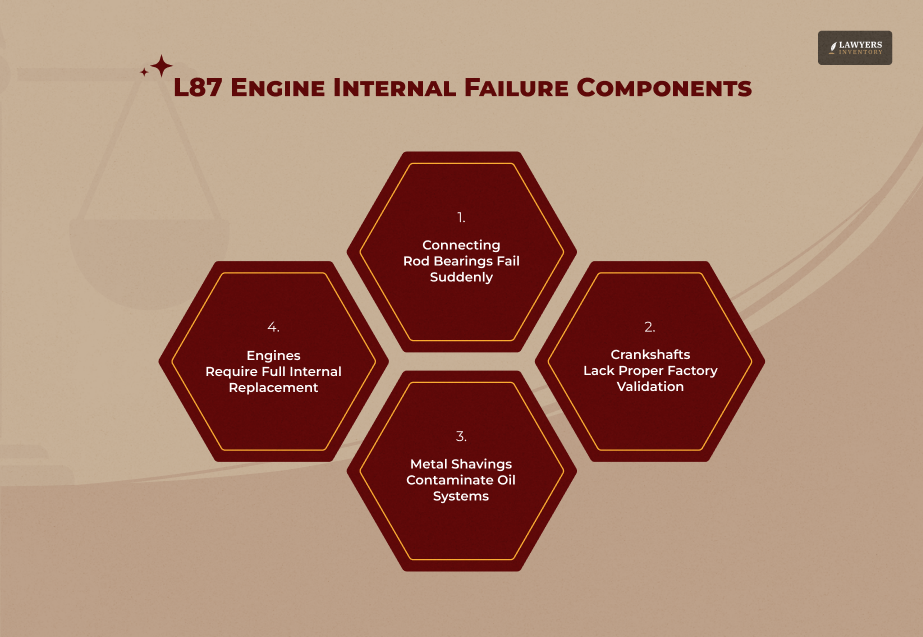
The GM L87 Engine Lawsuit focuses on a specific set of internal components that fail prematurely.
Plaintiffs argue that GM used out-of-spec parts that cannot handle the stresses of daily driving. This leads to the “spun bearing” phenomenon reported by many drivers.
Spun Bearings And Crankshaft Out-Of-Spec Issues
A primary allegation in the GM L87 Engine Lawsuit is that the connecting rod bearings fail. This happens because the crankshaft dimensions or surface finishes are incorrect.
When a bearing “spins,” it blocks oil flow and causes metal-on-metal contact. This effectively destroys the engine from the inside out.
Lifter Failures And Active Fuel Management Defects
Many owners also cite lifter failures in their GM 6.2L L87 Engine Lawsuit complaints. These components are part of the Dynamic Fuel Management system. This system is designed to save fuel, but it often causes bent pushrods.
Defective Fuel Management System Parts were the problem. Internal lifters stick during operation. Collapsed lifters cause ticking noises. Bent pushrods result in misfires. DFM systems show early wear.
Federal And State Laws

The legal framework of a GM L87 Engine Lawsuit rests on several layers of protection. Both federal statutes and state-level laws provide grounds for owners to demand a refund.
These laws ensure that manufacturers are held accountable for selling defective products to the public.
The Magnuson-Moss Warranty Act
The Magnuson-Moss Warranty Act is the federal law that prevents unfair warranty disclaimers. In the context of a GM 6.2L L87 engine lawsuit, this act allows plaintiffs to recover attorney fees. This helps owners pursue legal action without high upfront costs.
State Lemon Laws And Consumer Fraud Statutes
Individual states have even stronger protections that vary by region. California’s Lemon Law requires manufacturers to buy back a vehicle if repair attempts fail. These statutes are essential for owners involved in the GM L87 Engine Lawsuit.
State Lemon Law Recovery Rights allow victims to recover damages. Safety defects trigger faster buybacks. The laws target hidden vehicle defects. It also covers loss of resale value.
Recent News And The Controversial 2025 Recall Fix
The GM L87 Engine Lawsuit gained massive traction after a 2025 recall for 600,000 vehicles. However, the proposed fix for vehicles that have not yet failed sparked more litigation. Owners argue that the fix is just a temporary solution for a permanent problem.
The Thicker Oil Strategy And Fuel Economy
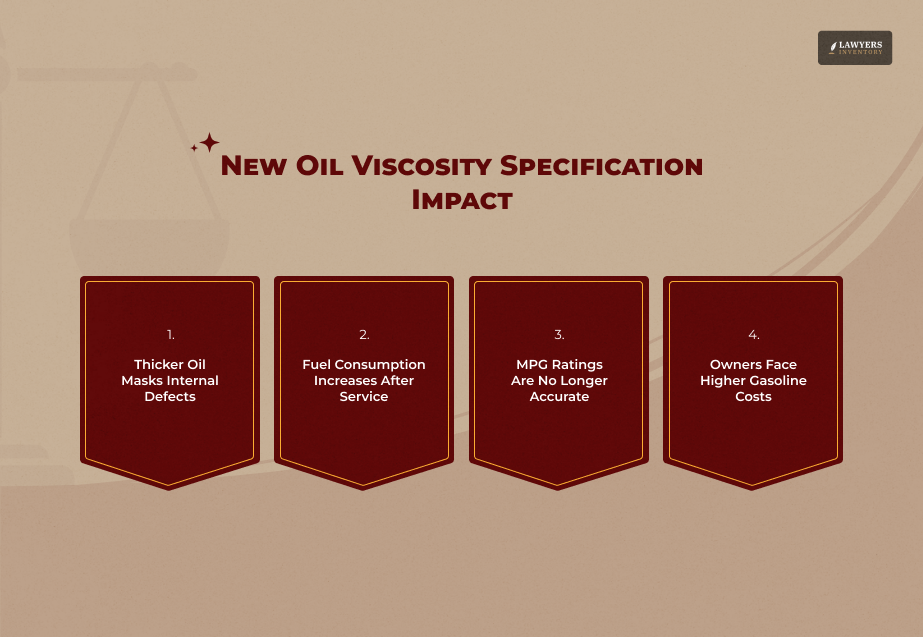
GM’s recall fix involves switching from 0W-20 to 0W-40 oil for these engines. Plaintiffs in the GM L87 Engine Lawsuit claim this thicker oil reduces fuel economy. This change may mask the underlying mechanical defect without actually fixing it.
NHTSA Expansion And Safety Risks
The NHTSA recently expanded its investigation into the L87 platform following crash reports. The agency is looking into failures that led to a sudden loss of propulsion. This adds significant weight to the claims in the GM L87 Engine Lawsuit.
Seeking Compensation And Protecting Your Rights
If you own an affected vehicle, you may be part of the class action. However, individual action is sometimes necessary for the best result in a GM L87 Engine Lawsuit. Taking the right steps now will strengthen your legal position in the future.
Documenting Engine Symptoms And Repair Visits
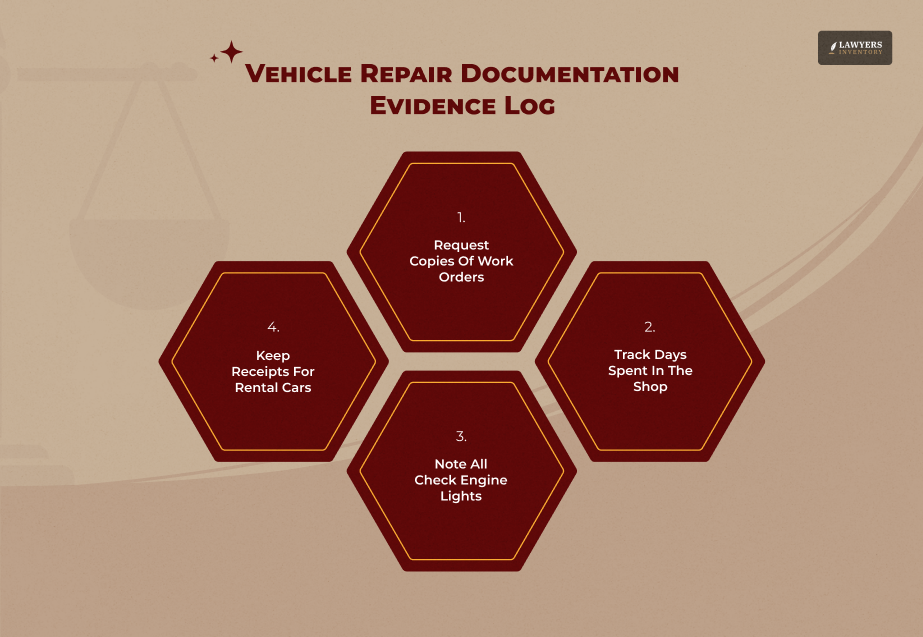
The success of your claim depends on the paper trail from the dealership. Always ensure that the advisor notes your specific complaints in writing. This evidence is vital for any successful GM L87 Engine Lawsuit.
Participating In The Consolidated Class Action
With cases consolidated in Michigan, a massive complaint now represents owners nationwide. You may choose to stay in this class or pursue an individual claim. This decision depends on your specific vehicle history and state laws.
Read Also: Owners Must Read: Nissan Class Action Lawsuit Engine Defect Explained
Frequently Asked Questions (FAQs):
The legal proceedings surrounding the GM L87 Engine Lawsuit move very quickly. These answers address the most common concerns for US citizens currently driving these vehicles. The GM L87 Engine Lawsuit remains a developing story for thousands of truck owners.
You should visit the official NHTSA recall lookup tool today. Enter your 17-digit VIN to see if your vehicle has an open recall. If your truck shows a recall for connecting rod bearings, you are likely affected by this litigation.
Yes, most class action settlements cover subsequent owners as long as the warranty is active. If your engine failed while under the factory powertrain warranty, you are usually eligible for compensation. It does not matter if you were the first or second buyer.
NHTSA recently opened a specific Recall Query (RQ26001) to investigate if the original fix was enough. This happened after dozens of owners reported total engine failure, even after receiving the thicker oil fix. This query could lead to a second, more comprehensive recall if the current fix is deemed unsafe.
Leave A Reply






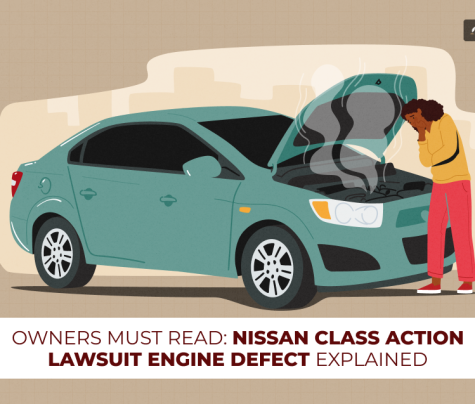
Owners Must Read: Nissan Class Action Lawsuit Engine Defect Explained
Read More
Understanding The Texas Roadhouse Menu Class Action
Read More
Tepezza Class Action Lawsuit Update 2025 – Hearing Damage Claims and Legal Options
Read More
Apple Siri Lawsuit Settlement Explained – Eligibility And Payouts
Read More
Torrid Discount Class Action Settlement-Your Guide To Eligibility, Benefits, And Deadlines
Read More
0 Reply
No comments yet.