Summarize using AI





Prompt copied. Paste it into Gemini.
Today’s topic: Express Contract Law.
Clear communication prevents financial and legal disputes during commercial transactions. Consequently, corporate entities and private individuals rely on express contracts to establish explicit, enforceable parameters.
An express contract states all operational conditions out loud or in writing. Both signing parties openly declare their future obligations. Ultimately, this direct communication protects capital, isolates liabilities, and provides clear remedies under contract law.
However, the modern legal landscape introduces major operational complexities. The definition of a binding agreement is changing rapidly.
Shifting technology, corporate practices, and judicial precedents require a deeper analysis of contract formation. Shifting away from vague handshake deals toward airtight structures is a commercial necessity.
What Is An Express Contract Law?
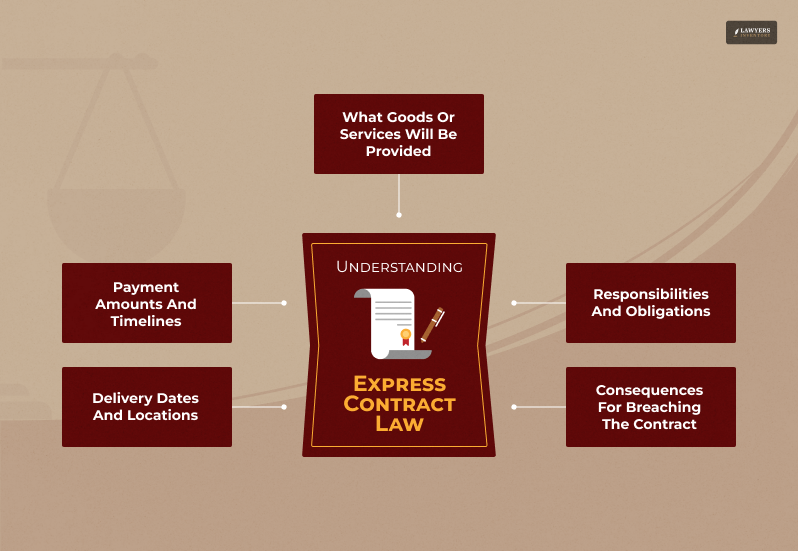
An express contract leaves zero room for structural ambiguity. The participating parties state their operational terms directly. These formal agreements exist in two distinct formats within the global marketplace:
- Written Contracts: Signed physical papers, digital contract packages, formal commercial invoices, or explicit email chains.
- Oral Contracts: Verbal promises spoken aloud and accepted explicitly by both participating parties.
Specifically, an express agreement must define specific variables to remain viable in a court of law. It must outline the exact goods or services delivered.
It must state precise payment amounts and strict deadline schedules. Moreover, it must detail the exact legal consequences of a contractual breach.
Importantly, oral express contracts carry identical legal weight to written documents. However, litigators encounter severe evidentiary hurdles when proving oral agreements.
Without physical documentation, a trial devolves into a subjective credibility battle. Therefore, modern risk management demands written authentication for all commercial transactions.
The Five Essential Elements Of Legal Validity In Express Contract Law
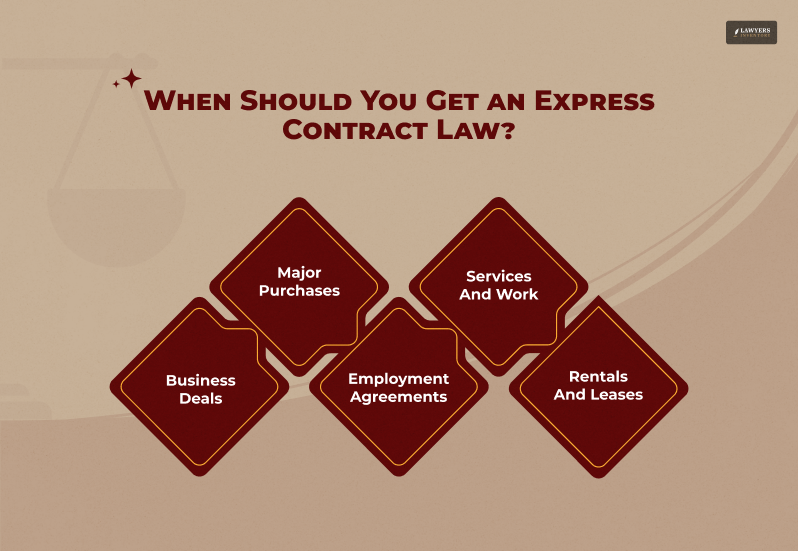
An express contract requires five foundational components to achieve legal validity. Without these elements, a civil court will rule the agreement completely void and unenforceable.
1. Offer And Acceptance
Firstly, one party must present a clear, unambiguous offer to contract. Subsequently, the second party must accept that specific offer exactly as presented.
This mirror-image acceptance establishes a true meeting of the minds. Any deviation from the original offer constitutes a counteroffer, which destroys the initial proposal.
2. Legal Consideration
Secondly, contracts require a reciprocal exchange of real value. For instance, consideration includes cash payments, physical real estate, professional services, or a promise to perform an action.
A one-sided promise constitutes a voluntary gift, not an enforceable contract. Courts do not evaluate the fairness of the value exchanged, but they demand its physical existence.
3. Competent Legal Capacity
Both signing parties must possess the legal ability to execute a contract. Accordingly, individuals must meet the statutory age of majority in their jurisdiction.
They must possess a sound, unimpaired mind. Furthermore, they cannot sign documents under active duress, physical threat, or illegal coercion.
4. Legality Of Purpose
The core objective of the contract must comply with statutory regulations. Simply put, courts will instantly void any express contract involving:
- Criminal acts.
- Fraudulent schemes.
- Prohibited merchandise.
A contract to distribute unlicensed goods cannot be enforced under civil law.
5. Clear Contractual Intent
Finally, both parties must actively intend to create a legally binding relationship. They should have a clear intent.
Their overt actions and statements must prove they understand the real legal consequences of the transaction. If both sides view the interaction as a joke, no contractual binding occurs.
Structural Differences: Express Contract Law VS Implied Contract Law
The legal system recognizes distinct contract categories based on creation methods. Crucially, the difference centers entirely on how the parties communicate their intent.
Legal Comparison Framework
| Express Contract | Attribute | Implied Contract |
| Created via explicit spoken or written words. | Primary Formation | Created via party conduct and situational facts. |
| Proved by physical documents or recorded statements. | Evidentiary Proof | Proved by behavioral patterns and past dealings. |
| High certainty; terms are defined clearly. | Structural Clarity | Variable certainty; terms require judicial interpretation. |
| Rapid; the text provides immediate metrics. | Enforcement Speed | Slow; courts must construct the missing terms. |
Real-World Case Models
- Express Application: A consumer signs a written automotive purchase agreement at a dealership. The document explicitly defines the final price, interest rates, and warranty timelines. Both sides understand their obligations instantly.
- Implied Application: A homeowner calls an emergency plumber to fix a burst water pipe. The homeowner does not explicitly negotiate a labor price beforehand. However, an implied contract exists. The law expects the homeowner to pay the standard market rate for the services rendered based on their conduct.
Systemic Trends: The Rise of Code-Based Smart Contracts
The legal landscape is experiencing a massive shift due to automation. Indeed, expert consensus shows that technology is changing how companies deploy express terms. The traditional ink signature is yielding to digital code.
The Evolution of Contract Mediums
- Traditional Written Contracts: Physical ink-and-paper agreements filed away in cabinets.
- Digital PDF E-Signatures: Electronic versions of standard documents signed via secure web portals.
- Blockchain Smart Contracts: Digital agreements translated directly into immutable, automated programming code.
Automated Express Execution
Modern logistics networks increasingly use blockchain-based smart contracts to execute express terms. A smart contract translates explicit terms into automated code.
For example, a contract might state: “Payment releases immediately upon delivery.” The software tracks the shipping data automatically.
When the package arrives at the warehouse, the system transfers the digital currency instantly. As a result, technology eliminates the need for manual invoicing and collection efforts.
The Commercial Danger Zone: Battle of the Forms
In high-volume industries, a significant contractual risk occurs during routine procurement. Legal experts call this phenomenon the “Battle of the Forms.” It happens when companies use automated paperwork to close quick deals.
Here’s how conflicts emerge:
- Purchase Order: A corporate buyer sends an express purchase order containing strict buyer-friendly terms.
- Invoice Response: The product manufacturer responds with an express invoice containing strict seller-friendly terms.
- Hidden Clash: Both parties sign the documents without reading the fine print.
Consequently, the two express documents contain completely conflicting terms regarding warranties and liabilities. If a product failure occurs, a complex legal battle ensues to determine which express document controls the deal.
The Legal Shield: Understanding The Integration Clause
A major pitfall in express contract litigation involves pre-contractual negotiations. During meetings, parties often make verbal assurances. However, if those promises do not appear in the final written text, they are highly vulnerable.
The Power Of Entire Agreement Clauses

To mitigate this risk, corporate attorneys insert an Integration Clause into the contract. This clause states that the written document represents the entire agreement between the parties.

Specifically, it explicitly wipes out all prior verbal promises, emails, and draft versions. Therefore, if an executive promises a special discount during a lunch meeting, but the integration clause excludes it, that discount is legally dead.
Tactical Missteps: Mistakes That Destroy Contract Security
While executing an express contract, professionals frequently commit critical errors. These mistakes inadvertently destroy their leverage during a dispute. To avoid these common pitfalls, you must protect your contractual options:
Commencing Work Before Signing:
Companies often begin services based on a verbal “go-ahead” while drafting the final text. Unfortunately, if negotiations stall, the company exposes itself to massive financial losses without clear contractual remedies.
Accepting Late Payments Repeatedly:
If an express contract mandates payments on the first of the month, but a vendor consistently pays on the fifteenth without a penalty, problems arise. By doing so, the business can inadvertently waive its right to enforce the strict deadline in the future through legal estoppel.
Failing To Define Material Breaches:
Vague enforcement terms weaken a contract. An explicit agreement must define exactly what constitutes a deal-breaking violation, such as missing a delivery deadline by more than forty-eight hours.
Actionable Toolkit: The Contract Health Check
A business owner must evaluate an agreement rigorously before signing it. Consequently, using an operational framework saves critical legal hours and uncovers hidden liabilities.
- Choice of Law Clause: Identifies exactly which state’s statutes will govern the contract during a legal dispute.
- Dispute Resolution Protocol: Mandates whether the parties must use expensive private arbitration or traditional public court trials.
- Force Majeure Provision: Defines who bears the financial loss during unpredictable, catastrophic events like natural disasters or pandemics.
- Clear Termination Exit Ramp: Outlines the exact number of days required for notice before a party can legally exit the deal.
- Indemnity Allocation: Specifies which party pays for third-party lawsuits stemming from product or service failures.
In conclusion, express contracts eliminate the dangerous financial risks of unspoken assumptions. They establish certain, predictable remedies if a business transaction fails.
Therefore, drafting written, explicit terms remains the ultimate industry standard for corporate risk management.
Read More:
- All You Need To Know About Contract Repository
- Who Is An Energy Lawyer? How Can You Find One?
- All You Need To Know About Procurement Contracts
Leave A Reply







Generational Equity Reviews- An Honest Guide (2025)
Read More
Complete Guide To Every DoorDash Lawsuit – Your Rights Explained
Read More
Claim Your Payout: What The Robinhood Data Breach Class Action Means
Read More
An Understanding Of The Home Depot Damage Protection Class Action
Read More
No Demo Reno Lawsuit – What Homeowners Must Know Before a ‘No-Demo’ Renovation
Read More
0 Reply
No comments yet.