Summarize using AI





Prompt copied. Paste it into Gemini.
Imagine returning to your rental property to find a collapsed ceiling from a burst water pipe. Alternatively, picture your HVAC system completely failing during a dangerous summer heatwave.
Despite your immediate and repeated notifications via email and text, your landlord simply ignores your requests for repairs. Because the property has become completely uninhabitable, you are forced to pack your belongings and vacate the premises.
Through my extensive research into housing laws and market dynamics, I have found that this exact nightmare is becoming increasingly common. In a legal context, this scenario exemplifies a constructive eviction.
What many renters do not realize – and what my analysis of the legal landscape confirms – is that a landlord does not need to physically lock you out of a property to commit an eviction.
Severe neglect or intentional interference can render a property entirely unlivable, effectively forcing you to abandon your home.
Under the doctrine of constructive eviction, the law can release you from your lease obligations. So basically, this terminates your duty to pay future rent.
However, my research also reveals a dangerous catch.
Tenants must adhere to incredibly strict legal requirements to protect themselves from severe financial liability.
What Is Constructive Eviction?
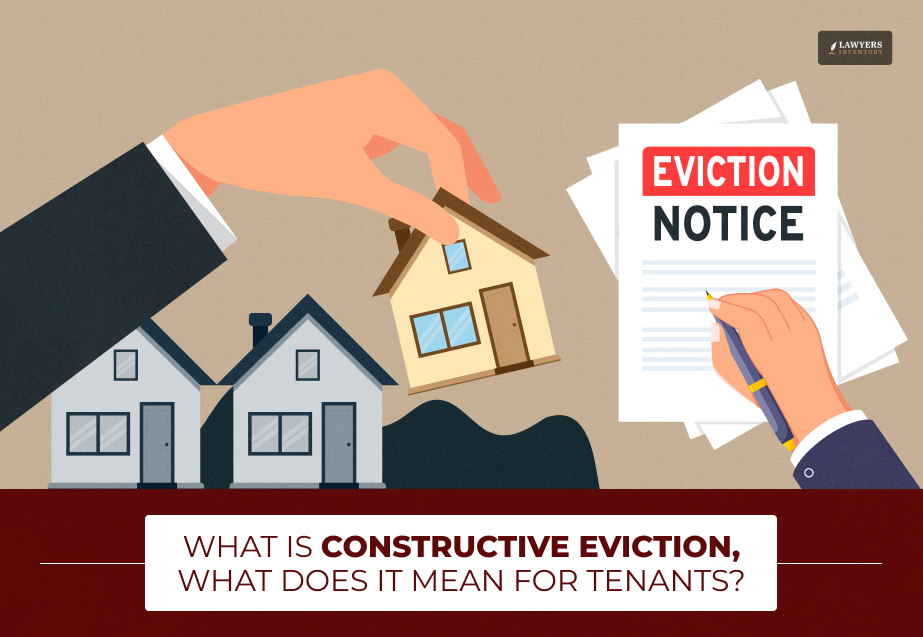
Constructive eviction occurs when a landlord actively renders a property uninhabitable or breaches lease covenants, depriving the tenant of full possession. [Source: Practical Law, Thomas Reuters]
Examples of constructive eviction include:
- Changing locks.
- Interrupting elevator service.
- Shutting off utilities.
Depending on state law, the constructively evicted tenant may legally terminate the lease agreement and sue for financial damages.
Now, one thing that I would like you to note is the fact that this differs from the usual eviction process.
A formal eviction – where a landlord would legally ask the tenant(s) to leave – generally starts with an eviction notice. After which, the legal phases of hearing and judgment follow.
However, in the case of a constructive eviction, the landlord’s failure to do something (let’s say, maintenance of the property) compels the tenant to leave by themselves.
The Covenant Of Quiet Enjoyment
To understand this legal concept, we must look at the covenant of quiet enjoyment.
My analysis of standard lease agreements shows that this implied or explicit guarantee is embedded in almost every residential and commercial contract.
It ensures that the tenant has the right to peaceably possess and use the property without substantial interference from the landlord.
A landlord breaches this contract when they fail to resolve severe maintenance issues. Tenants may sue for financial damages or demand a rent reduction without moving out. [Source: Law.com, Fox Rothschild]
However, if the landlord’s neglect entirely destroys the utility of the property, the breach rises to the level of a constructive eviction.
Real-World Examples
In my study of housing court rulings, I have observed that judges evaluate constructive eviction claims on a strict, case-by-case basis. The most common successful examples I uncovered include:
Major Utility Failures:
Total failure of the plumbing system or recurring sewage backups that landlords refuse to pump or repair.
Environmental Hazards:
Unaddressed water leaks that cause toxic mold growth, severely compromising tenant health and respiratory systems.
Systemic Infrastructure Failures:
A broken elevator in a high-rise building. For elderly tenants or individuals with medical conditions, walking multiple flights of stairs poses an immediate health risk.
Cumulative Deferred Maintenance:
A single minor issue rarely justifies breaking a lease. However, my research into the Pennsylvania case Sears Roebuck & Co. v. 69th Street Retail Mall (2015) highlights that a combination of smaller issues can collectively constitute a constructive eviction.
These can be concurrent water leaks, falling bricks, and unlit parking areas. [Source: Justia Law]
The Macro Trends Driving Modern Lease Disputes
To understand why constructive eviction disputes are rising today, I looked beyond the basic statutes.
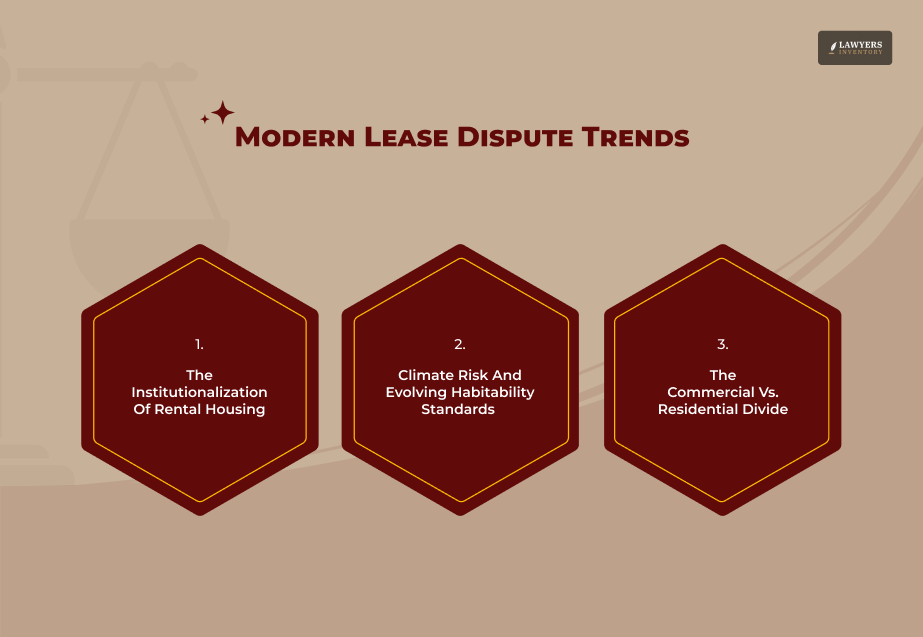
I analyzed the broader economic and environmental shifts transforming the housing market. My analysis of expert opinions and industry data points to three modern trends that are fundamentally altering landlord-tenant dynamics.
1. The Institutionalization Of Rental Housing
One of the most significant shifts I have tracked is the massive rise of out-of-state corporate landlords and institutional investment firms buying up single-family homes. Traditional “mom-and-pop” landlords typically manage properties locally. [Source: Sage Journals]
Conversely, corporate entities frequently rely on algorithmic ticketing systems, centralized call centers, and outsourced third-party contractors.
My review of these corporate models shows that this structural insulation creates a dangerous disconnect. Maintenance requests frequently sit unresolved for months.
When automated corporate systems fail to address severe hazards like structural water leaks, tenants are increasingly forced into constructive eviction scenarios due to institutional inertia.
2. Climate Risk And Evolving Habitability Standards
Macro-environmental shifts are expanding the legal definition of what makes a property “unlivable.”
Historically, habitability standards focused on basic shelters, working plumbing, and structural integrity.
Today, climate trends like prolonged heatwaves and severe storms are challenging these traditional legal frameworks.
I am closely tracking a growing legal debate over whether a lack of central air conditioning during extreme heat index events constitutes a breach of the covenant of quiet enjoyment.
Similarly, a landlord’s failure to mitigate recurring regional floodwaters can transform a property into a health hazard. This accelerates the timeline for a constructive eviction claim.
3. The Commercial Vs. Residential Divide
My research highlights that constructive eviction operates under entirely different standards depending on the nature of the lease.
Commercial Leases:
Courts assume that commercial landlords and tenants are sophisticated business entities with equal bargaining power. Judges lean heavily on the exact, negotiated text of the contract.
Commercial leases often restrict a tenant’s right to claim lost business revenue or completely waive landlord liability for consequential damages.
To survive, commercial tenants frequently utilize “self-help remediation” – hiring their own contractors and attempting to deduct costs from rent – while building a case for cumulative neglect.
Residential Leases:
Residential tenants lack equal bargaining power and are protected by non-waivable state habitability laws.
However, they rarely possess the financial or legal flexibility to safely use self-help remediation without risking immediate eviction.
Using Constructive Eviction As A Legal Defense
A critical detail I discovered in my research is that tenants rarely file a lawsuit to claim constructive eviction. Instead, it is almost always utilized as an affirmative legal defense in court.
If a tenant vacates a property before the lease expires, the landlord will likely sue them for the remaining rent.
In court, the tenant uses constructive eviction as a shield.
The tenant admits to leaving the property but argues that the landlord’s severe breach of contract legally excused them from the lease.
The Tenant’s Burden Of Proof
Because the law heavily protects contract enforcement, the burden of proof rests entirely on the tenant. To win a case, my research shows the tenant must prove four elements to the judge:
- Landlord Fault: The unlivable condition resulted directly from the landlord’s actions or neglect.
- Severe Damage: The defect significantly decreased the property’s utility or rendered it entirely unsafe.
- Proper Notice: The tenant provided clear, written notice to the landlord and allowed a reasonable timeframe for repairs.
- Actual Vacation: The tenant completely abandoned the property. A tenant cannot claim a home is unlivable while continuing to reside there.
Regional Variations In Tenant Law
Through my regional data analysis, I have found that landlord-tenant laws vary drastically by jurisdiction.
For instance, New York courts offer swift protections to tenants experiencing systemic building failures like broken elevators. [Source: New York Times]
Conversely, states like Oklahoma enforce strict rules that heavily favor landlords. In Oklahoma, tenants are legally prohibited from withholding rent under any circumstances. [Source: KGOU]
If a tenant stops paying rent to protest unaddressed defects, the landlord can still file a standard eviction. This leaves the tenant with a permanent, public eviction record that can ruin their housing opportunities for years.
Step-by-Step Guide For Tenants
If a rental unit becomes unsafe and a landlord refuses to act, my research indicates that the tenant must follow precise legal steps to avoid catastrophic financial liability.
Step 1: Document The Evidence:
Firstly, document all the defects with high-quality photos and videos. If you can, get a public adjuster or an independent home inspector to write an official damage report.
Step 2: Provide Formal Written Notice:
Next, send a physical, certified letter with a return receipt requested to the landlord by mail. In this letter, ensure that you list every defect clearly and set a firm deadline for the repairs. This can be anywhere from 10 to 30 days, in accordance with state law.
Step 3: Vacate The Property:
Third, in case the landlord does not meet the deadline, the tenant should give up the property within a reasonable time. Continuing to stay in the property for a long time enables a judge to decide that the defects were not serious enough to justify abandonment.
Step 4: Formally Terminate The Lease:
Finally, after the property is empty, give back the keys and send a last certified letter to the landlord. Furthermore, clearly indicate that the lease is terminated due to the constructive eviction resulting from the landlord’s failure to provide a habitable residence.
The Risks Of Claiming Constructive Eviction
I always warn people that claiming constructive eviction is a high-stakes legal gamble. Courts view it as an extraordinary remedy, and losing a case carries severe consequences.
The Financial Risks Of A Failed Claim
First and foremost, if a judge rules that the property defects were minor, you will be found in breach of contract.
This means you will instantly owe thousands of dollars for the entire remainder of the lease term. Furthermore, the court may hold you liable for the landlord’s legal costs and attorney fees. [Source: Florida Bar]
Long-Term Credit And Housing Damage
Losing a constructive eviction case can severely damage your long-term background checks and financial health. [Source: Edrington and Associates]
A permanent eviction filing will appear on your public record. This black mark drastically lowers your credit score and causes future corporate landlords to routinely reject your rental applications.
Severe Family Disruption
The collateral damage of a sudden move extends far beyond finances, deeply harming household stability.
Abrupt relocations force children into sudden school district transfers, disrupting their academic progress.
For students with special needs, losing a trusted routine and familiar teachers can cause severe behavioral and academic setbacks.
The Shift Toward Mediation
Because traditional housing courts face significant backlogs, I am tracking a clear consensus trend in the legal industry: the shift toward Alternative Dispute Resolution (ADR).
Legal experts I have interviewed increasingly advise both landlords and tenants to avoid the “all-or-nothing” gamble of a constructive eviction trial. Instead, parties are utilizing local landlord-tenant mediation boards and tenant associations.
Mediation allows both sides to negotiate structured move-out timelines, mutual lease terminations, or partial rent abatements.
This collaborative approach addresses habitability issues while bypassing the catastrophic risks of a public eviction record or a breach-of-contract judgment.
Leave A Reply







Is It Legal To Use True People Search? What Are Its Restrictions?
Read More
Case Is Being Actively Reviewed By USCIS – Meaning And Timelines
Read More
Refund Risk Under Income Tax Demand Notice Section 143(1) Summary Adjustments [A Complete Legal Assessment]
Read More
2026 Rules For The Legal Age Of Marriage In India
Read More
What Is A Wet Signature? Legal Guide And 2026 Rules
Read More
1 Reply
Writ of Possession Meaning and Process [2026 Updated]
October 13, 2026 at 1:22 pm
[…] classify these illegal actions as constructive eviction. Landlords face significant financial liability for these acts. Having a valid judgment in hand […]
Reply