When a president or governor steps in to reduce someone’s punishment or wipe the legal consequences of a conviction, the action falls under a broad category called executive clemency.
Two terms dominate clemency discussions – Commute vs Pardon – and they are consistently conflated in news coverage, legal conversations, and public understanding alike.
The confusion is understandable.
Both involve executive action. Both offer relief from the consequences of a criminal conviction. And both are granted by the same authorities.
But they are legally distinct in ways that fundamentally affect the person receiving them – what their record looks like, what rights they recover, and what legal obligations remain.
Quick Answer

In the commute vs pardon comparison, the core distinction is this: a commutation reduces or eliminates a criminal sentence without overturning the underlying conviction, while a pardon is a complete and total cancellation of punishment that generally negates the effects of the underlying conviction, according to the National Governors Association. A person who receives a commutation remains a convicted person with a reduced punishment. A person who receives a pardon receives forgiveness for the offense itself, with the possibility of civil rights restoration. Both are forms of executive clemency. Neither is the same as the other.
What Is A Commutation?
A sentence commutation lessens a punishment, either in whole or in part, that is currently being served.
A commutation may also relieve an individual from any financial penalties assigned to their sentence, including fines or restitution. However, this remission is limited to monetary duties not yet paid.
While a commutation reduces a sentence, it does not suggest innocence, alter the existence of the conviction, or eliminate any civil disabilities imposed on the individual because of the criminal conviction. [Source: Congress.gov]
To commute a sentence is therefore an act of executive mercy directed at the punishment – not the conviction. The court’s finding of guilt remains legally intact. The criminal record reflects the original offense. Background checks will show the conviction, though they may also note the commutation.
Unlike pardons, commutations do not need to be accepted by the offender, unless the President conditions the commutation on acceptance.
A prisoner who receives a presidential commutation continues to be bound by a judicial sentence – the commutation renders the judgment satisfied in part; it remains operative in part. [Source: National Governors Association]
This is a critical legal nuance.
When someone’s sentence is commuted, the original judgment of the court does not disappear. It is modified.
The commuted sentence is served under a modified version of the original court order – which means other components of that order, such as supervised release or restitution obligations, may remain in effect unless the commutation expressly addresses them.
What Is A Pardon?
A pardon is an act of executive clemency that forgives a criminal offense, removes the legal penalties associated with a conviction, and restores certain civil rights. [Source: Legal Information Institute]
The Supreme Court has described a pardon as blotting out the offense and removing all its penal consequences.
As per NGA, courts understand a pardon to generally negate the effects of the underlying conviction, such that the underlying judgment of conviction is satisfied and ceases to have operation.
However, a common misconception requires correction: pardons do not automatically erase a criminal record.
The conviction remains in FBI databases, court records, and commercial background check databases. The record will typically be marked as “pardoned” but not deleted.
Employers, landlords, and licensing boards conducting background checks will still see the conviction, though they will also see that it was pardoned.
A pardon is typically granted to individuals who have completed their sentences and demonstrated sustained good conduct over time.
A general guideline is that a minimum of five years should have passed since completion of the sentence before a pardon petition is considered. [Source: GovFacts]
That said, there is no absolute constitutional requirement for this waiting period – it is an administrative guideline, not a legal bar.
Commute vs Pardon: The Side-by-Side Breakdown
The commute vs pardon distinction comes into clearest focus when the two are examined side by side across the dimensions that matter most to people seeking relief.
| Scope | Commutation | Pardon |
| Conviction removed? | No | Generally yes |
| Punishment reduced? | Yes | Punishment is addressed indirectly through forgiveness |
| Criminal record cleared? | No – conviction remains, commutation noted | No – but record reflects pardon |
| Civil rights restored? | Not automatically | Often yes – voting, firearms, jury service, public office |
| Requires acceptance? | Not unless conditions are attached | Traditionally requires acceptance |
| Who typically qualifies? | Those currently serving sentences | Those who have completed sentences |
| Primary purpose | Reduce or end the punishment | Forgive the offense and restore standing |
| Admission of guilt implied? | No | Traditionally yes |
As one court put it, the difference can be characterized as “a complete and total cancellation of punishment” for a pardon versus “a substitution of a lesser or partial punishment” for a commutation.
Commute Vs Pardon: Who Holds the Power To Grant Either?
Both commutation and pardon power derive from the same constitutional source. Article II, Section 2, Clause 1 of the Constitution enumerates the President’s power to grant Reprieves and Pardons for Offenses against the United States, except in Cases of Impeachment.
Importantly, both commutations and pardons only apply to federal, not state, crimes.
For state-level offenses, the corresponding authority belongs to the governor – though the structure varies significantly by state.
Every state constitution authorizes the Governor or a Board of Pardons to grant clemency, though terminology, procedure, structure, and the use of this power vary greatly from state to state.
Some states require a formal recommendation from a Pardon Board before the governor can act. Others vest the power entirely in the executive.
The procedural variation across 50 states means that commute vs pardon decisions at the state level cannot be understood without reference to the specific jurisdiction involved.
Neither federal nor state courts hold this power.
Judges cannot grant pardons or commutations after a sentence has been imposed and become final. This power belongs exclusively to the executive branch – a boundary that has been consistently upheld through legal precedent across the entire history of American clemency law.
How The Process Works: Federal Petitions In Commute Vs Pardon
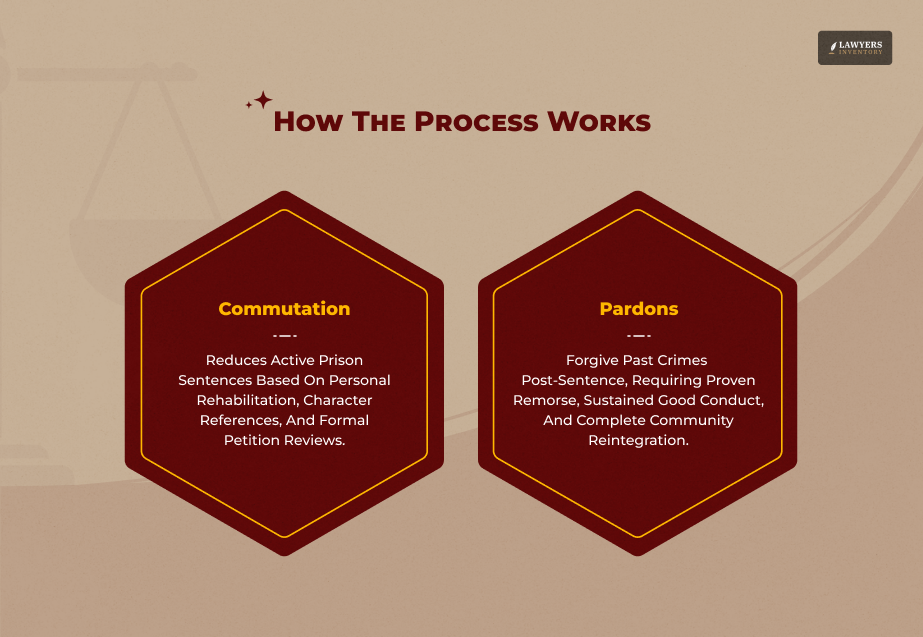
Whether seeking a commutation or a pardon at the federal level, the process runs through the same institution: the Office of the Pardon Attorney (OPA), which reviews each application before making a recommendation to the President.
For Commutation:
The applicant submits a formal petition – available on the Department of Justice website – along with the following:
- Personal history
- A statement explaining why commutation is warranted
- Character references.
- Evidence of rehabilitation.
According to Jason Goldman Law, the applicant should gather letters of support from family, community leaders, and even victims if willing.
There is no hearing. The applicant does not appear before anyone. The OPA reviews, prepares a recommendation, and forwards it to the President.
Commutation is typically most relevant for individuals currently serving sentences, particularly after all legal appeals have been exhausted.
For Pardon:
The process is structurally identical – petition through the OPA, recommendation to the President – but the timing and grounds differ.
Pardons are typically sought after the sentence has been completed. The applicant must demonstrate sustained good conduct over a significant period.
Remorse, acceptance of responsibility, and community reintegration are the central themes of a successful pardon petition.
Note: In both cases, legal representation significantly improves the quality of the petition. Neither process is guaranteed. The President's clemency power is plenary - there is no right to clemency, and no legal mechanism to compel the executive to grant it.
Which One Do You Need?
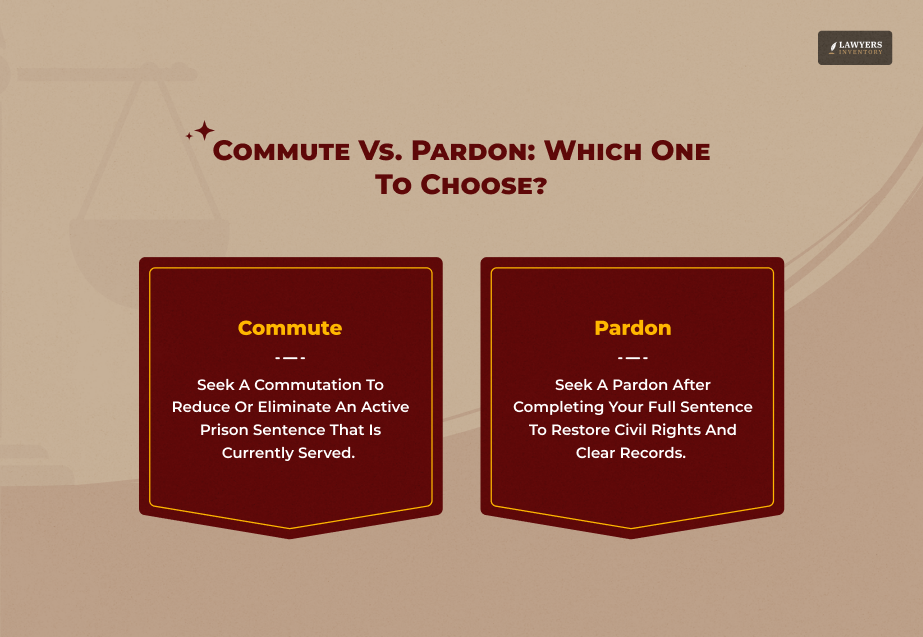
Whether you should seek a pardon or a commutation depends primarily on where you are in your sentence and what relief you need.
Commutations are in place to reduce or eliminate sentences for people who are actively serving time.
On the other hand, judges typically grant pardons to people who have completed their sentences and want to restore their rights or clear their records.
In practical terms:
Seek Commutation If:
You or someone you know is currently facing incarceration, and the sentence is the primary concern. Maybe it is too long, the circumstances have changed, or the law under which the person was sentenced has since been reformed.
Commutation addresses the punishment directly. It can mean immediate or accelerated release.
Seek A Pardon If:
The sentence has already been served, and the primary concern is restoring civil rights – the right to vote, to own a firearm, to serve on a jury, to hold public office, or to obtain professional licensing that a conviction would otherwise block.
A pardon is the more powerful tool of the two for people who want to move forward with their lives after completing their punishment.
A Critical Point: Neither form of clemency can be used to contest wrongful convictions. They only provide relief from punishment after conviction. Someone who believes that they faced wrongful conviction must pursue post-conviction relief through the courts - appeals, habeas corpus petitions, or innocence proceedings - not through executive clemency.
Commutation, Pardon, And The Broader Criminal Justice Landscape
Understanding commute vs pardon becomes richer when placed in the context of the full criminal justice process that precedes these decisions.
Long before commutation or pardon becomes relevant, the criminal justice system operates through a sequence of steps – each carrying its own legal weight.
The difference between indicted vs charged, for instance, marks a threshold in how a case formally begins: an indictment involves a grand jury finding, while a charge can be brought directly.
Either pathway ultimately leads to trial – where procedural realities like a sequestered jury, a hung jury, or a mistrial can dramatically affect outcomes before sentencing even occurs.
A hung jury – one that cannot reach a unanimous verdict – may produce a mistrial, giving the prosecution an opportunity to retry the case entirely.
A sequestered jury is isolated from outside information during deliberations to prevent prejudicial exposure in high-profile proceedings. Each of these trial-phase realities shapes the path that eventually leads to a sentence – and potentially, down the road, to a commutation or pardon petition.
What unites all of these concepts is legal precedent – the body of court decisions that defines how each stage of the criminal justice system operates, including the boundaries of executive clemency power.
Courts have consistently declined to interfere with the executive’s clemency authority. Thereby, reinforcing the principle that commutation and pardon are political and executive functions – not judicial ones.
Recent High-Profile Examples
The commute vs pardon distinction played out in visible and consequential ways at the federal level beginning in January 2025.
On the first day of his second term in office, President Donald Trump granted a “full, complete and unconditional pardon” to almost all individuals convicted of offenses related to events that occurred at or near the United States Capitol on January 6, 2021.
Fourteen named individuals convicted of such offenses instead received commutations of their sentences to time served.
President Trump stated that some individuals received commutations rather than pardons pending further research. [Source: National Governors Association]
This real-world example illustrates the practical distinction with clarity. Those who received pardons had their convictions addressed directly. Those who received commutations were released from further imprisonment – but remained convicted persons, with the legal implications that entails.
Franklin D. Roosevelt issued the most pardons in history, a total of 2,819 out of 3,796 acts of clemency. Most of which were related to convictions during Prohibition. [Source: Evergreen Attorneys]
President Obama, at the other end of the modern era, focused heavily on commutations. And that’s particularly for individuals serving lengthy mandatory minimum sentences for nonviolent drug offenses under guidelines that have since changed. Each approach reflects a different theory of what executive clemency is for.
Disclaimer: This article is for general informational and educational purposes only. It does not constitute legal advice. If you or someone you know is seeking a commutation or pardon, consult a qualified criminal defense attorney experienced in clemency petitions.
Sources:
- U.S. Constitution, Article II, Section 2 – Presidential Clemency Power
- Legal Information Institute, Cornell Law School – Commutation and Pardon (law.cornell.edu)
- Congressional Research Service – Executive Clemency and Judicial Power: Legal Overview and Recent Caselaw (April 2025)
- National Governors Association – The Governor’s Clemency Authority: An Overview of State Pardon and Commutation Processes (December 2025)
- U.S. Department of Justice – Office of the Pardon Attorney – Regulations Governing Executive Clemency (28 C.F.R. §§ 1.1–1.11)
- Jason Goldman Law – Federal Clemency: Pardon vs. Commutation (January 2026)
- GovFacts – Expungement vs. Pardon vs. Commutation: Pathways to a Second Chance (December 2025)
- Evergreen Attorneys – President Trump’s Commutations and Pardons (2025)
Leave A Reply





Hung Jury vs. Mistrial: What Is The Difference And Why It Matters
Read More
NarodniyDimUkraina: An Overview Of The Kyiv-Based Brand Preserving Ukrainian Craftsmanship
Read More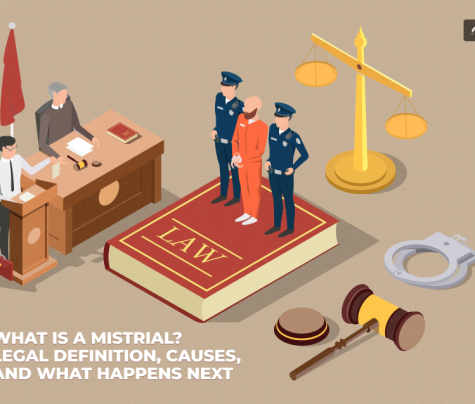
What Is A Mistrial? Legal Definition, Causes, And What Happens Next
Read More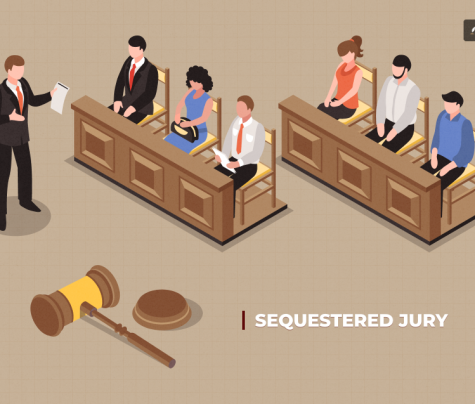
What Is A Sequestered Jury? Legal Definition, Process, And Everything You Need To Know
Read More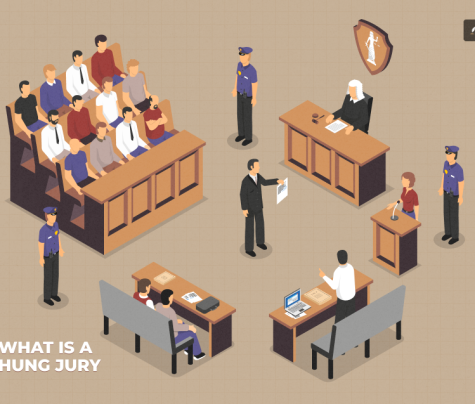
What Is A Hung Jury? Legal Definition, Causes, And What Happens Next
Read More
0 Reply
No comments yet.