
Summarize using AI





Prompt copied. Paste it into Gemini.
The fundamental difference between being indicted vs charged comes down to who finds probable cause to initiate a criminal prosecution. When an individual is charged, a prosecutor or law enforcement officer reviews the evidence.
Then, they file a formal accusation directly with the court. Conversely, when an individual is indicted, an impartial panel of local citizens known as a grand jury reviews the government’s evidence in secret.
Afterward, they vote to issue a formal accusation. Ultimately, both mechanisms result in formal criminal allegations and kickstart the litigation process.
However, they follow vastly different constitutional tracks.
They also afford different rights to the accused and carry unique strategic implications for criminal defense strategies.
For this reason, understanding the core procedural differences of being indicted vs charged is vital for navigating the justice system.
Quick Answer: Indicted vs. Charged

Here is the direct breakdown of being indicted vs charged:

• The Key Distinction: A prosecutor files a criminal charge, whereas a grand jury issues a criminal indictment.
• A Charge Defined: A state or city prosecutor reviews police reports. Next, they file a formal accusation directly in court.
• An Indictment Defined: A secret panel of 16 to 23 citizens votes on a formal accusation. They determine if enough evidence exists to proceed to trial.
• The Legal Result: Neither outcome proves guilt. Instead, both legally establish probable cause and officially launch a formal criminal case.
The Core Concepts Behind Indicted Vs Charged
To understand the mechanics of the criminal justice system, one must look at the two distinct pathways the government uses to bring a case to court.
When analyzing indicted vs charged frameworks, remember that neither an indictment nor a charge equals a conviction.
Instead, both function as initial procedural vehicles to assert that a crime occurred.
1. What Does It Mean To Be Charged?
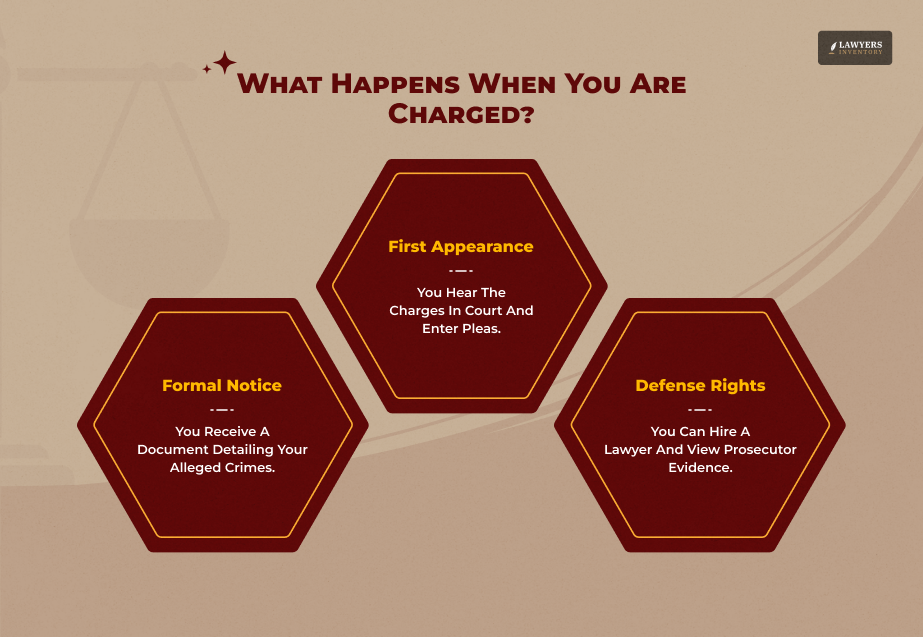
Being charged means that a district attorney, state prosecutor, or city attorney have gone through the police investigative reports.
Based on their review, they decide by themselves whether to prosecute or not. The formal start of the case is when the prosecutor submits a document to the court.
This document is commonly referred to by lawyers as a criminal complaint or an information.
These initial documents detail:
- Exact statutory violations alleged against the defendant.
- Fundamental facts and narratives establishing the baseline allegations.
- Names of the victims, law enforcement officers, or witnesses involved.
Furthermore, prosecutors possess broad discretion. Consequently, they can bring direct charges for both minor misdemeanors and severe felony offenses.
2. What Does It Mean To Be Indicted?
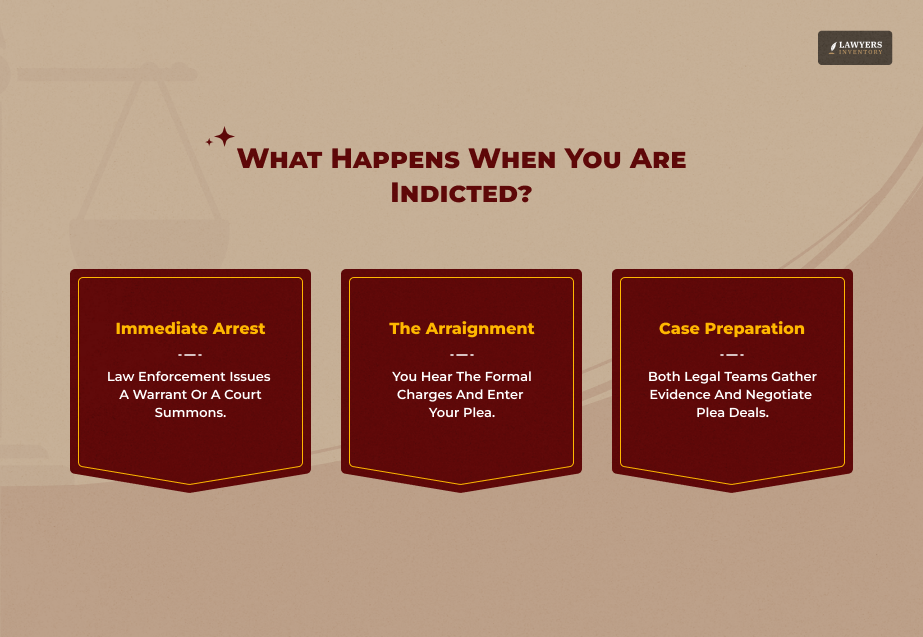
An indictment is a formal written accusation signed and given directly by a grand jury.
Under this procedure, the government has to submit its evidence to a group of 16 to 23 jurors, who are ordinary citizens, instead of a single prosecutor deciding the matter.
Importantly, a grand jury cannot decide whether a person is guilty or not beyond a reasonable doubt.
In fact, their only legal task is to figure out whether the government has provided enough basic probable cause. This level of proof is what leads to forcing a citizen to stand trial.
If at least 12 grand jurors find that hold enough evidence, they issue a “True Bill.” Doing so means they have decided for an indictment.
But, if they do not believe the prosecution’s story because the evidence is insufficient, they issue a “No Bill.” So, the indictment does not succeed.
Deep Dive: The Mechanics Of State vs. Federal Jurisdictions
The operational prevalence of an indictment versus a charge varies wildly. When examining indicted vs charged rules across the country, the outcome depends heavily on whether a case lands in state or federal court.
The Federal Imperative
In the federal criminal justice system, the grand jury remains an unyielding constitutional requirement.
Specifically, the Fifth Amendment of the U.S. Constitution mandates that no person shall answer for a “capital, or otherwise infamous crime” unless a grand jury presents an indictment.
Because the judiciary interprets “infamous crimes” to mean felonies, federal prosecutors (United States Attorneys) must secure a grand jury indictment for every single federal felony case.
Federal misdemeanors, by contrast, bypass this hurdle. Therefore, prosecutors can proceed via a standard charge.
The Flexible State Framework
The U.S. Supreme Court has ruled that the Fifth Amendment’s grand jury clause does not “incorporate” against the states.
Consequently, individual states can design their own unique systems for initiating felony prosecutions, which directly shapes how local citizens experience being indicted vs charged.
- Information States: Jurisdictions like California rarely utilize state-level grand juries. Instead, state prosecutors file a criminal complaint. Then, they proceed to an open, transparent preliminary hearing where a judge reviews the evidence.
- Indictment States: On the other hand, states like New York, Texas, and Florida maintain strong grand jury systems. As a rule, they frequently require indictments for capital offenses or serious felony classes.
Side-by-Side Comparison: Indicted Vs Charged
| Procedural Feature | Charged (Complaint/Information) | Indicted (Grand Jury Indictment) |
| Primary Initiator | State Prosecutor, Federal DA, or Police. | A panel of 16 to 23 local citizens. |
| Jurisdictional Norm | Standard for state courts; federal misdemeanors. | Mandatory for federal felonies; optional by state. |
| Level of Transparency | Open court public records and hearings. | Absolute secrecy; all statements remain sealed. |
| Defense Participation | Fully active; attorney participates in hearings. | Completely excluded; defense cannot attend. |
| Next Procedural Step | Arraignment followed by a preliminary hearing. | Bypasses preliminary hearing; moves to trial track. |
Strategic Multi-Tiered Trends In Indicted Vs Charged
Examining how these legal tools operate reveals a sophisticated strategic chess match between prosecutors and defense attorneys.
1. The “Ham Sandwich” Trend and Prosecution Control
There is a well-known legal phrase that a prosecutor might be able to persuade a grand jury to “indict a ham sandwich.”
Official documents of the government support this statement by revealing that federal grand juries approve indictments more than 99% of the time.
This extremely high rate of success is there because prosecutors have full control of the story. There is no judge in the room to act as referee, the public is not allowed, and the defense lawyer is entirely disregarded.
All this happens while the prosecutor is running the show, selecting the witnesses, and giving the facts without any room for counter-arguments or cross-examination.
2. Why Prosecutors Evade The Preliminary Hearing
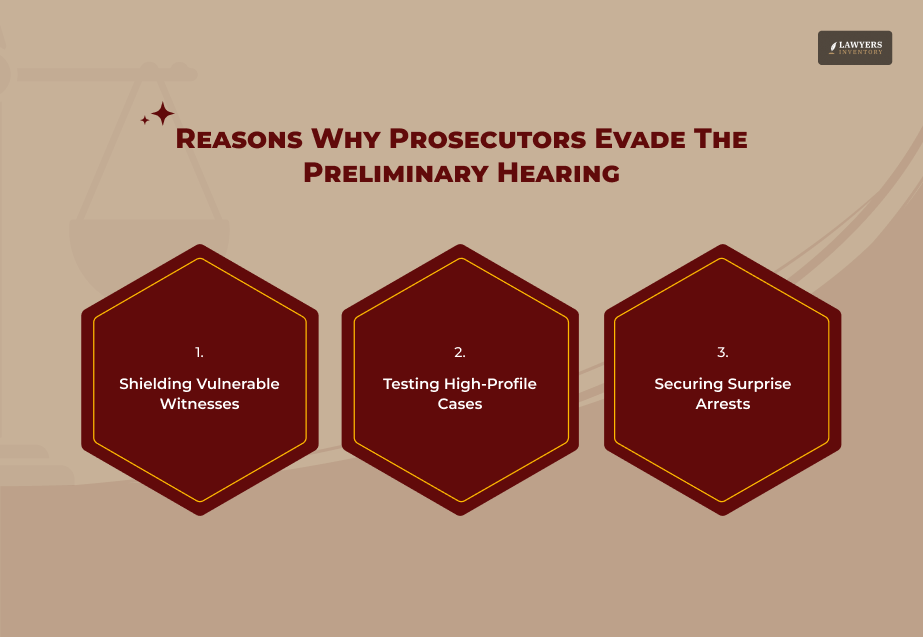
State prosecutors often choose to seek a grand jury indictment instead of filing standard charges for specific tactical reasons:
Shielding Vulnerable Witnesses:
Wherever a case is so delicate that the victims are at risk of further trauma – such as the exploitation of humans or child abuse – the prosecutors use grand jury secret rooms to collect evidence.
This way, a person who has been seriously hurt is not unleashed to face a lawyer who will try to make his/her cross-examination as probing as possible before the court audience.
Testing High-Profile Cases:
When a case can bring heavy political or public upheaval, a prosecutor may use the grand jury as a sort of civic focus group.
If the jury says no to the case, the prosecutor can quite easily get out of it and lay the blame on the citizen panel.
Securing Surprise Arrests:
With long, intricate white-collar fraud cases, prosecutors’ methods include secret grand jury work for several months.
They first get an indictment to be able to simultaneously issue arrest warrants and freeze bank accounts, thereby cutting off the suspects from fleeing and eliminating the digital evidence.
Timelines, Bail, And Your Defense Rights
Here are a few things that you ned to know about the timeline and bail procedure in indicted vs charged:
The Loss Of The Preliminary Hearing
First and foremost, if a prosecutor files a regular felony charge, you are legally entitled to a preliminary hearing.
This is an important part of the defense where your lawyer can cross-examine state witnesses, dispute illegal police searches, and bring in evidence that can help in dismissing the charges early on.
Yet, once a grand jury issues an indictment against you, this right is taken away.
The reason is that the grand jury has already made a probable cause determination in a closed session, so the court considers a preliminary hearing unnecessary and forwards the case straight to trial.
Case Timelines: Arrest Vs. Indictment
The timeline of a case generally follows one of two paths:
- The Arrest-First Pathway: Law enforcement arrests you first. Next, the prosecutor reviews the evidence and files formal charges. Constitutional rules require an open-court arraignment quickly, typically within 48 to 72 hours.
- The Indictment-First Pathway: The government investigates you secretly, presents the case to a grand jury, and secures an indictment before you are detained. The suspect’s arrest occurs after the formal charges are already active.
The Realities Of Posting Bail
Being indicted doesn’t always result in stricter bail terms. On the contrary, the magistrates take into consideration the seriousness of the offense, your criminal history, your likelihood to abscond, and how dangerous you are to the public.
Most of the time, misdemeanors lead to the typical cash bail or even release without payment, whereas major felonies demand large financial bonds. In cases of capital offenses like murder, magistrates may refuse bail altogether through either line.
How A Defense Lawyer Fights Back
Since an indictment cuts out the pre-trial coverage, your lawyer has to retaliate with strong post-indictment motions, e.g. a Motion to Dismiss (Penal Code Section 995 motion in California). That motion claims that the grand jury’s secret record did not have sufficient legal evidence.
A competent criminal defense lawyer safeguards your life’s work by doing independent investigations, making motions to exclude illegally obtained evidence, and handling plea negotiations for reduced penalties.
The government indictment or charge is a very offensive opening move, but it is not a final judgment.
Sources
- The Fifth Amendment, United States Constitution
- The Fourteenth Amendment, United States Constitution
- Federal Rules of Criminal Procedure (Rules 6 & 7)
- U.S. Code Title 28, Section 133 (The Judiciary Act)
- California Penal Code (Sections 738, 872, 995)
- New York Criminal Procedure Law (Article 190) & Texas Code of Criminal Procedure (Chapter 20)
- Bureau of Justice Statistics (BJS)
- United States Department of Justice (DOJ) Justice Manual (Title 9)
Leave A Reply







Is It Legal To Use True People Search? What Are Its Restrictions?
Read More
Case Is Being Actively Reviewed By USCIS – Meaning And Timelines
Read More
Refund Risk Under Income Tax Demand Notice Section 143(1) Summary Adjustments [A Complete Legal Assessment]
Read More
2026 Rules For The Legal Age Of Marriage In India
Read More
What Is A Wet Signature? Legal Guide And 2026 Rules
Read More
0 Reply
No comments yet.