Quick Answer:

Loss of Consortium is a legal claim seeking compensation for the loss of companionship, affection, emotional support, intimacy, or services caused by another person's wrongful conduct.
Claims of loss of consortium address the non-economic damages sustained as a result of such injuries – essentially, the “loss of enjoyment and benefits of” marriage.
These types of claims differ by state. As a result of which, it is best to review local regulations and consult an attorney about when one can expect such awards.
What Is Loss Of Consortium?
Loss of consortium is a legal claim that allows certain family members – most commonly a spouse – to seek compensation when another person’s negligence or wrongful act severely affects their relationship with an injured or deceased loved one.
Unlike claims for medical expenses or lost wages, a loss of consortium claim focuses on the personal impact of the injury on the relationship itself. It recognizes that serious injuries often affect far more than the injured individual.
A catastrophic accident may permanently alter family dynamics, emotional support, companionship, intimacy, parenting responsibilities, and shared daily life.
For example, if someone sustains a traumatic brain injury in a truck accident and can no longer communicate, provide emotional support, participate in family activities, or maintain the same marital relationship, their spouse may have grounds to pursue a loss of consortium claim in jurisdictions where such claims are recognized.
In many states, loss of consortium is considered a derivative claim, meaning its success depends on the validity of the injured person’s underlying personal injury claim. If the injured party cannot establish liability, the consortium claim may also fail.
What Does “Consortium” Actually Mean?
Loss of consortium means more than losing a sexual partner. The law gives this term a broad meaning. Consortium includes many intangible benefits from close family relationships. It mostly applies to marriage partners. Courts recognize these valuable benefits.
However, judges find financial value hard to measure. These relationship benefits still hold real worth.
Laws change from state to state. Depending on the state, it can include:
- Love and affection
- Emotional companionship
- Comfort and support
- Society and fellowship
- Sexual intimacy
- Household assistance
- Shared parenting responsibilities
- Caregiving
- Guidance and protection
- Enjoyment of family life
Some states include emotional companionship and affection. Others include love, comfort, fellowship, and intimacy.
Consortium also includes tangible, practical tasks. Partners share housework and raise children together. They provide caregiving, offer guidance, and enjoy pleasant moments together.
Negligence can cause permanent bodily injury. This injury damages emotional bonds and daily tasks. The injury causes purely emotional loss. This loss shows no physical signs.
Therefore, people cannot easily measure this damage. Courts classify consortium losses as non-economic damages.
What Types Of Loss Can Be Included?
The exact damages available vary by jurisdiction, but courts commonly consider several different forms of relational harm.
| Type of Loss | Example |
| Emotional companionship | A spouse becomes emotionally distant following a severe brain injury. |
| Love and affection | The injured person is no longer able to express affection due to permanent cognitive impairment. |
| Intimacy | A spinal cord injury permanently affects the couple’s intimate relationship. |
| Household services | The injured spouse can no longer cook, clean, or maintain the home. |
| Parenting support | A parent is unable to participate in childcare because of permanent disability. |
| Guidance and protection | A family loses the advice, emotional stability, or daily support previously provided by the injured individual. |
Courts generally evaluate the overall impact on the relationship, rather than any single category of loss.
Who Can File A Loss Of Consortium Claim?
To a large extent, the determination of who can sue an individual as their spouse will depend on the applicable state law.
In the most typical situations, spouses are the claimants, but it is not clear to what extent eligibility under each law varies.
Here are a few things that you need to know:
- Legal Spouses: The overwhelming number of states give the right to make claims for damages not only by spouses married in a traditional way but also by same-sex married couples.
- Registered Domestic Partners: Only some of the states recognize domestic partnerships and civil unions as legally qualifying to a limited extend of the rights of married couples.
- Unmarried Couples: As for couples who live together without being engaged or getting married legally in the traditional way, they do not get a chance to make these kinds of claims.
- Children: There are jurisdictions where the court may award damages to children on the ground of filial consortium loss.
- Parents: A few of the States give permission for the recovery by parents when their kids who are still below the age of majority are catastrophically and permanently injured.
When Can Someone File A Loss of Consortium Claim?
Loss of consortium claims frequently arise from serious injuries caused by another party’s negligence. Because the claim is derivative, it is typically filed alongside the injured person’s primary lawsuit.
Common situations include:
- Motor vehicle accidents
- Commercial truck collisions
- Motorcycle crashes
- Medical malpractice
- Workplace accidents (where permitted)
- Defective product injuries
- Nursing home negligence
- Premises liability accidents
- Construction site accidents
- Wrongful death actions in jurisdictions that recognize consortium-related damages
Not every injury qualifies.
Courts generally expect the underlying injury to be significant enough to cause a meaningful disruption to the family relationship. Temporary injuries with minimal long-term impact are less likely to support a successful consortium claim.
What Must You Prove In A Loss Of Consortium Claim?
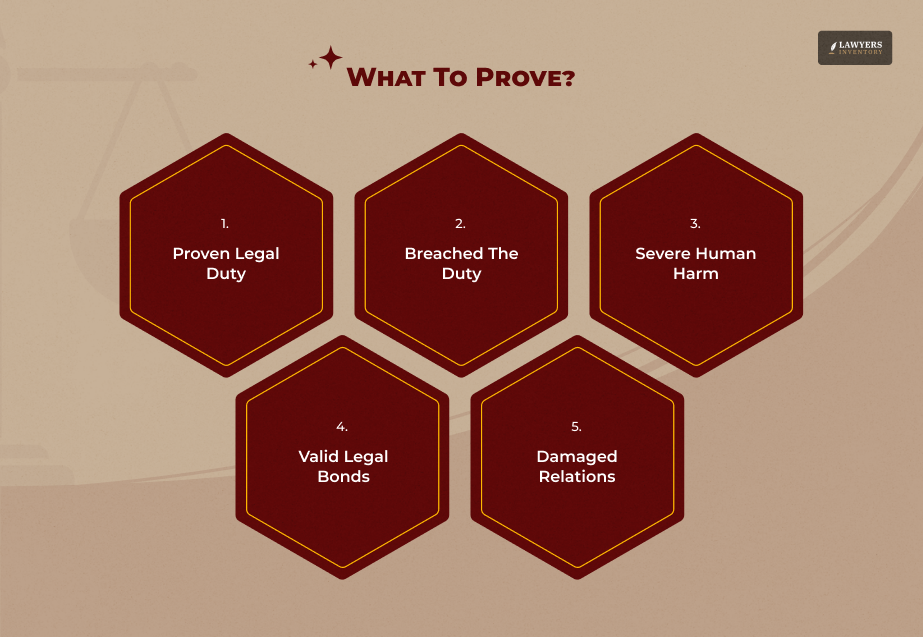
The loss of consortium claim is rarely successful simply because a loved one is injured. The courts tend to require the plaintiff to prove certain legal points that show that the defendant’s actions have caused a disruption in the family relationship.
Because a claim for loss of consortium is usually considered a derivative claim, the litigation’s success can largely depend on the success of the personal injury or wrongful death claim of the individual directly involved in the subject matter of the loss of consortium claim. [Source: Cornell Law School, Legal Information Institute]
Every jurisdiction is different, but courts tend to look at these elements:
1. The Defendant Owed A Legal Duty
The first part of the argument: it is important for the claimant to establish that the defendant owed them a duty of care which they have failed to carry out. This, for example, can be something like – a motorist’s duty to drive properly
2. The Defendant Breached That Duty
The claimant should establish that the defendant failed to act up to the standard of care established through speeding, medical malpractice, or unsafe workplace maintenance.
3. The Injury Was Serious Enough to Affect the Relationship
Courts only review cases with catastrophic, lasting consequences. These injuries must completely change the person’s life. Such cases involve:
- Paralysis.
- Amputation.
- Traumatic brain injury.
4. A Recognized Relationship Existed
The claimant must, more than likely, submit proof of relationship. These are the documents required:
- Marriage certificates.
- Civil union papers.
- Birth certificates.
A handful of states restrict consortium claims to legally married spouses only, and some allow children or parents to recover only in certain instances.
5. The Relationship Was Significantly Harmed
Finally, the claimant should provide proof that the relationship is greatly harmed. Great emotional losses weigh more than economic losses.
The family experiences these adverse effects: loss of the quality of comfort, loss of physical contact, and an increase in family responsibility for providing care and emotional support.
In the worst cases, the individuals become completely isolated from society. Claimants will be required to demonstrate to the court the non-economic, intensely personal losses suffered to sue. [Source: Justia]
How Do Courts Calculate Loss Of Consortium Damages?
Unlike medical expenses or lost wages, there is no universal formula for calculating loss of consortium damages.
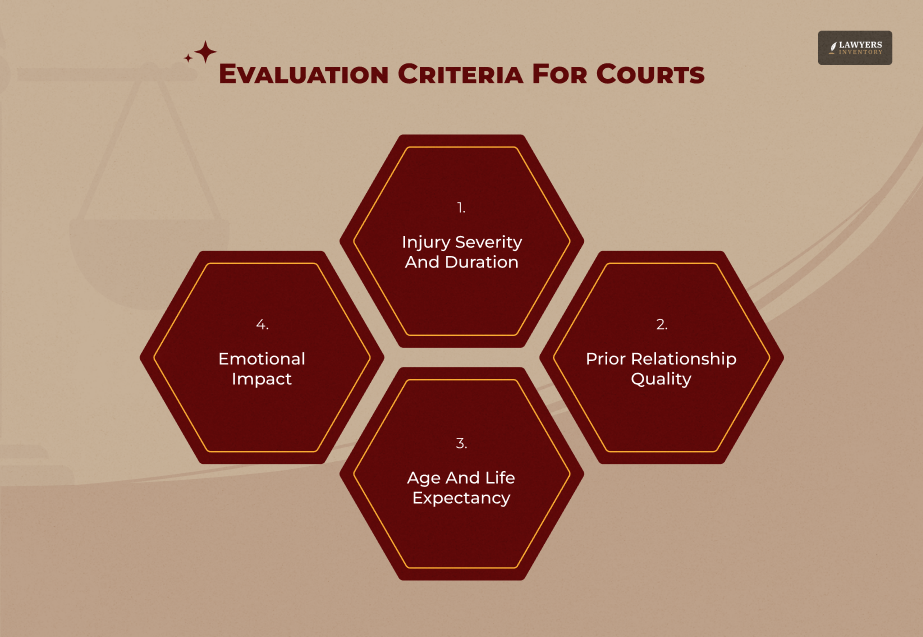
Instead, courts and juries evaluate the unique circumstances of each case. Common considerations include:
Injury Severity And Duration:
A large part of these cases is about how serious the injury and recovery periods are.
It is very difficult for spinal injuries (which are one of the permanent, severe traumas) to recover from, and such injuries may cause irreversible damage to relationships.
But minor injuries, like broken bones, heal quite rapidly and only cause a brief disruption.
Prior Relationship Quality:
The claimant must provide substantial evidence for the existence of a previous relationship. Physical exhibits can be very powerful proof of an ongoing, loving family relationship before the incident.
These items may be photo albums, intimate diaries, and even statements of friends about the claimant’s relationship.
Age And Life Expectancy:
The courts also assess age and life expectancy as a factor. These factors help judges to foresee how many years were lost due to future companionship.
The judge uses the victim’s age and the life expectancy statistics for persons of the same age and time of the accident to decide upon the number of lost years of companionship.
Emotional Impact:
Last but of course not least, the judge has to consider the emotional trauma. The judge determines the amount of the financial award to be made for non-monetary damages.
What Evidence Strengthens A Loss Of Consortium Claim?
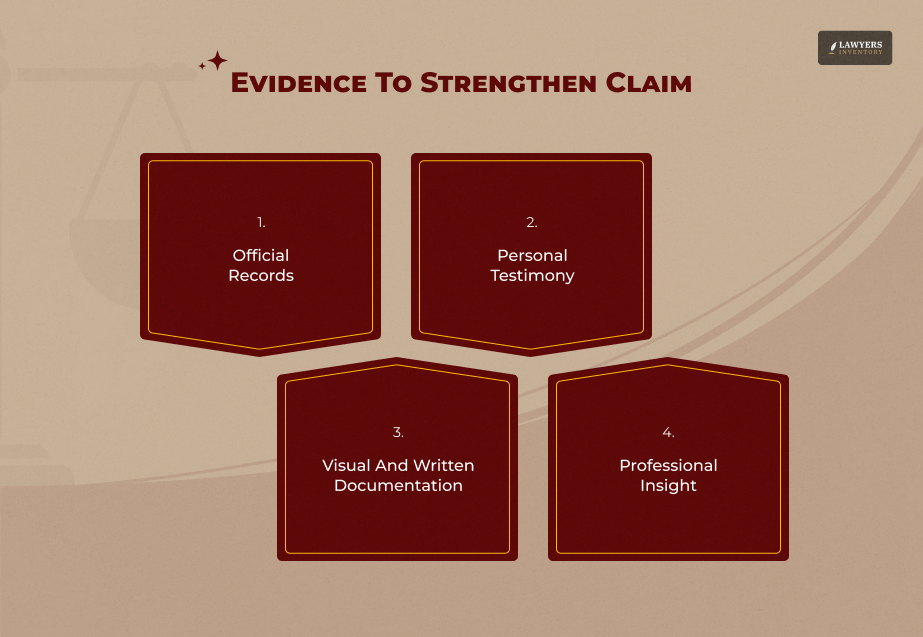
A lot of articles only state “evidence is required” without actually explaining what that means for practice.
In reality, winning a case often involves highlighting the changes in the injured party’s everyday life.
These items of evidence can help support a claim as long as they are relevant to the situation on hand and the rules that apply to the case.
Official Records:
Medical reports are a crucial aspect of demonstrating the seriousness of an injury. Such documents include a surgeon’s report, a disability certificate, or any other kind of document issued in connection with a person’s medical treatment.
Documents such as marriage and birth certificates are required to prove that a claimant has legal ties with another person. [Source: Disability Benefits]
Personal Testimony:
Friends’ and family members’ witness statements will bring the human side and give personal accounts. The evidence comes down to these descriptions of the person’s changed behavior.
Witnesses could point to the victim’s isolation of his emotions, the reduction of the victim’s social contact, or an increased load of looking after him. [Source: Ben Crump]
Visual And Written Documentation:
Photos and journals can work as a powerful means of remembering a person’s lifestyle before a significant injury.
One can look at photos and videos to see the travel and hobbies of persons. A person’s daily emotional state can be seen very clearly through writing journals or similar materials.
Professional Insight:
There’s also some very important support coming in from psychotherapy records, which help to confirm the depth of the psychological problems experienced by the patient over time.
These records include details of a patient’s mental health sessions and the professional reports written about the patient’s treatment.
According to Expert Courts Reports, the fact is that psychologists and rehabilitation experts can be called by the lawyers to give testimony as expert witnesses to a court in order for the lawyers to bolster a case for their clients.
Real-Life Examples Of Loss Of Consortium Claims
Understanding how consortium claims arise in everyday situations helps distinguish them from general emotional distress claims.
Example 1: Catastrophic Car Accident
The defendant’s negligent behavior can cause a traumatic brain injury that leaves them completely amnesiac as well as suffering from character modifications.
The partner of the person enduring these injuries is qualified to bring a loss of consortium claim to cover the harm stemming from the fractured marital relationship, specifically regarding support as well as companionship lost over time
Example 2: Medical Malpractice
A medical professional’s terrible blunder can create a life-lasting disability, preventing the person from carrying on in their daily activities.
If the injured individual’s companion is required to be a full-time caretaker or assumes financial obligations for the entire household, they would absolutely be able to claim loss of consortium.
In this way, they can cover this significant negative change in the partnership’s balance as well as quality.
Example 3: Workplace Accident
It’s possible for unsafe, poorly maintained tools to trigger a construction-site crash that leads to severe injuries.
Losing the capability to participate actively in family routines and parenting duties, especially following an event, will require a court to give an honored sum of money via loss of consortium
Example 4: Nursing Home Negligence
Elder neglect often causes severe, avoidable physical injuries. These injuries deprive the surviving spouse of a peaceful joint retirement. The neglect strips away the mutual comfort and companionship that the couple anticipated for many years.
Example 5: Defective Product
Unusually malfunctioning industrial-grade tools could lead to full, irreversible partial paralyzed. This could force the couple’s able-bodied individuals to handle both financial and personal duties 24 hrs a day, seven days a week. This necessitates an honored loss of consortium settlement.
Example 6: Wrongful Death
A fatal truck accident can rip a parent’s life away from their child and also accomplice in a moment.
The surviving partner would certainly have a claim to loss of consortium (covering themselves) and would most definitely still pursue a separate wrongful death claim that would cover the kid as well as other beneficiaries.
Loss Of Consortium vs. Emotional Distress
These two legal concepts are frequently confused, yet they compensate for different harms.
| Loss of Consortium | Emotional Distress |
| Focuses on harm to a family relationship | Focuses on the claimant’s own psychological injury |
| Usually a derivative claim | May be an independent claim |
| Often brought by a spouse or qualifying family member | Usually brought by the directly affected individual |
| Compensates for loss of companionship, affection, intimacy, and support | Compensates for anxiety, depression, PTSD, or severe emotional suffering |
| Depends heavily on the underlying injury claim | May arise in different legal contexts depending on state law |
For example, a spouse may recover consortium damages because their marital relationship has fundamentally changed, while the injured individual separately seeks compensation for emotional distress caused by the accident itself.
Loss Of Consortium vs. Wrongful Death
Although these claims often arise from the same tragic event, they serve different legal purposes.
| Loss of Consortium | Wrongful Death |
| Compensates for the loss of a relationship | Compensates survivors for losses resulting from a person’s death |
| Often accompanies personal injury or wrongful death claims | Exists only when a death has occurred |
| Usually focuses on companionship and emotional support | May include funeral costs, financial support, and other statutory damages |
| Eligibility varies by state | Governed by state wrongful death statutes |
Some states allow consortium damages within wrongful death actions, while others treat them as distinct legal remedies. Because the rules vary considerably, it’s important to review the specific laws of the relevant jurisdiction rather than assuming a uniform nationwide approach.
State Laws On Loss Of Consortium: Why Jurisdiction Matters
The loss of consortium laws are extremely inconsistent throughout the country. There is not a one-size-fits-all approach.
Whether a person qualifies, how much they can receive, and how soon they can get it all varies by state.
Persons seeking compensation should review state laws in the state where they were harmed or where they intend to file the claim. [Source: Legal Match]
Who Can Bring a Claim?
All the state statutes, without exception, identify the legally married partner as a claimant. They differ significantly, however, on claims made by other family members. A few states recognize claims of damages by minor children for the loss of parental companionship.
Other states allow the parents to file for a claim if the minor child has a permanent disability. However, other states strongly discouraged these choices to avoid unlimited liability. [Source: Justia]
Damage Caps May Apply
Financial recovery is not always unlimited. States categorize loss of consortium as a non-economic damage.
Thus, state-imposed statutory damage caps can curtail these monetary awards. These caps most commonly occur in medical malpractice or government liability cases. But some state courts find these limits to be unconstitutional.
Statutes Of Limitation
Finally, timing is still important for each and every case. Time limits and the limits of statutes of limitations sometimes limit a loss of consortium claim.
Generally, this deadline reflects the period of time involved in the personal injury or wrongful death claim itself.
Filing windows range from 1 to several years based on the state. If the window is missed, that exact deadline; recovery is unfailingly barred even if the claim was deserved.
Disclaimer: This article is for general informational and educational purposes only. It does not constitute legal advice. Loss of Consortium procedures vary significantly by state and locality. If you are planning to file for a Loss of Consortium claim, consult a qualified attorney in your jurisdiction immediately.
Sources:
- Cornell Law School Legal Information Institute
- Justia Law
- Internal Revenue Service (IRS) Publication 4345
- Expert Court Reports
- Disability Benefits Help
- Ben Crump Law
Leave A Reply






What Is An Operating Agreement? LLC Requirements, Key Provisions, And Why You Need One
Read More
Intentional Infliction Of Emotional Distress Explained: Elements, Evidence, And What Makes A Claim Win
Read More
What Is A Preliminary Hearing? Core Procedures, Timeline, And What To Expect
Read More
What Is Grand Larceny? Felony Thresholds, Penalties, And Your Legal Options
Read More
Larceny vs. Theft: What’s The Real Legal Difference?
Read More
0 Reply
No comments yet.