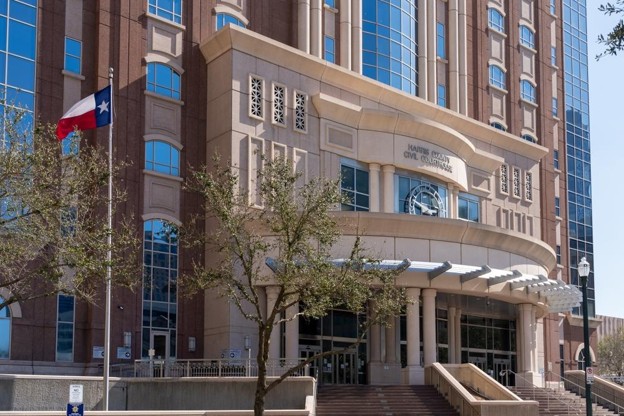
Those trials line up against a Texas legal market where actual courtroom experience has become statistically rare. Federal criminal jury trial usage dropped from 8.2 percent of cases in 1962 to 3.6 percent by 2013.
In Texas state district courts, civil jury trials fell from 3,369 in 1997 to fewer than 1,200 by 2012, a 64 percent decline.
For a commercial litigator who treats trial volume as the durable measure of a trial lawyer, the math says the bench is shrinking faster than the docket.
What Is A Pro Bono Case?
Pro bono work refers to legal assistance offered completely free of charge to individuals, nonprofits, or community organizations who otherwise would not be able to pay for a lawyer.
Such cases are very important for unlocking justice for those who have been left out, in particular in areas like family law, housing evictions, immigration, and civil rights.
Usually private law firms, corporate legal departments, and legal aid societies handle these issues, carefully screening clients for their income qualification and the strength of their case.
Testifying in a courtroom can be quite a rewarding experience for lawyers, as well as fulfilling one of their ethical obligations by taking on a pro bono case.
Finally, the main point of these cases is that through them the court system should be accessible to everyone based on the case merit, not the one who has more money.
The Felony Trials
Mensing’s felony trials cover a category of work most commercial litigators never touch. His roster includes:
- A capital murder case that ended in mistrial and dropped charges (State of Texas v. Johnson).
- A not-guilty verdict in a continuous-abuse case carrying 25 years to life (State of Texas v. Smith).
- One not-guilty verdict for a Houston university professor in a sexual assault prosecution (State of Texas v. Yorke).
- An embezzlement acquittal on a case where the defendant had given three separate confessions (State of Texas v. Petrie).
An 80 percent win rate is striking against any baseline. Prosecutors generally do not file cases they expect to lose.
Across federal criminal dispositions, more than 90 percent end in plea agreements; of the small fraction that go to trial, juries convict in the overwhelming majority.
Cases that survive to a jury are, by selection, the cases the state believes it can prove.
“I’ve partnered each time with a criminal defense lawyer that will know the ins and outs and who, frankly, were excellent trial attorneys,” Mensing said.
That pairing matters. Mensing came into each criminal trial as the commercial litigator alongside a seasoned criminal defense lawyer who handled the procedural quirks, the local bench, and what’s known institutionally about the prosecutor’s office.
That arrangement gave the client a doubled-up trial team without a fee and gave the commercial litigator courtroom time on cases the civil docket no longer reliably produces.
The TRLA Pro Bono Track
A second tranche of Mensing’s pro bono work moved through the Texas RioGrande Legal Aid Society.
Founded in 1970 to represent Texas farmworkers, TRLA grew into the nation’s third-largest legal aid provider and Texas’s largest. It basically serves roughly 23,000 clients per year across 68 counties of Southwest Texas with about 185 staff lawyers.
TRLA also operates public defender programs in ten rural South Texas counties under contract with the Texas Indigent Defense Commission, representing felony, misdemeanor, and juvenile defendants. For its more complex jury trials, the organization recruits outside trial counsel.
“They were looking for a lawyer to try all their cases,” Mensing said. “And so I tried cases for them all over Texas. One that was in Houston was for the mother of a minor child in a two-week custody trial.”
That custody trial was In re Xochiitil Trejo Whetzel. In this, the mother prevailed on every issue against a father whose position was supported by the court-appointed ad litem. Mensing stepped into the case ten days before trial.
His estimate of his total pro bono case contribution runs into the thousands of hours. And at least $1 million in legal services, by his own accounting.
“Part of it is to be charitable, but part of it is also self-interested. It helps me. One thing I love about trial work is you can always learn something new. So it’s a win-win,” he said.
What The Civil Docket No Longer Teaches
A professional logic drives that specific allocation. This logic runs on data that Mensing does not always cite explicitly. However, the trial statistics firmly confirm it.
Civil jury trials in Texas state district courts dropped 64 percent between 1997 and 2012. Over the same window, federal civil jury trials in Texas fell from 360 down to 135.
A commercial trial lawyer faces a changing landscape while building a practice in 2026. Cases that historically generated valuable trial repetitions now resolve through alternative avenues. These avenues include arbitration, motion practice, or pretrial settlement.
Criminal cases sit in a different posture.
Plea-to-trial ratios in criminal practice are even more lopsided. However, the trials that do happen run with substantially higher stakes. They also operate on much tighter timelines than most civil dockets.
A capital murder trial immediately puts a lawyer in front of a jury. This environment involves a highly contested fact dispute. Ultimately, the intense cross-examinations must land perfectly in real time.
A sexual assault trial demands credibility judgments on the witness stand that no commercial deposition prep simulates.
“Throughout my career, I’ve tried to think outside the box to get to trial as much as I possibly can and to hone my skills as a trial lawyer in all types of different settings,” Mensing said.
His point of comparison is the criminal defense bar rather than other commercial lawyers.
“Top criminal defense lawyers are incredible trial lawyers because one of the hallmarks of a great trial lawyer is the ability to think on your feet in the dicey circumstances under the brightest lights, under the most extreme pressure,” Mensing said. “That’s the position I wanted to put myself in, which is why I did these trials.”
The Skill That Transfers Across Todd Mensing’s Record As A Litigator
A transferable skill, in Mensing’s framing, is the read of a jury and the ability to recalibrate in real time.
Across more than 60 trials in state and federal courts, Mensing, a litigator with more than two decades in Texas, has carried what he learned from the criminal docket into his commercial work for all his clients, whether they be a Fortune 50 client, private equity fund, or a family offices.
“One thing I like to say to clients, whether it’s a Fortune 50 or a family office, is, ‘I’ve been in front of a lot of juries, and I know from experience, this is how this will play,'” Mensing said.
“I would not be able to do that with confidence if I had not gone outside the normal channels to gather as much trial experience as possible.”
That phrasing matters because it identifies what most commercial litigators can’t offer with the same backing.
In a market where most civil disputes never reach a jury, a commercial trial lawyer who has tried capital cases brings a kind of cross-training that doesn’t show up on a resume. Competence is in the cumulative reps, and the reps are accumulated where trials still happen.
The Hard Math Behind Todd Mensing’s Trial Volume as a Litigator
Texas Office of Court Administration data on trial volume reinforces the pattern. For criminal dispositions, jury trials accounted for fewer than 3 percent of all criminal cases resolved in recent years.
State and federal civil jury trial rates in Texas hover around half a percent of all civil dispositions. The vanishing trial trend has reshaped the supply of trial experience available to clients hiring trial lawyers.
Against that backdrop, AZA Law has tried over 110 cases since 2018, including 6 trials in 2020 when most courts were closed because of COVID-19.
That trial-per-attorney ratio is unusual for a boutique law firm. Mensing’s role in the firm’s trial volume includes the felony trials that, by his own description, supplied the formative reps he now relies on in commercial work.
The criminal docket, in his account, is the training ground for the civil one. Pro bono case is the access point. Co-counsel from the criminal defense bar is the technical safeguard.
The combination has produced multiple felony trials, an 80 percent win rate, and a body of jury time that most commercial litigators of his generation have not accumulated.
Leave A Reply







Who Is Responsible For Pest Problems In Dallas Rental Properties
Read More
Considering A Sexual Abuse Claim? Know What Legal Support Offers
Read More
When Should You Hire Personal Injury Lawyers After An Injury?
Read More
North Carolina’s Contributory Negligence Rule: Why A Small Mistake Can Bar An Injury Claim
Read More
What Families Can Do When A Nursing Home Injury Has No Clear Explanation
Read More
0 Reply
No comments yet.