Summarize using AI





Prompt copied. Paste it into Gemini.
Listen to this article
Quick Answer: Do Personal Injury Lawyers Work On Contingency

Most personal injury lawyers work on contingency, meaning their payment depends directly on winning your case. The firm advances out-of-pocket costs and collects a pre-negotiated percentage, typically between 33 and 40 percent, only after securing a recovery.
Most personal injury lawyers work on contingency fee arrangements rather than billing clients by the hour. Under this structure, an attorney secures payment only after obtaining a successful settlement or court verdict.
If the firm fails to recover compensation, the client owes no legal fees. When consulting localized firms, claimants must carefully evaluate the exact percentage terms of the agreement.
Do Personal Injury Lawyers Work On Contingency Fee Structure?
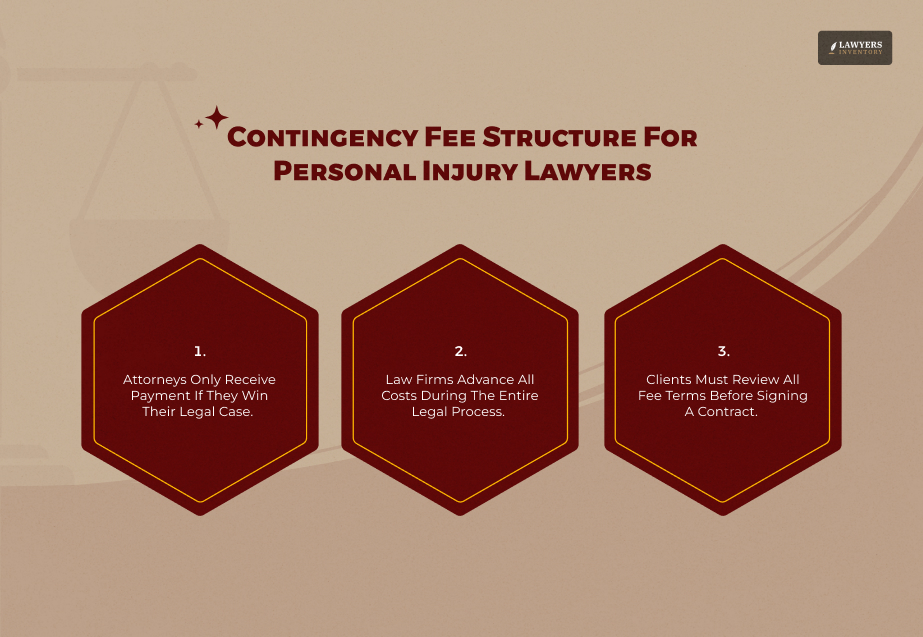
Most personal injury lawyers work on contingency fee agreements rather than billing clients via traditional hourly retainers.
Under this civil litigation framework, an attorney’s right to financial compensation depends entirely on the outcome of the case.
The law firm advances all out-of-pocket litigation expenses. They only collect their professional fees after securing a successful settlement or a winning jury verdict.
If the firm fails to recover compensation, the client faces zero financial liability for the attorney’s labor. This structure democratizes the civil justice system.
It allows injured individuals to challenge well-funded insurance corporations without risking their personal savings.
However, state bar ethics boards enforce strict boundaries regarding these contracts. Claimants must analyze how a specific firm structures its percentages, cost deductions, and operational expenses before signing a binding retainer agreement.
Types Of Claims Contingency Attorneys Manage
Contingency lawyers in personal injury cases usually don’t ask for money upfront. They only get paid if they win for you. That’s why they usually take cases where compensation might be given.
Here are some cases they often handle:
- Car crashes
- Slips and falls
- Medical Mistakes
- Motorcycle and truck accidents
- Cases where someone died wrongly
- Accidents at work or construction sites
- Injuries from work or birth
- Cases of abuse in nursing homes
- Bites from dogs
- Bicycle or pedestrian accidents
- Claims for work injuries
If you got hurt in a different kind of accident and it caused big injuries, personal injury attorneys may be able to help.
They work based on winning your case, so you don’t have to worry about paying upfront. They’ll fight for what you deserve from the insurance company or in court.
Particular Types Of Lawyers Cannot Operate On Contingency
Ethical rules strictly restrict when attorneys can use contingency agreements. Under ABA Model Rule 1.5(d), lawyers cannot execute contingency contracts in criminal defense actions or standard domestic relations cases, including divorces and child custody disputes.
Public policy bars these arrangements to prevent lawyers from gaining a financial stake in dissolving families or avoiding criminal sentencing.
However, a distinct legal exception exists for collection actions. Attorneys can legally utilize a contingency fee structure when recovering post-judgment balances or liquidating past-due child support and alimony orders.
How Does Your Contingency Agreements Operate
When they handle your case on a contingency basis, they take care of all the expenditures that pop up while working on your case.
You won’t have to worry about paying them upfront or giving them a retainer because they use their firm’s money to cover everything that comes up.
Here are some of the expenses:
- Paying experts they bring in
- Costs for looking at important evidence like forensic data
- Fees for filing stuff in court
- Getting crucial documents like medical records or reports from accident specialists
These are just some things they might need as they create your case against the person responsible.
But here’s the good part: when the attorneys work on a contingency, you don’t have to pay for these expenses. They handle it all because they believe you shouldn’t have to take more risks while seeking justice.
How Do Contingency Attorneys Get Remunerated
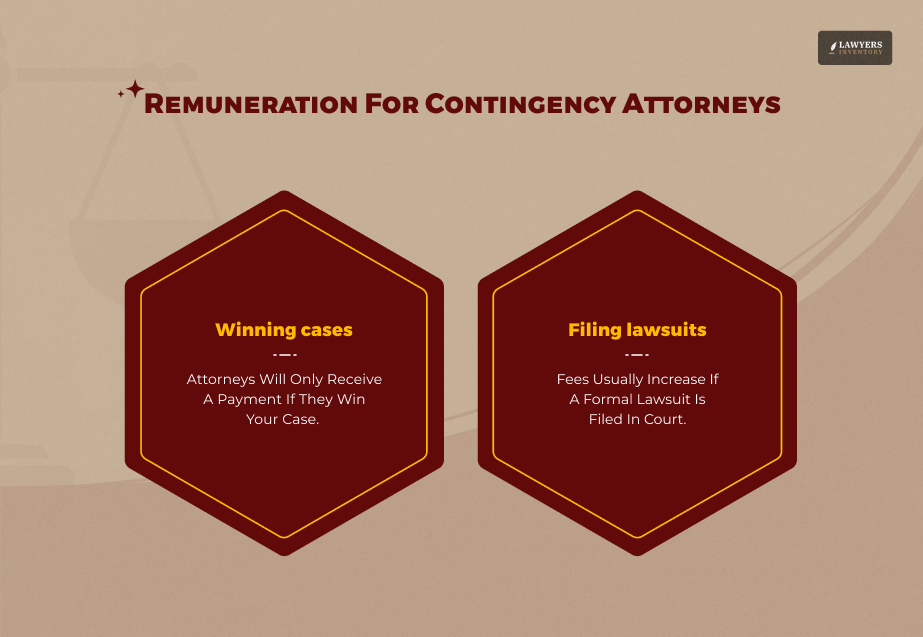
One of the best things about hiring a lawyer on a contingency is that they only charge when they beat the opponent.
If they can’t win your claim or get you compensation for what happened, you won’t have to disburse for their work. That means they will not be entitled to get back the money on your lawsuit if they fail.
But if they do win, a part of what you get as compensation will go toward paying the lawyer’s fees and the expenses they had. The exact part can differ a lot from case to case.
Personal Injury Law Authority states clearly that standard contingency fee percentages are not uniform. Retainer agreements routinely feature a tiered percentage model based on the stage of litigation.
- Pre-Suit Settlement Stage: Firms generally charge a standard 33.3 percent (one-third) fee if they settle the claim before filing a formal lawsuit.
- Civil Litigation Stage: The fee typically escalates to 40 percent if the attorney must file a complaint in civil court. Preparing for depositions, executing motions, and entering a jury trial demands immense operational resources from the firm. [Source: Griffith Injury Law]
Difference Between Attorney Fees And Case Costs?
So, do personal injury lawyers work on contingency? Yes. But while a contingency fee setup means you won’t have to pay your personal injury law firm upfront, there might still be other costs you’ll need to cover yourself if you’re pursuing a personal injury case.
Besides the lawyer’s fees, there are other expenses that come with this type of lawsuit.
Claimants must separate attorney fees from out-of-pocket litigation costs. Legal fees compensate the firm directly for its professional labor and strategy execution.
Conversely, legal costs represent expenses paid out to third-party vendors during case development.
- Court Filing Fees: Administrative expenses paid directly to the civil court clerk to open the lawsuit.
- Expert Witness Retainers: Fees paid to medical specialists or accident reconstruction engineers to provide objective courtroom testimony.
- Deposition Expenditures: Invoices generated by court reporters to transcribe official statements under oath.
Retainer contracts specify how firms manage these costs. Many firms advance these costs upfront and deduct them from the final settlement.
Therefore, it’s best that you read the contract details closely to verify your financial liabilities if the case fails. [Source: American Bar Association]
The Critical Calculation: Gross Recovery vs. Net Recovery
Claimants must verify how a contract structures fee deductions. According to Litigation Authority, the choice between a “gross” or “net” calculation alters your final payout by thousands of dollars.
- Gross Settlement Deduction: The attorney calculates their percentage from the total amount recovered. Only after taking this fee does the firm deduct third-party case costs. LawInfo reports that this method reduces the client’s final take-home recovery.
- Net Settlement Deduction: The firm subtracts all out-of-pocket litigation costs from the total recovery first. The attorney then calculates their percentage from the remaining balance. This structure favors the client.
Discuss Contingency Fee Agreements During A Consultation
Still not sure how those contingency deals with personal injury law firms work? You can get all the details straight from the lawyers you’re thinking about working with.
When you have a free talk with a lawyer, here are some things you might want to ask:
- What will your firm actually do to help me?
- Can you explain all about your contingency fees?
- How much of a cut do you take from what I get?
- Is there anything I can do to make your job easier?
- What should I do if the insurance people call me?
- How often will you update me about what’s going on with my case?
- Can you come to see me at home or in the hospital, or do I have to come to your office?
- How long do I have before I need to file a lawsuit?
- How much do you think my case is worth?
- What’s the plan going forward with my case?
Resolving Statutory Medical Liens

A final financial hurdle involves subrogation and medical liens, as per LawInfo. If a health insurance provider or hospital paid your medical bills following the accident, they maintain a legal right to reimbursement from your settlement.
A contingency attorney does more than secure a check. They negotiate directly with medical providers to lower these outstanding lien balances. Resolving these liens ensures that healthcare providers do not tap into your personal checking account after the case closes.
Leave A Reply







When To Hire A Civil Suit Lawyer: A Complete Guide To Non-Criminal Lawsuits
Read More
Is Hiring A Debt Relief Lawyer Right For You? Key Legal Options Explained
Read More
How To Hire A Criminal Defense Lawyer: Key Parameters And Pitfalls
Read More
0 Reply
No comments yet.