Today’s topic: Brushing scam!
The brushing scam has become a widespread problem for millions of Americans who are being sent unordered packages to their doorsteps.
Although receiving a “free gift” may appear harmless at first, the legal and privacy consequences are alarming.
This scam enables third-party vendors to increase their credibility by posting fake, verified purchases in your name.
As of February 2026, the Federal Trade Commission has stepped up its efforts to combat the brushing scam.
According to recent reports from the Better Business Bureau, there has been a 30% increase in brushing scam reports on Amazon since the end of 2025. (Source: BBB.org)
Lawsuits are currently pending in federal courts against data brokers who sell the addresses of consumers to international sellers for the use of these schemes.
State Attorneys General in California and New York are also investigating large-scale “brushing farms” that violate consumer privacy to affect market algorithms.
In this article, we will discuss the following:
- The mechanics of how third-party sellers carry out this fraud.
- Federal laws that govern the ownership of unordered merchandise.
- The link between unordered packages and identity theft.
- How to protect your online accounts from these occurrences.
Understanding The Mechanics Of The Brushing Scam
The brushing scam is a complex type of search engine and review fraud practiced by dishonest online merchants.
By shipping cheap merchandise to real addresses, online merchants can create “verified” five-star reviews that deceive other consumers into purchasing low-quality merchandise.
How Sellers Get Your Information
Victims often wonder, “What is a brushing scam, and how did they get my address?” More often than not, your information has been obtained from a previous data breach or “people search” sites that harvest public information.
Sellers buy these lists to obtain genuine shipping addresses that will verify their sales volume.
The Role Of Marketplace Algorithms
The brushing scam amazon sellers employ is intended to take advantage of the “A10” or other ranking algorithms. These algorithms rank products with high sales velocity and positive reviews.
By “brushing” a product, the seller can bump their product to the first page of search results, resulting in thousands of dollars in legitimate sales.
Legal Rights And Unordered Merchandise In The US
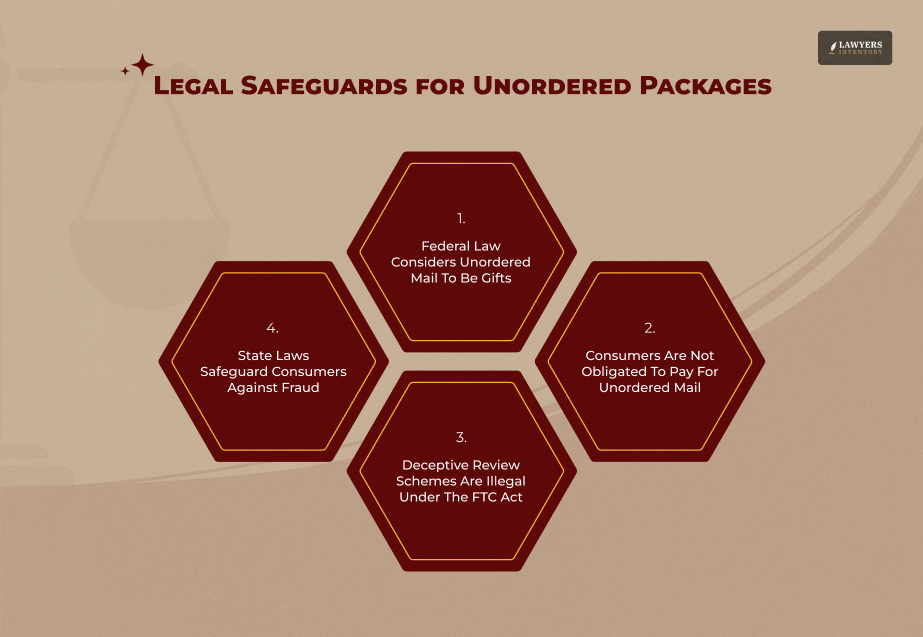
The law is in place to protect anyone who receives an unordered package. It is important to understand the law so that victims of the brushing scam can understand that they are not responsible for the unordered packages they receive.
The Postal Reorganization Act Of 1970
According to federal law, if you get unordered merchandise in the mail, you can consider it a gift.
You have the right to keep it, dispose of it, or donate it to someone else without sending any money to the sender.
You are not required to return the brushing scam merchandise or pay any “shipping fees” later.
Prohibitions Against Unfair Trade Practices
The FTC Act bans “unfair or deceptive acts or practices in or affecting commerce.” The brushing scam falls under this category because it misleads other consumers who use these fake reviews.
Federal agencies rely on these laws to sue companies that stage these activities to manipulate market competition.
The Connection Between Brushing And Identity Theft
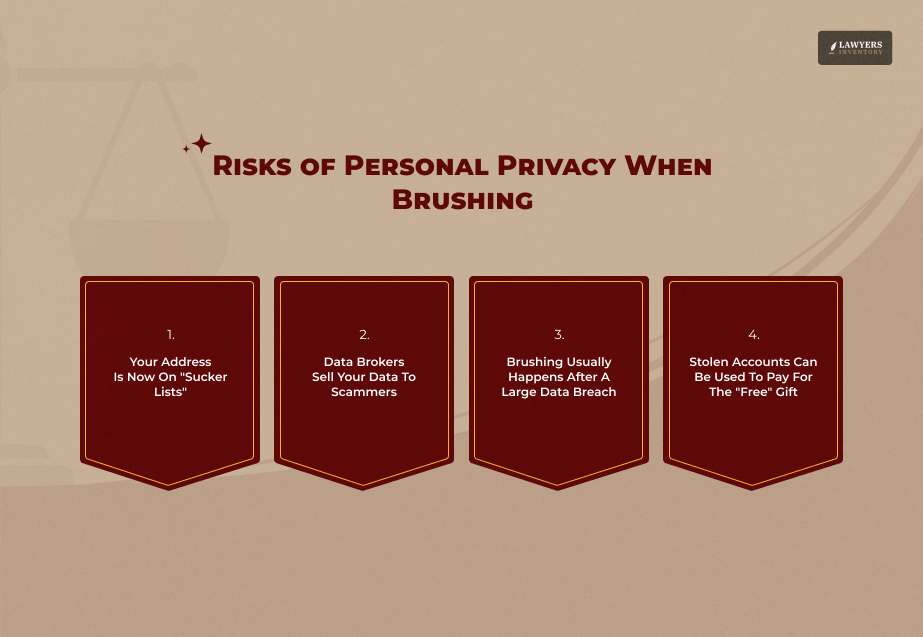
Receiving a random box is usually the first indication of a bigger security issue. Although the brushing scam itself does not charge you any money, it shows that your own personal information is in the possession of malicious individuals.
Finding The Privacy Risk
If a seller starts a brushing scam, they already have your name, address, and possibly your phone number.
This alone is usually enough for malicious individuals to try “account takeovers” or “SIM swaps” if they have other pieces of information.
The Problem Of Compromised Accounts
If you recognize a brushing scam Amazon package in particular, look at your order history right away.
Sometimes, scammers will not only use your address but also hack your account to make purchases with your saved payment information.
This is no longer a review scam but an actual theft of money.
Read Also: ListCrawler Cartel Scam: A Guide To Recognizing And Stopping Extortion
How To Protect Yourself From Future Scams
Handling a brushing scam needs proactive measures to ensure that your online life is always safe. Failure to address the packages will mean that the data leak, which triggered the whole process, will continue unabated.
Protecting Your Marketplace Accounts
If you feel that you have been a victim of an Amazon brushing scam, it is important that you change your password immediately. Activate two-factor authentication (2FA) to ensure that your account is not accessed by anyone who might not have your best interests at heart.
Effective Reporting Of The Incident
It is always important that you report the incident of a brushing scam to the platform from which it originated. Amazon, eBay, and Walmart have dedicated fraud teams that investigate these sellers.
Environmental And Safety Issues With Brushing
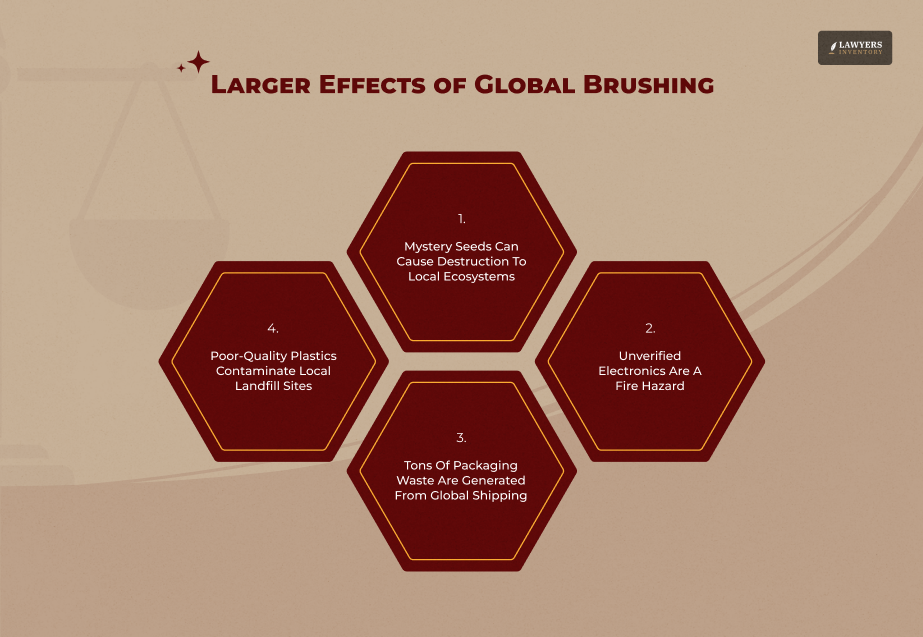
The brushing scam is more than just a legal issue; it also has tangible effects. Many of the products being shipped are low-quality plastic products or even dangerous materials.
Waste And Environmental Damage
Millions of tons of low-quality, unwanted products are dumped into landfills due to the brushing scam.
These products are not recyclable. The carbon footprint of shipping millions of “ghost” packages around the world is substantial. (Source: EPA.gov)
Risks Of Unverified Products
Other times, a brush scam may come with seeds, supplements, or electronics that do not comply with US safety regulations.
In 2020, the USDA cautioned Americans against planting “mystery seeds” that had been mailed to them, which could be invasive or carry diseases. (Source: NY Times)
Read Also: Protecting Your Assets From The Coinbase Text Scam
FAQs – Common Brushing Scam Questions
The increasing number of e-commerce sites has raised the question, “what is a brushing scam amazon sellers use?”
These questions cover the most common concerns for US citizens who are currently experiencing the brushing scam phenomenon.
If you are a victim of a brushing scam, it does not affect your credit report because you received a package.
The thing that you should be concerned about is that the person who has your address may also have your Social Security number.
You should check your credit report at AnnualCreditReport.com to see if anyone has applied for a new credit card in your name.
No, you cannot be sued for keeping unordered merchandise. This is very clearly stated by the Federal Trade Commission.
Even if the package contains a note asking for payment, you have the right to keep it as a free gift.
A company that threatens you with a lawsuit for not paying for a “brushed” item is itself engaging in mail fraud.
The seed scam is a particular and dangerous form of the brushing scam. Merchants send out packages of unknown seeds to boost their rankings in the “Garden” category.
Customs do not inspect the seeds. As a result, they can bring invasive insects to American soil.
If you get seeds, do not plant them or dispose of them in the trash where they can germinate. Instead, call your local Department of Agriculture office for instructions.
Leave A Reply






Hung Jury vs. Mistrial: What Is The Difference And Why It Matters
Read More
NarodniyDimUkraina: An Overview Of The Kyiv-Based Brand Preserving Ukrainian Craftsmanship
Read More
What Is A Mistrial? Legal Definition, Causes, And What Happens Next
Read More
What Is A Sequestered Jury? Legal Definition, Process, And Everything You Need To Know
Read More
What Is A Hung Jury? Legal Definition, Causes, And What Happens Next
Read More
0 Reply
No comments yet.