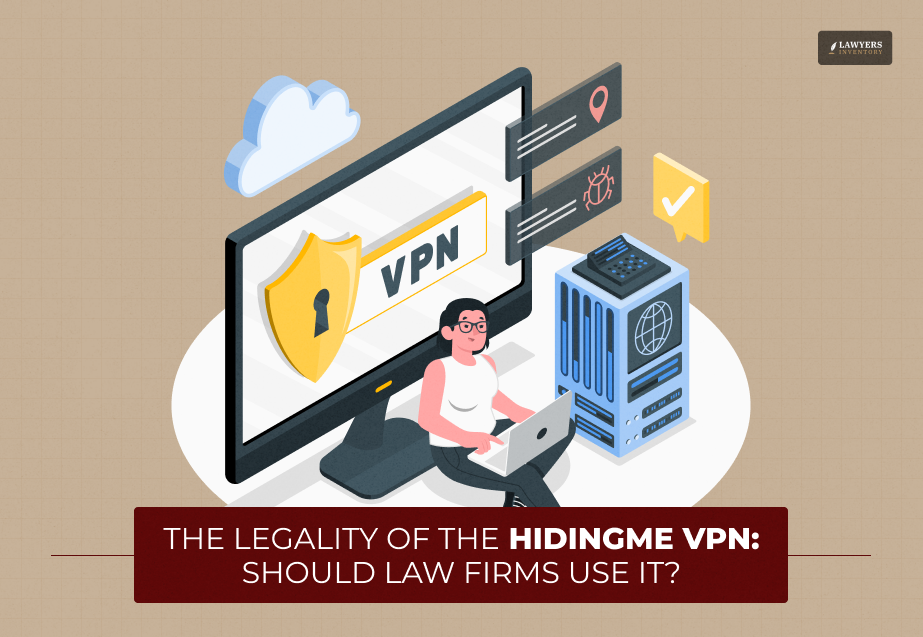
Today’s topic: Should law firms use HidingMe Com (Hide.me) VPN?
When it comes to the modern legal landscape, we can all collectively say that the traditional office perimeter has effectively dissolved.
With partners and associates frequently accessing sensitive case files from courthouses, transit hubs, and remote home offices, the “duty of technology competence” is no longer a suggestion – it is a professional mandate.
Protecting attorney-client privilege in a digital-first world requires more than just strong passwords. At present, it needs a robust encryption layer to shield data from sophisticated intercepts.
As a result, this brings many firms to a critical crossroad: which tools offer genuine security versus mere marketing promises?
For those trying to understand hide.me (hidingme com), the question isn’t just about speed or server counts.
Rather, it is about whether this specific VPN infrastructure aligns with the high ethical and legal standards required to safeguard the sanctity of the law.
In this article, we will talk about the following:
- About the HidingMe Com VPN.
- Features, user reviews, and pricing of the VPN.
- Is using the platform legally compliant?
- Ethical obligations and ABA Models rules.
- Risks and benefits that law firms must consider before choosing the platform.
- Is HidingMe Com the right choice for your law firm?
Therefore, keep reading!
About HidingMe Com (Hide.me)
To evaluate whether a VPN is suitable for a legal practice, one must look past the interface and into the infrastructure.
Founded in 2012 by a team of “tech geeks” frustrated by digital restrictions, hide.me (hidingme.com) was engineered on the principle that internet freedom is a right, not a privilege.
While many consumer VPNs prioritize streaming, HidingMe Com’s development is rooted in “systemic anonymity” – an approach that aligns with a law firm’s non-negotiable risk management needs. (Source: Hide.Me)
The provider’s mission centers on transparency, evidenced by their 2013 debut as one of the first in the industry to publish a Transparency Report.
Now updated through 2026, these reports verify that despite receiving numerous data requests, hide.me has no logs to surrender.
Furthermore, their support for the Electronic Frontier Foundation (EFF) demonstrates a philosophical commitment to defending digital civil liberties.
For a law firm, this isn’t just software; it is a tool built on the intent to provide “speedy, easy, and secure” connections that protect the sanctity of professional business.
Features For Legal Professionals
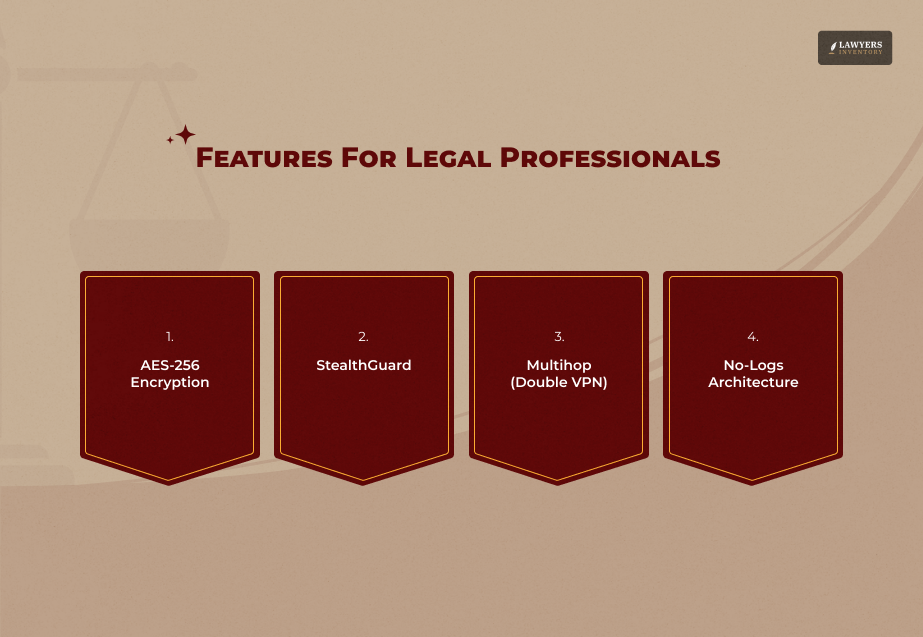
For the modern practitioner, hide.me provides several specialized technical safeguards that directly address the vulnerabilities of remote legal work:
AES-256 Encryption:
This is the industry “Gold Standard.” It employs a symmetric key so complex that it is computationally infeasible to crack, ensuring that even if a firm’s data packet is intercepted on a public courthouse Wi-Fi, it remains unreadable.
StealthGuard:
Standard “Kill Switches” often fail if the software crashes. StealthGuard allows a firm’s IT administrator to bind specific applications – such as an Outlook client or a Case Management System like Clio – to the VPN.
This ensures these apps cannot transmit data unless the encrypted tunnel is active, effectively eliminating accidental leaks.
Multihop (Double VPN):
For high-stakes litigation or sensitive investigations, this feature routes traffic through two separate encrypted servers in different jurisdictions.
This adds a layer of “plausible deniability” and makes traffic analysis nearly impossible for third-party observers.
No-Logs Architecture:
Technically, the service is built on a “zero-persistent-data” model. It does not store IP addresses, session logs, or browsing history, which is a critical defensive layer against broad-sweeping discovery requests or subpoenas.
HidingMe Com VPN Review
From a professional standpoint, a tool is only as good as its reliability. In our review of hide.me for legal environments, three factors stood out:
Independent Audit Verification:
Trust is a legal requirement, but “verify” is the professional standard. hide.me was among the first in the industry to undergo a third-party security audit by Leon Juranic (DefenseCode), proving their no-logs claims are not just marketing, but a technical reality. This provides firms with a clear “due diligence” trail.
Performance Consistency:
High-speed 10Gbps servers mean that large discovery file transfers or high-definition video depositions do not suffer from the latency or “jitter” that often plagues cheaper VPNs.
Jurisdictional Resilience:
Unlike US-based providers that can be served with National Security Letters or gag orders, HidingMe Com operates out of Labuan, Malaysia. This geographic separation provides a significant legal “buffer” for firms handling sensitive international or corporate data.
Does A VPN Influence Internet Speed?

Usually, no. While all VPNs add some overhead due to encryption, hide.me uses modern protocols like WireGuard and specialized "Bolt" technology to keep speeds comparable to an unencrypted connection.
HidingMe Com Pricing
For most firms, the 28-month plan offers the highest ROI on “defensible due diligence.” At just $2.49/month, it provides a cost-effective way to ensure that every mobile device and remote laptop in the firm is encrypted.
This is something that helps fulfil the “reasonable effort” standard required by ABA Model Rule 1.6 without a significant capital outlay.
Here’s a look at the pricing:
| Plan Duration | Monthly Cost | Total Commitment | Key Professional Benefit |
| 28 Months (Best Value) | $2.49 | $69.99 | Includes 4 EXTRA months; 30-day money-back guarantee. |
| 12 Months | $4.58 | $54.99 | Balanced term for annual firm budget cycles. |
| 1 Month | $11.99 | $11.99 | No long-term commitment; ideal for short-term litigation projects. |
| Free Plan | $0.00 | $0.00 | No credit card required; perfect for testing software compatibility. |
The Legal Framework: Is Using HidingMe Com VPN Compliant?
When a law firm selects a VPN, the provider’s physical and legal headquarters are as critical as its encryption protocols.
HidingMe Com is based in Labuan, Malaysia, a jurisdiction specifically chosen for its robust privacy protections and the absence of mandatory data retention laws. (Source: Personal Data Protection Act 2010, Malaysia)
Unlike providers headquartered in the United States or “Five Eyes” countries, hide.me is not subject to the Stored Communications Act or National Security Letters, which can compel U.S. companies to secretly log user activity.
From a compliance standpoint, this jurisdictional separation acts as a strategic “buffer.” If a third party attempts to subpoena client metadata, they face significant international legal hurdles.
Because the service is architected on a no-logs basis, there is simply no “identifiable data” to surrender – a technical reality that has been verified by independent security audits.
Furthermore, using HidingMe Com helps firms meet GDPR and CCPA requirements by ensuring that data in transit is shielded from unauthorized interception. For a partner, this isn’t just about privacy; it is about defensible due diligence.
Utilizing a transparent, offshore-regulated entity demonstrates that the firm has taken “reasonable efforts” to move client communications outside the reach of domestic mass surveillance and commercial data harvesting.
Read Also: How Can QuikConsole Help Lawyers And Law Firms?
Ethical Obligations And ABA Model Rules
For legal practitioners, cybersecurity is not merely a matter of IT policy; it is a core component of professional ethics.
Under ABA Model Rule 1.1 (Competence), lawyers are obligated to understand the risks and benefits associated with relevant technology.
Failing to secure a digital connection while handling sensitive case data can be construed as a failure of this duty.
Furthermore, Model Rule 1.6 (Confidentiality) requires lawyers to make “reasonable efforts” to prevent the unauthorized disclosure of client information. (Source: The Tech Savvy Lawyer)
Using a tool like HidingMe Com provides a verifiable layer of encryption that fulfills this “reasonableness” standard.
The ABA Formal Opinion 498 further clarifies this by explicitly recommending the use of VPNs for virtual law practices and attorneys working in unsecure environments.
By routing traffic through HidingMe’s encrypted tunnels, a firm effectively creates a digital extension of its physical office. This ensures that the attorney-client privilege remains intact, even when the lawyer is working from a remote location.
Ultimately, deploying such technology is a proactive step in maintaining the high standard of care required to protect a client’s most sensitive interests from modern digital threats.
Which Information Is Stored About Me In Hidingme?

According to their no-logs policy, hide.me does not store:

• Browsing activity.
• IP addresses.
• Connection logs.

For paid accounts, they only store the email address used for signup, which customers can request to have removed. (Source: No-Logs Policy)
Read Also: Essential Cybersecurity Software Every Law Office Should Use
Risks vs. Rewards: What Law Firms Must Consider
| Category | The Risk | The Reward |
| Data Privacy | Domestic subpoenas/logging mandates. | Malaysian Jurisdiction; no mandatory logging. |
| Connectivity | Unsecured public Wi-Fi intercepts. | AES-256 Encryption; military-grade data shielding. |
| User Error | Accidental leaks during VPN drops. | StealthGuard; blocks traffic if the VPN disconnects. |
| Global Access | Restricted usage in “gray” regions. | Protocol Variety; Stealth tools for restrictive nets. |
| Due Diligence | Unverified “No-Log” marketing fluff. | Independent Audits; Certified privacy architecture. |
While the technical and legal advantages of hide.me are significant, firms must approach implementation with a nuanced understanding of global regulations.
The primary “risk” is not the software itself, but the legal landscape of the jurisdiction where it is being used.
In countries like China, Russia, or the UAE, the use of non-government-approved VPNs can inhabit a legal gray area or be outright restricted. (Source: TRA, Practical Law)
Firms with international offices must ensure that their use of HidingMe Com VPN complies with local telecommunications laws to avoid regulatory friction.
Furthermore, there is a clear distinction between a firm’s rewards when using Free vs. Premium or Business tiers.
While HidingMe Com offers a robust free version, law firms should prioritize the Premium or Business plans.
These tiers offer dedicated server access and higher-level support, ensuring that high-bandwidth activities – like streaming a remote trial – are never throttled.
Ultimately, the reward is a secured digital perimeter. By shifting from a “trust-the-network” model to a “zero-trust” model powered by HidingMe Com, firms mitigate the risk of data breaches that could lead to malpractice claims, reputational damage, and the loss of client trust.
When NOT To Use Hidingme VPN?
While Hide.me secures your data in transit, a VPN is not a complete cybersecurity solution. Instead, it protects the pipeline, not the device itself.
Therefore, law firms must recognize that encrypting public Wi-Fi traffic will not defend against structural vulnerabilities on an endpoint.
Specifically, a VPN cannot protect your firm in the following scenarios:
- Phishing Attacks: For instance, clicking a malicious link in an email bypasses your VPN completely.
- Compromised Credentials: Furthermore, if an attacker steals a password, only Multi-Factor Authentication (MFA) can block access.
- Physical Theft: Similarly, if a laptop is lost, you need local drive encryption like BitLocker or FileVault to secure data at rest.
- Malware Infections: In addition, a VPN does not replace Endpoint Detection and Response (EDR) software.
Ultimately, true ethical compliance requires a layered “defense-in-depth” approach. Consequently, you should use Hide.me to shield your data pipeline, but combine it with robust local security configurations.
Leave A Reply






Hung Jury vs. Mistrial: What Is The Difference And Why It Matters
Read More
NarodniyDimUkraina: An Overview Of The Kyiv-Based Brand Preserving Ukrainian Craftsmanship
Read More
What Is A Mistrial? Legal Definition, Causes, And What Happens Next
Read More
What Is A Sequestered Jury? Legal Definition, Process, And Everything You Need To Know
Read More
What Is A Hung Jury? Legal Definition, Causes, And What Happens Next
Read More
0 Reply
No comments yet.