Summarize using AI





Prompt copied. Paste it into Gemini.
The POCSO Act is the main statutory protection for children in case of their sexual abuse in India.
The protection of the childhood of young individuals is an inherent responsibility of the government and the court.
With regard to this, the POCSO Act is designed in such a manner as to ensure that any kind of crime against children receives utmost attention and is dealt with on a priority basis.
At present, there is a heated debate in the legal field about the age of consent in India. The Supreme Court of India is considering cases in this regard to see whether the age of consent should be reduced from 18 years.
In this article, we will elaborate on the following:
- The legal definition and scope of the legislation.
- Offenses and the scale of penalties under the law.
- Crucial court judgments that shaped the current legal standing.
- Federal and state roles in implementing safety measures.
- Recent updates and the ongoing debate over the age of consent.
What Is The POCSO Act And Why Was It Created
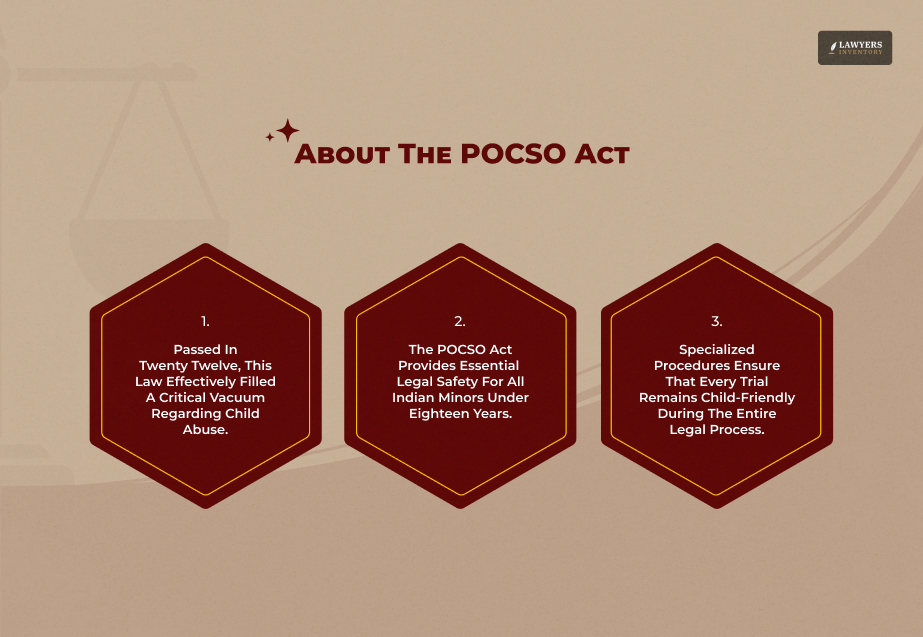
The POCSO Act marks a significant development in the Indian criminal justice system in terms of ensuring safety for minors.
Prior to the POCSO Act, there was no such provision in the Indian criminal justice system that would specifically take care of the peculiarities associated with sexual abuse of children.
What Is POCSO Act?
In order to get an understanding of what is POCSO Act, one needs to have knowledge about the legal vacuum that was filled by the act when it came into effect in 2012.
Origin And Full Form Of The Law
The full form of POCSO Act is Protection of Children from Sexual Offences Act.
- It is the primary form of Legal Protection for Indian Children.
- The Law was passed by Parliament in 2012.
- It aims to prevent child sexual abuse.
- POCSO Act protects all children under eighteen years.
- It ensures child-friendly trial procedures across India.
Classification Of Offenses Under The POCSO Act 2012
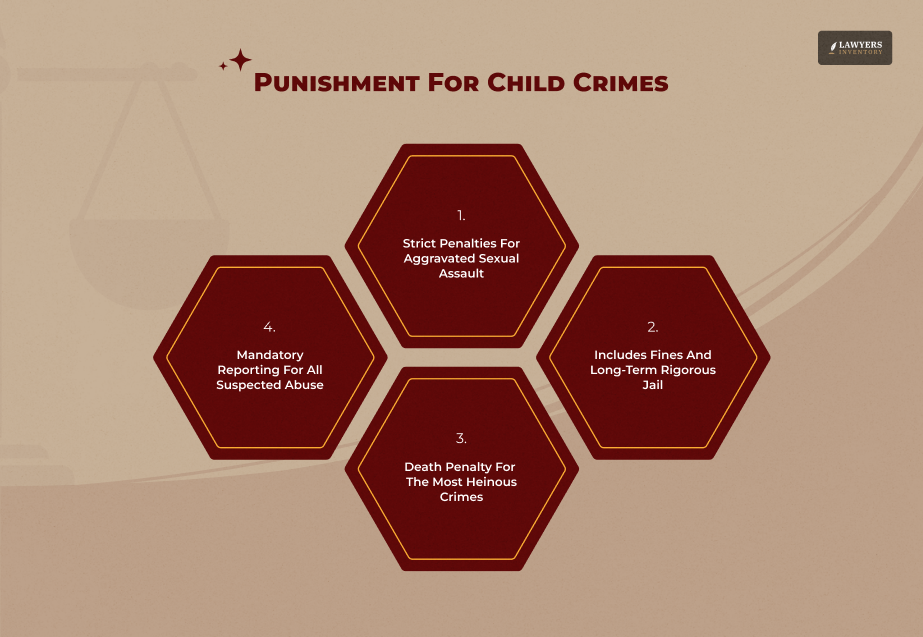
Different Types Of Sexual Assaults Have Been Classified By The POCSO Act In Order To Ensure Proper Punishments.
Sexual Assault And Aggravating Factors
There are particular factors that make the crime even worse because of the relationship or power held by the perpetrator. These include sexual assault when carried out by family members, law enforcers, and teachers.
Penalties For The Most Heinous Offenses
The penalties for the most heinous offenses under the POCSO Act range from rigorous imprisonment to capital punishment in extreme cases.
For example, aggravated penetrative sexual assault requires a minimum of twenty years of rigorous imprisonment.
Laws Relating To The POCSO Act
POCSO is a centralized act, but the successful implementation lies at the State level. The Union as well as State Governments are responsible for providing a protective atmosphere for the children.
Role Of Central Government In Policy
The Central Government formulates the primary guidelines and framework for establishing Special Courts. Moreover, it takes care of funding the victim compensation schemes across the country.
State Level Implementation And Local Child Welfare
Every State Government needs to establish Child Welfare Committees and ensure that there is a specialized training program for police stations.
They are also in charge of “One Stop Centres” for children requiring immediate healthcare and legal assistance.
Legal Procedures And The Role Of Special Courts
The POCSO Act makes sure that the court proceedings do not traumatize the child victim once again.
This is done through provisions for creating an exceptional atmosphere, different from regular criminal cases.
Setting Up A Child Friendly Court Atmosphere
There are special courts that can take cases registered under the POCSO Act 2012 in each district. The comfort and mental security of the minor come before anything else.
Guidelines For Collecting Evidence And Testimonies
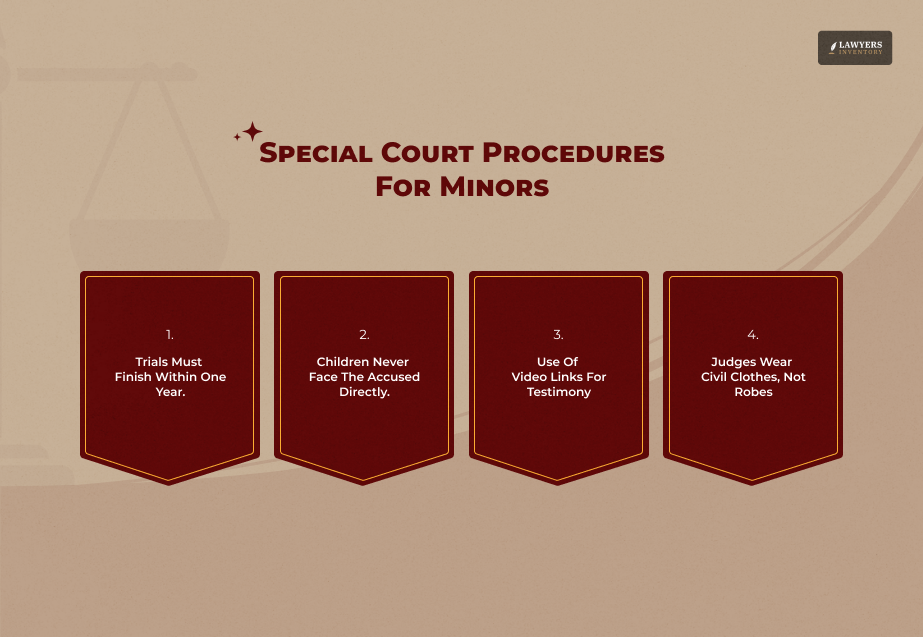
According to Section 33 of the law, the judge has to make sure that the child is not confronted with the accused in court.
Mostly, either a screen or a different room is used for recording the victim’s testimony (National Commission for Protection of Child Rights).
Trial Completion Within One Year
The law states that the evidence should be collected and recorded within thirty days of the court initiating the case. In addition to this, the whole trial should be over in one year.
Mandatory Reporting And The Duty Of Care
An aspect of this statute that stands out is the duty imposed by law on the general public and experts. Not reporting a crime is not only unethical; it becomes a criminal offense.
Section 21 And Failure To Report
If someone is aware that an offense has occurred, they have a duty to report it to the police. Failing to comply will land a person behind bars for six months or will be subject to a fine (Legal Service India).
Protection Of Individuals Who Report
In order to encourage people to come forward with information, the statute provides immunity to individuals from any civil or criminal proceedings on account of making reports in good faith. An individual will not be made accountable for giving wrong information.
Procedure Of Medical Examination
For a conviction for child abuse, medical evidence plays a vital role. This evidence is collected through the process of a highly specialized examination procedure.
Consent and Presence of Guardians
A medical examination of a child can only be done in the presence of one of his/her parents or an adult known to the child and who is trusted by the child. In the case of a girl child, the medical examination should be done by a lady doctor so that she feels at ease.
Immediate Medical Treatment Without FIR
The hospital/clinic should offer immediate medical treatment to the child victim. It shouldn’t take time to get a FIR registered before administering medical aid.
Read Also: Understanding The Core Differences Between Criminology Vs Criminal Justice
Important Judgments And Judicial Interpretations
Indian Courts have been actively involved in making sure the effectiveness of POCSO continues. Judges tend to clarify the “means” of the act whenever they encounter any complicated modern cases.
Landmark Judgment For Definition Of Contact
The landmark judgment provided by the Supreme Court in Attorney General for India v. Satish and Another (2021) 2 SCC 757 was of paramount importance.
As per the Supreme Court ruling, it was not required to demonstrate skin-to-skin contact in cases dealing with sexual offenses (Supreme Court of India).
Protecting The Identity Of The Minor
However, it should be noted that in the case of Nipun Saxena v. Union of India (2019) 2 SCC 1, the Supreme Court formulated the following strict requirements concerning victim privacy.
Namely, neither individual nor media can disclose the identity of the victim of such crimes.
FAQs – POCSO As The Primary Child Protection Law
Citizens can be confused when it comes to reporting a crime and understanding what it involves legally, according to the POCSO Act.
It is important to understand the POCSO Act to know your rights and obligations as an active member of society.
Any person must contact the nearest police or the Special Juvenile Police Unit in case he or she suspects that a child is a victim of sexual exploitation or other forms of abuse.
One may call the child helpline on 1098. Mandatory reporting applies to professionals and officials.
Firstly, they provide child-friendly trials.
Secondly, all such processes take no longer than one year, after which they are completed.
Thirdly, the Special Court prevents the child and the accused from meeting during the proceedings.
Yes, the Special Court may award interim and permanent compensation to the child. This compensation assists with paying for medical expenses and rehabilitation.
It should be paid by the state government through the District Legal Services Authority instantly.
Non-reporting of a crime under this act is considered a punishable offense. Any individual may be imprisoned for up to six months.
This is applicable to any individual having information regarding a crime committed currently or previously.
As per the existing provisions of law, there is no concept of “consent” below 18 years of age. This implies that even “romantic” acts between adolescents are punishable. This particular issue is under consideration at the Supreme Court level.
It is required by the law that the investigation of a case must be completed within two months. The trial of the case should be concluded within one year from its cognizance. However, due to heavy workload in many areas, delays in delivering a verdict are inevitable.
Leave A Reply







Is It Legal To Use True People Search? What Are Its Restrictions?
Read More
Case Is Being Actively Reviewed By USCIS – Meaning And Timelines
Read More
Refund Risk Under Income Tax Demand Notice Section 143(1) Summary Adjustments [A Complete Legal Assessment]
Read More
2026 Rules For The Legal Age Of Marriage In India
Read More
What Is A Wet Signature? Legal Guide And 2026 Rules
Read More
0 Reply
No comments yet.