A civil suit lawyer is an attorney who handles non-criminal legal disputes. People also call these professionals civil litigators. They represent plaintiffs and defendants in various legal matters. For example, they handle lawsuits involving businesses, contracts, real estate, and personal injuries.
Criminal defense attorneys focus on crimes. Conversely, civil suit lawyers focus primarily on recovering financial compensation. They also resolve structural disputes or secure specific property for their clients.
A civil lawsuit can involve individuals. It can also involve corporations or government entities. These disputes are civil matters rather than criminal offenses. However, navigating court deadlines and procedural rules remains highly critical.
A single administrative mistake can ruin your entire case. For instance, the court might dismiss your claim entirely. Alternatively, the judge might issue an automatic judgment against you.
Therefore, understanding the system is vital.
Civil Court Vs. Criminal Court: Key Differences
To understand the role of a civil suit lawyer, you must understand how civil court differs from criminal court. The U.S. legal system separates these two areas cleanly. Specifically, it divides them based on the nature of the offense and the ultimate legal goal.
The Objective
Criminal cases punish an individual for breaking societal laws. The penalties include jail time, probation, or state fines.
Conversely, civil cases resolve private disputes. They aim to repair financial or material harm. Therefore, the outcome typically involves money damages or specific court orders.
The Standard of Proof
Criminal prosecutors face a high burden. They must prove guilt “beyond a reasonable doubt.” This is the highest standard in the legal system.
In contrast, civil suit lawyers face a lower burden. They must prove their case by a “preponderance of the evidence.”
This means your legal team must demonstrate that your claim is more likely true than not. In simple terms, it requires a 51% certainty threshold.
The Right to Counsel
If you face criminal charges, the U.S. Constitution guarantees you a public defender. This applies if you cannot afford an attorney.
However, no constitutional right to a free attorney exists in civil court. Therefore, if someone sues you over a contract or property damage, you must hire a private lawyer. If you cannot afford one, you must represent yourself.
What Does A Civil Litigator Do? Key Stages Of A Lawsuit
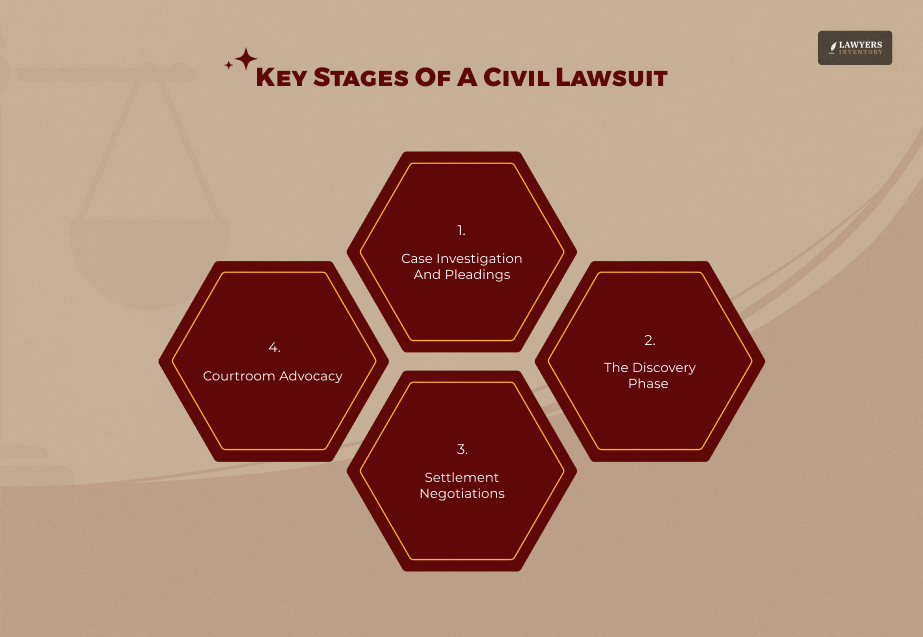
A civil suit attorney manages all phases of the litigation process. When you hire an attorney, they immediately take control of the case. They perform several critical tasks to advance your claims.
1. Case Investigation and Pleadings
First, your attorney gathers physical evidence. They also interview key witnesses and review financial documents. They do this to build a strong legal argument.
Next, they draft and file the initial paperwork.
For a plaintiff, this document is called the Complaint. It outlines the lawsuit’s legal grounds. For a defendant, this paperwork is called the Answer. It legally responds to the plaintiff’s allegations.
2. The Discovery Phase
Discovery is usually the longest part of a lawsuit. During this stage, attorneys from both sides formally exchange vital information.
Your lawyer sends written questions called interrogatories. They also request physical documents.
Furthermore, they conduct oral interviews called depositions. This crucial stage prevents surprises during the trial. It also uncovers the core facts of the dispute.
3. Settlement Negotiations
The vast majority of civil cases in the United States resolve before a trial ever begins. Your lawyer negotiates directly with the opposing counsel. They do this to secure a fair financial settlement.
Additionally, they use the evidence from the discovery phase as leverage. This helps them secure a favorable deal that protects your financial interests.
4. Courtroom Advocacy
Sometimes, negotiations fail completely. If this happens, your attorney takes your case to trial.
They manage jury selection and present opening statements. They also cross-examine witnesses. Finally, they argue legal motions before a judge or a jury to win your case.
Understanding Civil Attorney Fee Structures
The cost of hiring a civil suit lawyer depends heavily on several factors. These include their experience, geographic location, and practice area.
Legal market data indicates that hourly rates for specialized civil litigation frequently average over $350 per hour across the United States.
Attorneys generally bill clients using one of three primary fee structures:
| Fee Structure | Best Suited For | Key Details |
| Hourly Rates | Business disputes, breach of contract, real estate | Clients pay for the exact time spent on the case. Lawyers track this time in six-minute increments. |
| Contingency Fees | Personal injury, employment discrimination | You pay zero dollars upfront. The attorney takes a set percentage only if you win the case. |
| Flat Fees | Routine tasks, simple document drafting | You make a predictable, one-time payment for a highly defined legal service. |
Most hourly cases require an upfront payment called a retainer fee. This operates as a secure deposit. It typically ranges between $5,000 and $15,000. The attorney draws their hourly costs from this deposit as they work.
What Happens If You Ignore A Civil Summons?
A process server will hand you a legal packet if an individual or business files a lawsuit against you. This packet contains a Summons and a Complaint.
The document explicitly states that you must respond within a set timeframe. This deadline usually ranges between 20 and 30 days. The exact number depends entirely on your state court rules.
Ignoring this paperwork is a catastrophic legal mistake. It triggers immediate, severe legal consequences that can devastate your finances.
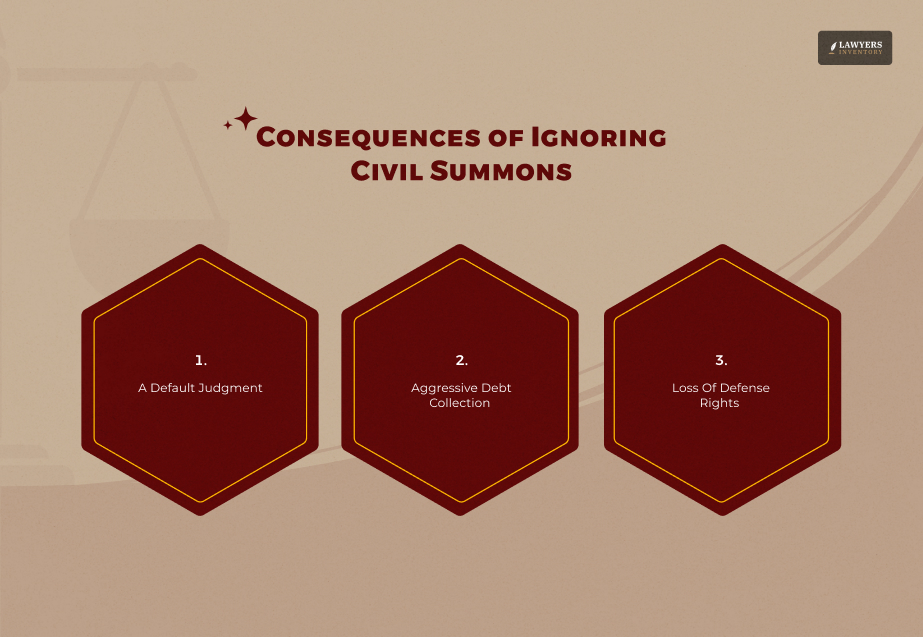
- A Default Judgment: The plaintiff automatically wins the case if you fail to file an official Answer within the deadline. The judge accepts the plaintiff’s claims as absolute truth because you failed to contest them.
- Aggressive Debt Collection: The plaintiff gains aggressive collection powers immediately after securing a default judgment. They can legally garnish your weekly wages. They can also freeze your personal bank accounts or place permanent liens against your real estate.
- Loss of Defense Rights: Fighting a lawsuit after a default judgment is incredibly difficult. Courts rarely overturn these orders. To fix it, you must prove that a severe emergency completely prevented you from responding.
Therefore, you must contact a civil litigation attorney the exact moment you receive a civil summons. Acting quickly ensures you meet the strict court deadlines and protect your legal rights.
Leave A Reply








When, Why, And How To Hire A California Personal Injury Attorney?
Read More
Understanding Fee Structures: Do Personal Injury Lawyers Work On Contingency?
Read More
How To Choose A Product Liability Lawyer In NYC: A Defective Product Legal Guide
Read More
Delayed Accident Symptoms: Protecting Your Health And Your Personal Injury Claim
Read More
0 Reply
No comments yet.