
Today’s topic: Starkist Tuna Class Action
The Starkist Tuna Class Action legal case has affected millions of consumer purchases over the past decade because of the alleged influx of empty cans, as well as the massive price-fixing schemes among the major players in the business.
These cases seek to provide compensation to consumers for overcharging or under-delivery of the quantity advertised. In this article, we will explain further on the following:
- The types of lawsuits being brought against Starkist, such as slack-fill and antitrust suits.
- Personal history of major land settlements and corresponding products.
- Legal definition of price-fixing and under-filling claims.
- Eligibility requirements for consumers, food service providers, and direct purchasers.
- Instructions on how to make a settlement claim.
- Tips by experts on how to check the authenticity of a settlement and how to avoid scams.
What Are The Starkist Tuna Class Actions?
The Starkist Tuna Class Action is not a single case but a set of legal struggles that have lasted well over a decade, from consumer protection claims regarding can weights to federal antitrust litigation involving global competitors.

Overview Of Major Legal Disputes
One of the first class action lawsuits to gain nationwide attention was the Starkist Tuna Class Action Lawsuit for under-filling.
This class action alleged that Starkist’s 5-ounce cans of tuna did not meet federal minimum weight requirements.
The Scale Of The Antitrust Litigation
Besides weight issues, the Packaged Seafood Products Antitrust Litigation took aim at Starkist for conspiring with Bumble Bee and Chicken of the Sea. The suit filed against the three major brands alleged price fixing to keep tuna costs unnaturally high for consumers.
Timeline & Key Cases
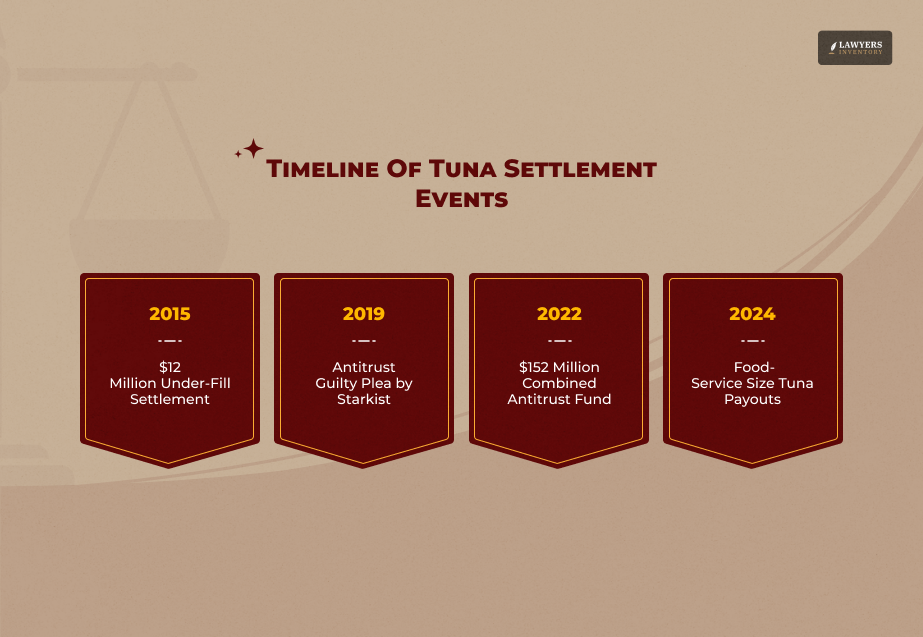
It is tricky to track a Starkist Tuna Class Action because many of the settlements run simultaneously.
The varied classes of buyers, from an individual shopper to a large restaurant buying enormous quantities, have different deadlines and requirements.
The Original Under-Fill Case
The Starkist Tuna Class Action gave consumers who purchased 5-oz cans from 2009 to 2014 the opportunity to redeem money or gift cards.
This marked the beginning of the scrutiny of the manner in which the company used to measure the “drained weight” of the product.
The Massive Antitrust Settlement
A settlement amounting to over $150 million was reached in the Packaged Seafood Products Antitrust Litigation.
This amount established a fund to compensate “end payers,” which also encompasses individual consumers who purchased tuna products for household consumption.
Labeling And Endorsement Issues
The other was a Starkist Tuna Class Action involving the “Heart-Check” trademark of the American Heart Association.
The plaintiffs argued that it constituted a paid endorsement that deceived health-conscious consumers into believing that it was a superior product compared to others.
Allegations: Legal Bases
Every case in the Starkist Tuna class action has its own legal foundation that varies from fraud litigation to Federal Trade Regulation. This understanding helps all consumers understand their rights in claiming money back for their purchases.
Under-Filling and Slack-Fill Laws
In the case of the Starkist Tuna Class Action Lawsuit, the attorneys involved were claiming that the manufacturer had a tendency towards “slack-filling.” This meant they were leaving too much air within the cans they produced, with the purpose of fooling the consumer into thinking they had more product within them, according to ClassAction.org.
Antitrust and Price-Fixing Claims
Plaintiff’s class action case, Packaged Seafood Products Antitrust Litigation, alleged a hidden conspiracy concerning the “Big Three” brands of tuna. Because these firms have chosen not to compete on price, Americans have been forced to pay a premium for a kitchen staple.
Dolphin-Safe and Sustainability Labels
It is worth noting that Consumer Organizations, along with Environmental Groups, brought a Starkist Tuna Class Action suit on account of “Dolphin-Safe” packaging concerning the safety of fishing practices.
Terms of Settlement & What You May Be Entitled to
The amount of compensation for the Starkist Tuna Class Action could be quite varied, as it purely depends on the case for which the individual qualifies for the compensation. Some offer some amount of cash, while others offer vouchers for the stores in the form of credits for the future.
Typical Consumer Refunds
Settlement members may have their choice between $25 cash or $50 in vouchers in the under-fill Starkist Tuna Class Action. These figures are usually lowered if too many people file, so that everybody gets something.
Antitrust Fund Distribution
In the case of the Packaged Seafood Products Antitrust Litigation, the amount is based on the volume of tuna purchased. Grocery chains and other direct purchasers received millions while individual consumers typically receive much smaller – and often changing – amounts.
Am I Eligible? – Consumer Checklist
Before filing for a Starkist Tuna Class Action, you will need to confirm that you fall within the “Class Definition.” Typically, this includes dates of purchase and the exact size of the can or pouch purchased.
Identifying Your Buyer Class
Are You a “Direct Purchaser” or an “End Payer”? Most retail buyers are end payers, but wholesalers who bought the product directly from the factories of the seafood company, Starkist, are considered direct purchasers.
Categories Of Products To Consider
Look back through your purchases for Starkist Chunk Light or Solid White Albacore. The Starkist Tuna Class Action may separate typical cans, packaging, and the larger 40-oz cans used in cafeterias.
Read Also: Clif Bar Class Action Lawsuit: What You Need To Know & How To Claim
How To File A Claim & What To Expect
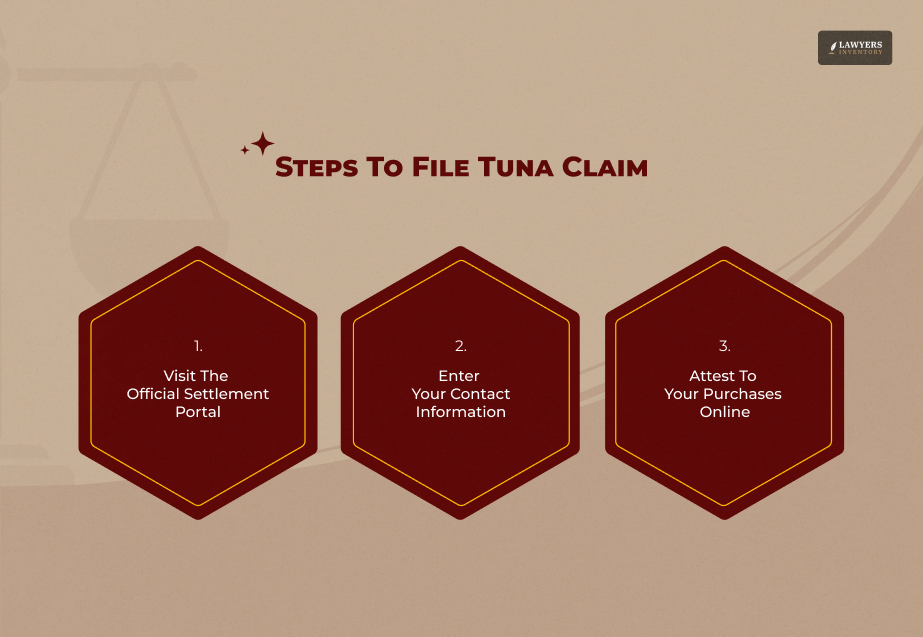
Applying for a Starkist Tuna Class Action usually involves an online procedure. Plaintiffs must apply before “The Bar Date” if they wish for their applications to be accepted by the court.
The Official Settlement Site
There is an official administrator website for any Starkist Tuna Class Action Lawsuit. Avoid those third-party sites that ask for a fee. A legitimate settlement is always free to join for eligible members.
The Payout Timeline
Following the submission of your Starkist Tuna Class Action claim, the court will need to conduct a Fairness Hearing. This is when the judge will give official acceptance of the agreement. Checks might not arrive by mail for months and sometimes years following this hearing.
Frequently Asked Questions (FAQs):
Many consumers have specific questions about the Starkist Tuna Class Action and how it applies to their everyday shopping. These questions address common issues that citizens face when dealing with large-scale seafood litigation.
An authentic Starkist Tuna Class Action notice will contain a unique Class Member ID and include a link to a website that ends in .com or .org and is administered by a court-appointed administrator. It should never request your Social Security number or your credit card information to process your claim.
In this instance, the deadline has passed for that particular Starkist Tuna Class Action Lawsuit. You want to check if there are any active settlements regarding the Packaged Seafood Products Antitrust Litigation, because new phases of payout sometimes open for different buyer groups.
Most Starkist Tuna Class Action settlements allow you to file a “Claim Without Proof” for a capped amount. You simply sign the form under penalty of perjury that you purchased the products during the eligible time frame.
The case of Starkist Tuna Class Action is equally important in the matter of corporate accountability in the food industry. Whether it involves making sure the cans are full or the price is reasonable, these legal battles are what safeguard your rights as a buyer.
If you also think that you are one of the victims of these acts, then you must be alert about the notification for the new settlements and the digital documents of your purchases.
Leave A Reply






Nunaturals Sweetener Recall FDA Warning – Complete Legal And Safety Guide
Read More
FDA Highest Concern Cake Recall Salmonella – Safety Alert And Guide
Read More
Shein Lawsuit: Copyright, Consumer Claims, And All Major Legal Battles
Read More
MSU Chemical Exposure Lawsuit Explained – Health Risks & Legal Impact
Read More
Girl Scouts Cookies Lawsuit Explained – Safety Claims And Legal Truths
Read More
0 Reply
No comments yet.