Quick Answer:

Super Lawyers is a nationwide legal directory owned by Thomson Reuters. It rates outstanding attorneys across more than 70 practice areas. According to the official Super Lawyers selection data, only the top 5% of lawyers in each state win selection each year. The top 2.5% of newer attorneys make the Rising Stars list. You cannot buy your way onto this list. However, selected attorneys must pay if they want to upgrade their profiles or buy ads.
As someone who has thoroughly researched this platform, I know how hard it is to evaluate legal directories. The legal industry overflows with badges, awards, and honors. Some are meaningful, while others are just marketing scams.
I wanted to find the truth about Super Lawyers.
What Is Super Lawyers? Overview Of The Rating Platform
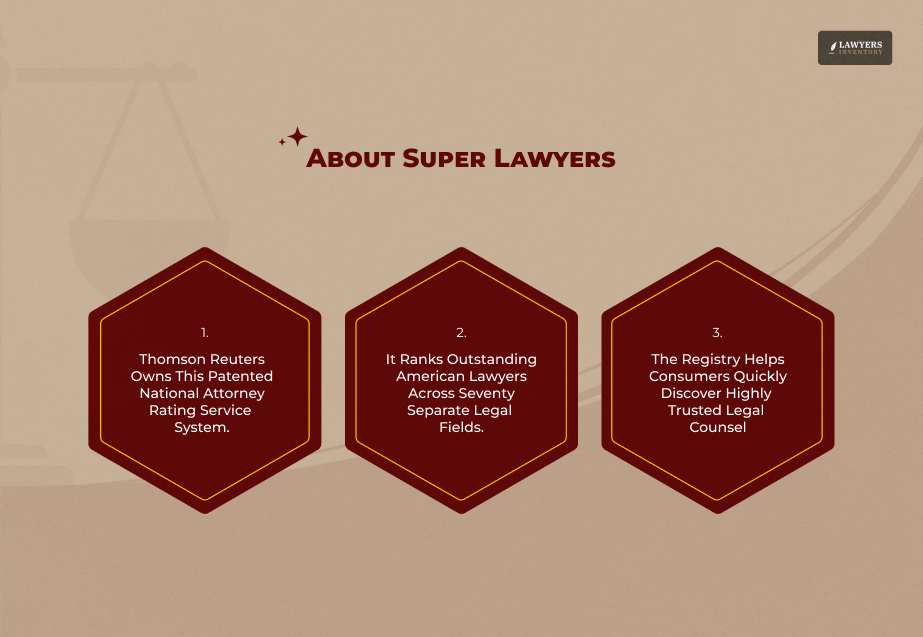
I began my research by looking at the core purpose of Super Lawyers. Thomson Reuters operates this service as a comprehensive legal directory – Legal Accolades.
According to the platform, it is a “rating service of outstanding lawyers from more than 70 practice areas who have attained a high degree of peer recognition and professional achievement.” [Source: Thomas Reuters]
It serves two main audiences:
- Helps everyday consumers look for a lawyer.
- Helps attorneys look for peer referrals.
The platform operates on a state-by-state basis. Every year, it publishes a list of premier legal professionals. I noticed that the directory covers all firm sizes – from solo practitioners to global firms.
I like that the platform tries to level the playing field. It does not just pick lawyers from the biggest firms. Instead, it relies on a specific vetting system.
For clients, this directory acts as a helpful filtering tool. It verifies an attorney’s professional standing. And for attorneys, it offers a badge of honor from a highly trusted information company.
The Super Lawyers Selection Process Step-by-Step
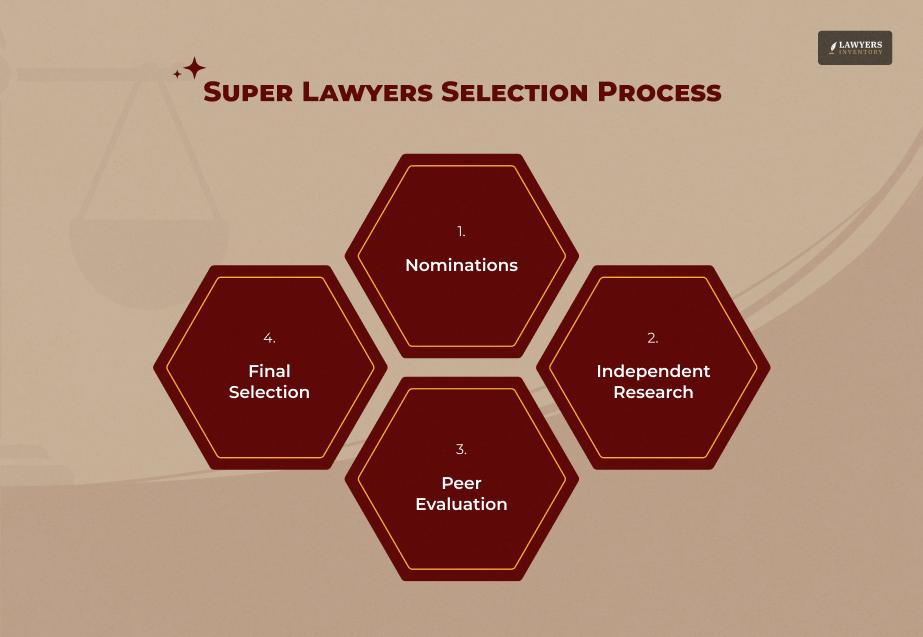
The core of the platform’s credibility rests on its selection process. I examined this process closely on the official Super Lawyers selection methodology page.
The company actually holds a U.S. patent for its system. This system uses a multi-phase setup to ensure objective results.
Here is the four-phase system:
Step 1: Creating The Candidate Pool
Firstly, the platform creates the candidate pool to list them. Here’s what it looks like:
- Peer Nominations: Licensed attorneys nominate peers they have seen in action. The system blocks self-nominations and voting blocks.
- Independent Research: The research team finds outstanding attorneys who missed formal nominations.
- Managing Partner Surveys: Law firm leaders provide feedback on top talent in their own firms.
Step 2: Testing 12 Evaluation Factors
The research team scores candidates on 12 points of peer recognition and achievement. These include verdicts, experience, honors, and pro bono work.
Step 3: Blue-Ribbon Panel Review
High-scoring candidates move to a panel review. Top-rated peers in that exact specialty evaluate the candidates.
Step 4: Final Selection And Category Limits
Lawyers only compete against peers from similarly sized firms. Local bars verify that every selected attorney is in good standing.
The 12 Indicators Of Professional Achievement
I want to highlight the exact metrics the research team uses during Step 2. As outlined by the Thomson Reuters research criteria, they look at twelve specific data points to grade a lawyer:
- Verdicts and settlements
- Transactions and major deals
- Representative clients
- Years of experience
- Honors and awards
- Special licenses and certifications
- Position within their law firm
- Bar association activity
- Pro bono work and community service
- Scholarly lectures and writings
- Education and employment background
- Other notable achievements
Super Lawyers vs. Rising Stars: Core Differences
During my research, I noticed two distinct lists inside the directory. The platform separates seasoned professionals from young talent. Both lists use the same 12 evaluation factors, but the rules for entry differ.
I created this simple table based on the official Super Lawyers eligibility guidelines to show the main differences:
| Feature | Super Lawyers List | Rising Stars List |
| Selection Cap | Top 5% of lawyers per state | Top 2.5% of lawyers per state |
| Age Limit | No age limit | 40 years old or younger |
| Experience Limit | No experience limit | 10 years or less in practice |
| Vetting Rigor | Full 12 performance points | Full 12 performance points |
Understanding Directory Costs: Is It “Pay-to-Play”?
I know many lawyers worry about “pay-to-play” schemes. Which is why I looked into this deeply. I can confirm through Super Lawyers’ terms of service that you cannot pay to get on the list.
You must pass the vetting process.
However, the platform turns into a commercial marketing business after the selection phase. And that is something that provides “maximum exposure and potential leads.” [Source: FindLaw]
Winners can keep a basic, free profile. Alternatively, they can buy premium features to get more clients.
According to the official Thomson Reuters legal marketing catalog, I discovered three main paid marketing options:
- Standard Profiles: These upgraded online profiles add photos, biographies, and direct contact buttons.
- TopSpots: These ads place an attorney at the very top of specific geographic search results.
- Print Advertisements: These are display ads inside Super Lawyers Magazine. The company distributes this magazine to bar members and consumers.
Is A Super Lawyers Listing Worth It For Your Law Firm?
I believe a Super Lawyers selection holds real value for modern law firms. This badge helps build trust quickly.
Based on modern legal marketing case studies, it provides three major peer and client benefits:
- Instant Credibility: Third-party validation removes the guesswork for clients who feel overwhelmed by choices.
- Better Conversion Rates: Displaying the badge on your website builds psychological trust with potential clients during initial consultations.
- Stronger Referral Networks: Other attorneys use this directory to find vetted co-counsel in distant geographic areas.
Review Of Value And Firm ROI
I tracked how this badge affects firm revenue and reputation. Many lawyers ask if the badge generates real leads. I found that the badge acts as a validation tool rather than a direct cold-call source.
When clients look for an attorney, they feel stressed. They face a serious personal or financial crisis. They want proof that a lawyer has skill. When I visit a law firm website, a prominent badge catches my eye immediately. It functions as an instant shortcut for quality.
Furthermore, I verified the client acquisition power of the Thomson Reuters network – which is not something that people are unaware of.
Their online directory gives small firms a fighting chance. If you run a small firm, you might struggle to compete with massive marketing budgets.
By holding a profile in their directory, you look just as credible as your biggest competitors. This visibility helps your firm secure cases from discerning clients who demand verified credentials.
Compliance Verification And Final Assessment Every Client Should Know
I checked this data against the official Thomson Reuters corporate directory. Legal choices cause major financial and personal impacts. This falls directly under strict consumer protection standards.
Legal directories provide great baseline information. However, consumers should check state bar records and hold initial consultations before hiring any lawyer.
I found that Super Lawyers remains a legitimate, heavily vetted accolade. It is a valuable tool for any law firm’s growth strategy.
Leave A Reply






Hung Jury vs. Mistrial: What Is The Difference And Why It Matters
Read More
NarodniyDimUkraina: An Overview Of The Kyiv-Based Brand Preserving Ukrainian Craftsmanship
Read More
What Is A Mistrial? Legal Definition, Causes, And What Happens Next
Read More
What Is A Sequestered Jury? Legal Definition, Process, And Everything You Need To Know
Read More
What Is A Hung Jury? Legal Definition, Causes, And What Happens Next
Read More
0 Reply
No comments yet.