Summarize using AI





Prompt copied. Paste it into Gemini.
Quick Answer: What Does A Background Check Show?

A background check typically shows criminal history, credit and financial records, identity verification, employment and education history, and driving records. Federal law limits how far back most of this information can go, generally seven years under the Fair Credit Reporting Act. Medical and genetic information stay off-limits until after a job offer. Most checks take one to five business days to complete. If a report contains an error, the applicant has a legal right to dispute it and see a copy before any adverse decision is finalized.
Millions of people search “what does a background check show” every year, usually while waiting on a job offer or a lease approval. The honest answer depends on who ordered the check and why.
Consumer Finance explicitly mentions that a background check includes “credit checks, criminal background checks, public records – such as bankruptcy filings and other court documents – and information related to your employment history.”
However, the legality related to these checks, the verification process, and your legal rights against such checks are a few things that will give you a leverage as a job seeker.
What Does A Background Check Show?
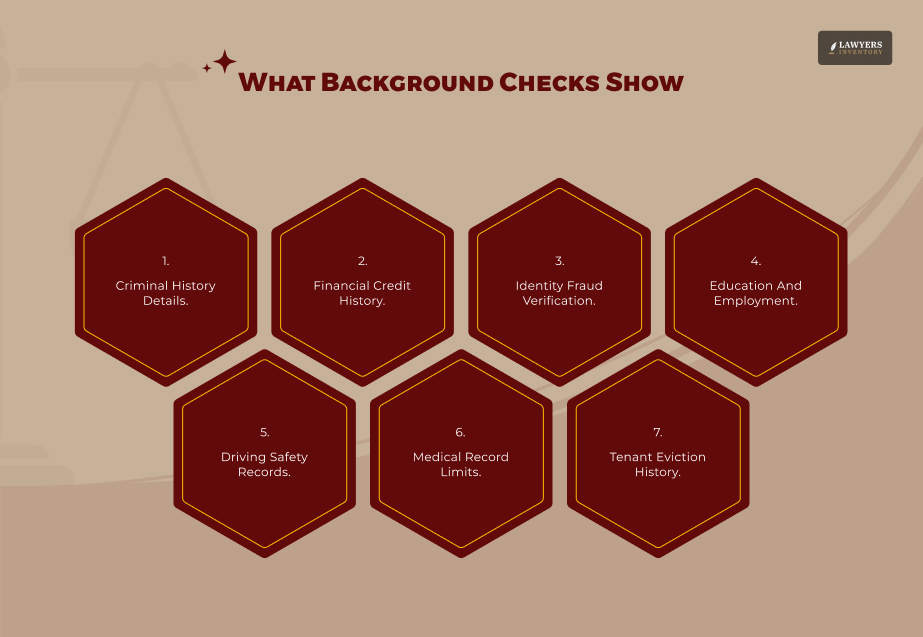
Here are some of the things that a background check will show:
1. Criminal History
Criminal history is the part of any background check to which most attention is paid. The report might contain felony and misdemeanor convictions.
It can also include pending charges. In most states, it includes arrests that did not result in convictions. [Source: California Civil Code § 1786.18 (2025), Justia Law]
Severity matters here.
Cases of grand larceny involve stealing an amount greater than the state-set threshold. The laws treat these cases as more serious. Different requirements for reporting apply to them. A person might not have been given an arrest record.
However, the conviction for the criminal offense can still be reported. Employers are expected to consider the seriousness of the offense. The report details the result of the court case. It does not detail the procedures leading to it.
Someone might have a public defender as their first lawyer. They will have a conviction or dismissal exactly the same on their record as someone who employed a private lawyer.
The report only discloses the decision of the court. It does not disclose whose counsel represented the person.
The Seven-Year Rule

The Fair Credit Reporting Act limits how long certain negative information can appear on a report. Arrests that did not result in conviction, civil judgments, and paid tax liens generally drop off after seven years. Criminal convictions have no federal time limit, though a growing number of states cap them at seven years regardless. If a case was ultimately dismissed, and the applicant later believes the original arrest amounted to malicious prosecution, that dismissal should still clear the way for the record to age off under the standard timeline. Applicants in states with stricter caps, including California and New York, often see cleaner reports than the federal floor would otherwise allow.
2. Credit And Financial History
A background check ordered for a role handling money, from bookkeeping to executive finance, often includes a credit report. This shows open accounts, payment history, and any bankruptcies, which can be reported for up to ten years.
It does not include a credit score. Employers can only see this information after getting written permission, and the report cannot be used to deny employment for reasons unrelated to the job’s financial responsibilities.
3. Identity Verification
Every standard background check confirms that the applicant’s Social Security number matches their name and reported address history. This step also flags any aliases or address discrepancies tied to that number.
It is largely a fraud check, confirming the person applying is who they claim to be, and it rarely surfaces anything an honest applicant needs to worry about.
4. Employment And Education Verification
Employers routinely confirm past job titles, dates of employment, and degrees earned. This step relies on cooperation from former employers and schools, which is where delays usually creep in.
Some organizations respond to verification requests by demanding notarized releases or charging processing fees for records that should be routine, a pattern close to malicious compliance with disclosure rules rather than a good-faith effort to confirm the facts quickly.
5. Driving Records
Any role that involves operating a vehicle, from delivery driving to school transportation, typically triggers a motor vehicle report.
This includes the following:
- Accidents.
- License suspensions.
- Traffic convictions.
Unusual charges can show up here too.
A DUI on a bike, treated as a criminal offense in several states even though no motor vehicle was involved, will appear on a driving or criminal record depending on how the state classifies it.
Applicants should know their state’s specific law before assuming a bicycle stop won’t follow them.
6. What’s Off-Limits Before A Job Offer (Medical Record)
U.S. federal law sets a clear boundary for sharing medical and genetic records.
Under the law and the ADA (Americans with Disabilities Act), employers are prohibited from inquiring about the existence of disabilities or medical history. They also cannot ask about family medical history
These restrictions apply at least until before a job offer is given. Employers can ask an employee for a medical certificate or doctor’s report only at later stages.
Such a disclosure from a medical professional should only be asked for if it is related to the job. It must also be necessary for the business.
Employers wish to fully remain within these legal limits. In some cases, they have made an ADA compliance checklist a part of the hiring process. Interviewers use this checklist.
They do this mostly to prevent asking such questions during the screening. Asking those questions would have breached these lines.
7. Rental And Tenant Background Checks
Background checks aren’t limited to employment. Landlords run similar reports before approving a lease, and those reports pull from a different set of records.
Eviction filings, including a Writ of Possession issued after a landlord wins an eviction case, can appear on a tenant screening report even if the tenant later resolved the underlying dispute.
During the pandemic-era eviction moratorium, many eviction cases were paused or dismissed, and some of those older filings may no longer meet the legal threshold for reporting, depending on the state and how the case was ultimately closed.
How Long A Background Check Takes
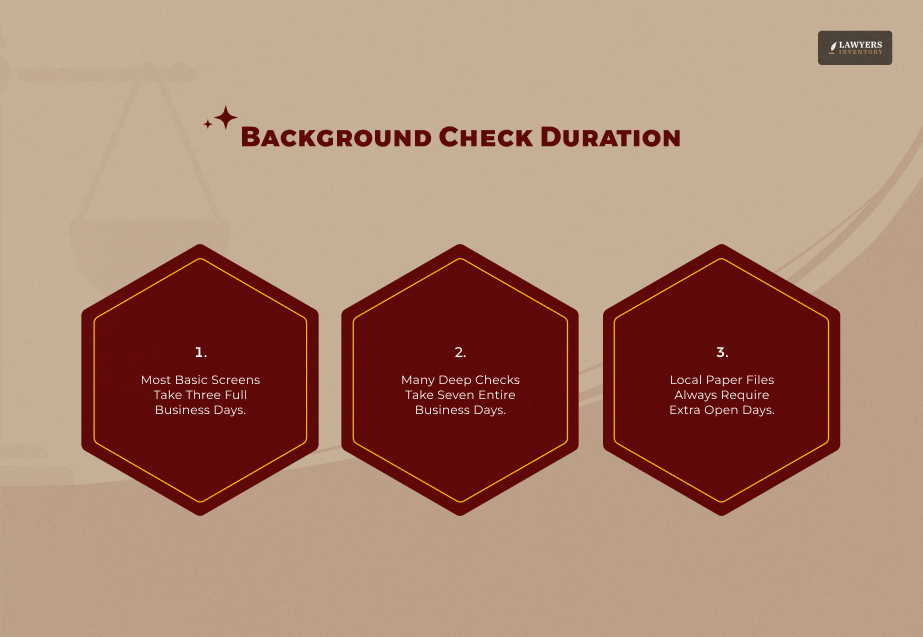
Turnaround time, or exactly how long a background check takes, depends heavily on what’s being verified. Identity checks and national database searches often return within minutes. County-level criminal record searches usually take one to two business days.
Employment and education verification tend to run longer, sometimes a week or more, because they depend on a former employer or school actually responding to the request.
Most complete employment background checks, combining several of these searches, finish within one to five business days.
Your Rights If Something’s Wrong
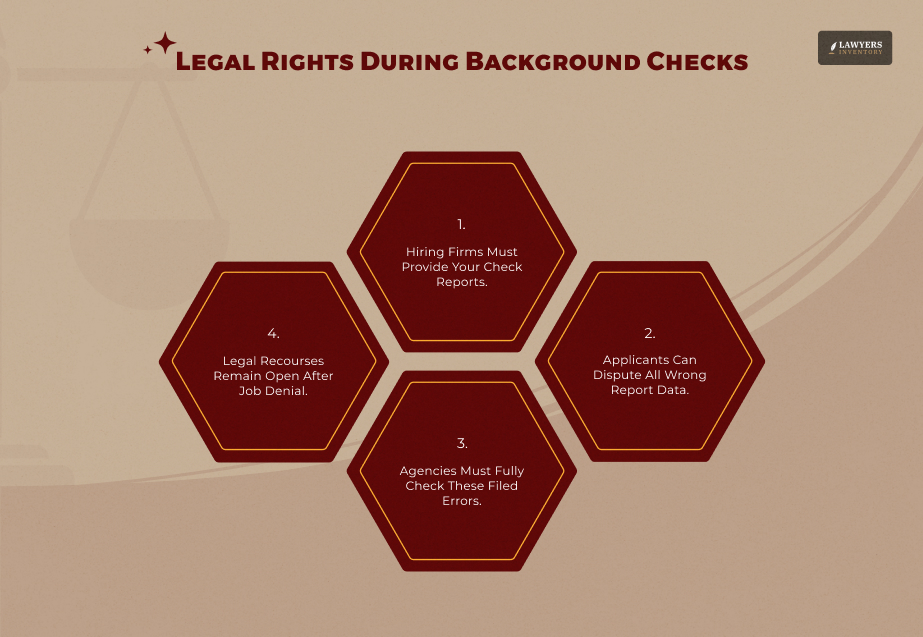
Job seekers really do have recourse in a well-developed legal setup when background checks are wrong or lead to negative judgments.
A hiring company might plan to decline someone because of the content of a background check report. If so, they are legally required to supply a copy of that report. They must also provide a separate notice telling you what rights of challenge you have.
The background check report might be inaccurate. In this case, the job seeker could go directly after the report with the agency that supplied it. That agency is required by law to investigate this type of complaint.
People might face a denial that they think is unjust or even discriminatory. They should probably get their own legal representative to fight the issue rather late in the procedure.
For example, they can do this after the decision is already made. This way, there might still be more legal options for them. Furthermore, the applicable timeframes have not passed yet.
Sources:
- U.S. Equal Employment Opportunity Commission and Federal Trade Commission, “Background Checks: What Job Applicants and Employees Should Know”
- Consumer Financial Protection Bureau, guidance on employment credit and background checks
- Fair Credit Reporting Act, 15 U.S.C. § 1681c (reporting time limits)
- State civil codes on criminal conviction lookback periods, including Cal. Civ. Code § 1786.18
- Industry turnaround data from background screening providers, cross-checked across multiple sources
Leave A Reply







How To Build A World-Class Law Firm Intake Engine: The Definitive Platform Guide
Read More
Legal Case Management Software Explained: How To Choose, What To Avoid, And The Best Tools In 2026
Read More
Logikcull Review 2026: The eDiscovery Tool 1,500+ Legal Teams Trust – But Should You?
Read More
Legal Assistant Vs. Paralegal: The Real Difference And Why It Matters
Read More
How AI-Driven Law Firms Deliver Higher-Quality Representation For Less
Read More
0 Reply
No comments yet.