Summarize using AI





Prompt copied. Paste it into Gemini.
Quick Answer

The Kennedy Funding lawsuit refers to a series of high-stakes commercial lender liability cases, most notably Shelton v. Kennedy Funding, Inc. These actions accuse the hard-money bridge lender of predatory practices. This includes charging exorbitant, non-refundable upfront fees for loans that never close, and orchestrating “loan-to-own” foreclosures while withholding loan proceeds [Source: U.S. Court of Appeals for the Eighth Circuit].
The historic Kennedy Funding lawsuit represents a watershed moment for the private equity and bridge loan industries. It completely altered the landscape of high-risk commercial financing. Over the last two decades, this continuous web of litigation managed to become one of the most talked-about legal battles in modern corporate history.
As I researched the modern mechanics of commercial real estate litigation, I understood what really shaped the Kennedy Funding lawsuit. And why the allegation matters till date.
Here’s everything I found out.
Kennedy Funding Background
The Kennedy Funding lawsuit simply rocked the whole world when it came to light. As a result, the lawsuit instantly became a hot topic of conversation. This is primarily because of the appeal it had to the landscape.
However, before we can actually get into the meat of things, let us take a moment to understand the key players in this lawsuit to get an idea of the whole ordeal. First, let us start with an overview of Kennedy Funding.
Kennedy Funding is a well-known company in the high-risk loan or bridge finance sector. The organization has been operating in this sector for a long time and has made a name for itself.
Kennedy Funding was often lauded for its more accessible approach. In other words, the company would often finance risky or shoddy ventures that others won’t. This helped the organization to create its sense of niche for itself.
Arkansas Business and Commercial Laws
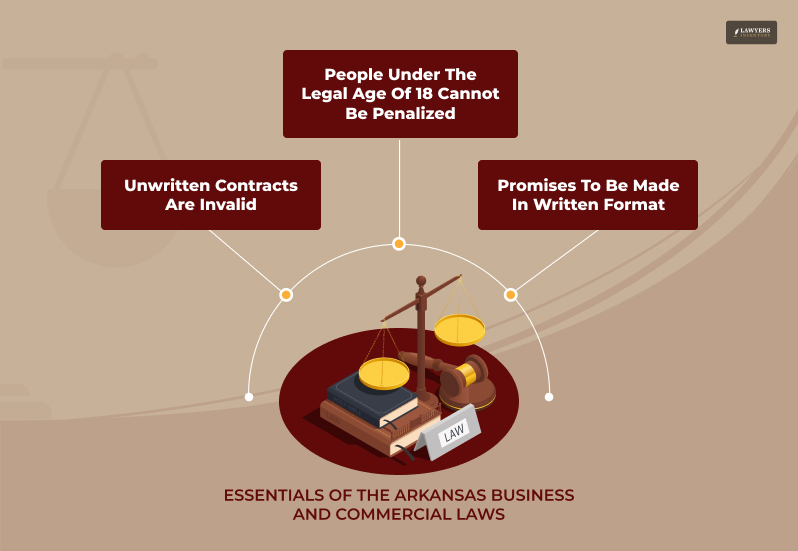
Since we are already on the topic of the Kennedy Funding lawsuit, we should also look at the second piece of the puzzle as well, which is the Arkansas Business and Commercial Laws.
This would help you understand the general area of lacking and the primary reason behind the lawsuit or what pushed the Arkansas legal organizations to slam Kennedy Funding with lawsuits.
Hence, follow along to learn more about the flouts of the Kennedy Funding Lawsuit:
- The Statute of Frauds: No contract is valid if it is not in writing. This could be an agreement promise or a legal contract. Therefore, companies cannot pressurize customers with unnecessary force unless there is a legal and written document.
- Bankruptcy Affidavits: Promises to pay debts during bankruptcy cannot be entertained unless it is given in a written format.
- Minor Safeguards: Finally, no individual under the legal age can be penalized for loan recovery. Therefore, making it a barrier or a buffer that can safeguard customers from unethical soliciting by companies.
These statutory parameters serve as a defensive buffer for corporate consumers. When a private lender systematically bypasses these guardrails, they lay the groundwork for a catastrophic Kennedy Funding lawsuit.
Overview Of Kennedy Funding Lawsuit
With the basics out of the way, we can finally concentrate on the more important side of the discussion, the Kennedy Funding Lawsuit overview. The company’s primary focus was bridge loans. These are short-term mortgages that can help people to bridge the financial gap.
Many lenders find this form of lending to be high-risk in nature. This is primarily because this form of loan is usually used for risky projects that come with a high rate of failure. Therefore, this is where the Kennedy Funding lawsuit comes into play.
Kennedy Funding Lawsuit primarily functions in this sector. However, over the years, the brand has managed to become infamous due to regulation flouting. In other words, the company is often accused of mishandling loan agreements.
In some instances, the company is accused of practicing predatory lending practices. Practices that actually compel individuals to lose money and end up paying extra. Therefore, it is seen as an unethical practice by banks.
This is the primary lawsuit against the company. However, the lawsuit is like an onion. You peel off one layer, and there is a stinkier layer underneath.
Primary Lawsuits Against Kennedy Funding
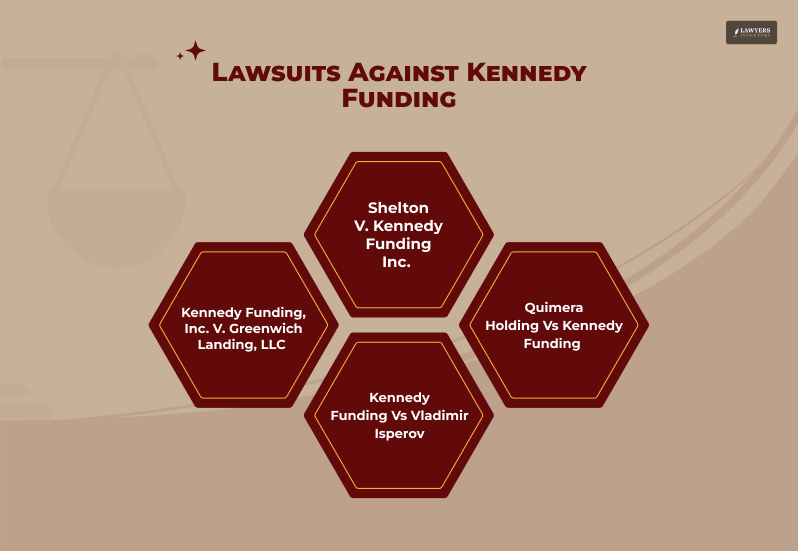
Kennedy Funding has been in the business for a while now and has managed to earn a name for itself for its unconventional loans. However, the infamous lawsuit exposed the company for its predatory practices.
As a result, more and more cases of banks’ predatory loan practices came to light. Kennedy’s Lawsuit is a Class Action Lawsuit, which means that it is an amalgamation of several different lawsuits at the same time.
Therefore, in this section, we will be looking at some of the most prominent lawsuits that Kennedy Funding faced.
Kennedy Funding, Inc. v. Greenwich Landing, LLC (2010)
| Plaintiff | Kennedy Funding, Inc |
| Defendants | Greenwich Landing, LLC and guarantor Mahmoud Wahba |
| Action | Strict foreclosure of a mortgage securing a promissory note |
One of the most infamous Kennedy Funding lawsuits is Greenwich Landing LLC against Kennedy Funding. This infamous lawsuit took place back in the year 2010. Kennedy Funding issued a mortgage to Greenwich Landing LLC. [Source: Justia]
The primary case generally revolved around the question of whether the said entity holds a promissory note. This note allows the entity to take up responsibilities as agents and true owners of said property.
The case went on for a while before the court decided on a verdict. The court claimed that the holder of the promissory note (Kennedy Funding) is seen as the rightful owner of the said property and can foreclose it.
Shelton v. Kennedy Funding Inc. (2010)
| Plaintiff | Virgil Shelton |
| Defendants | Kennedy Funding, Inc. |
| Action | Breach of contract and fraud claims arising out of the sale of an Arkansas cemetery |
Perhaps the most damaging blow to the lender’s reputation occurred in the landmark case Shelton v. Kennedy Funding, Inc., decided by the U.S. Court of Appeals for the Eighth Circuit [Source: U.S. Court of Appeals for the Eighth Circuit].
Another very notable lawsuit against the Kennedy Funding was Shelton Vs Kennedy Funding. This case involved Shelton and Acklin. Shelton sold his owned cemetery named Rest In Peace to Willie Acklin back in the year 1992. As soon as the transaction went ahead, Acklin signed a specialized promissory note. This note claimed that Acklin agreed to pay Shelton in installments.
However, things turned sour back in the late 1990s, and Acklin ran into financial problems. This resulted in Acklin taking out a financial loan to clear out the obligation. This was a high-risk venture. Hence, Kennedy Funding was the first to pick up the loan.
Kennedy Funding granted the loan and sanctioned around $675,000 for Shelton. However, the company decided to keep the amount. This was a highly inconsistent move on Kennedy’s part.
Eventually, Acklin defaulted on the loan. As a result, Kennedy Funding started the foreclosure procedure. However, the lender did not pay Shelton any money. As a result, Shelton took the matter to court and decided to sue Kennedy Funding for unethical business practices.
Eventually, the case escalated, and judges found that Shelton’s claim was valid. As a result, the court asked Kennedy to pay the $675,000 that he was owed.
Other Notable Cases
The Shelton Vs Kennedy Case was one of the eye-openers for everyone. In other words, the case singlehandedly managed to expose the general rot underneath the company’s business masquerade. This resulted in more cases coming to the forefront.
Quimera Holding vs Kennedy Funding is another notable lawsuit in which Kennedy Funding found itself. However, details of the case have not been released to the general public yet. Therefore, more details of the case were not released. [Source: CaseMine]
Another very notable Kennedy Funding case was the Kennedy Funding Vs Vladimir Isperov case. The case was brought to light in the year 2020. The case not only involved Vladimir, but also involved an affiliate lending company named Lending Bee. [Source: Justia Dockets & Filings]
Again, the details of the following case are muddled. Therefore, there is not much detail about the case. All in all, these cases added to Kennedy Funding’s infamy.
Legality of The Problem
Most plaintiffs who filed claims came forward with familiar complaints against the organization. In most of the cases, Kennedy Funding was accused of mishandling loan agreements.
As a result, terms like ‘deceptive and cruel’ were thrown at the organization. Kennedy Funding miscommunicated the true cost of the loan or the interest rate. This is one of the primary charges against the organization.
Like for example, the plaintiff was supposed to receive a full payment of $675,000 in the Shelton case. However, Mr Shelton claimed that he was deceived about the whereabouts of the money and the payment channel.
This exposes a blatant and egregious problem that is latent in the financial sector. In most Kennedy Funding lawsuits, state or federal laws were broken. As a result, this shows how this is part of a bigger problem that plagues the system.
Recurring Allegations In Kennedy Funding Lawsuit
Recent lawsuits against the company feature one major complaint. This complaint focuses on non-refundable, upfront advance fees.
Corporate borrowers claim the lender requests tens of thousands of dollars. The lender says these fees cover underwriting and site evaluations.
Later, the lender creates impossible closing conditions. This tactic allows them to keep the huge advance fees. They do this without funding the loan at all.
Struggling real estate developers then face sudden contractual defaults. They lose their equity in a disastrous way.
This method mimics predatory “loan-to-own” techniques. This violation led to a major federal case. The court penalized the company in Shelton v. Kennedy Funding, Inc. [Source: U.S. Court of Appeals for the Eighth Circuit].
Industry experts blame this fee-churning trickery for ongoing complaints. The pattern triggers civil lawsuits across several states.
Developers often seek quick bridge loans. For them, this pattern of non-disclosure serves as a vital warning. A written offer does not guarantee a final capital injection.
Impact of Kennedy Funding
Kennedy Funding has managed to stay under the radar by keeping its shady businesses out of public eyes. However, soon enough, the business started to smell. More and more people came forward with their stories about Kenny Funding’s predatory lending policies.
In the Shelton Case, Kenedy Funding managed to use legal loopholes to reduce the overall amount payable by the organization as damages. The company just paid the principal amount and not a penny more.
This shows that the company is well-equipped to handle these lawsuits, and it is concerning. However, this is not an isolated incident. In fact, the company has done this multiple times. This shows how flawed the general system is.
Industry-Wide Implications
The Industry-Wide implication of the case was huge. The case single handedly managed to change the industry standard. This case managed to open people’s eyes to predatory lending and its implications.
The case reignited the discussion of lending vs recovery. How and what means a financial organization might use to recover the loan. Therefore, making things easier for the customers.
This industry shift is important as it can make things more transparent for the people taking loans and the lenders. Which in turn can allow for a better business environment. Hence making things better all around.
Kennedy Funding Lawsuits And Commercial Risk Mitigation
In summation, the Kennedy Funding Lawsuit managed to change the very essence of the financial business environment. As a result, changing some things permanently.
This is one of the most important cases of this decade and can really change the very landscape of the business for the better.
Then again, predatory lending is a very problematic situation that has no easy solution. Therefore, it will be years before a permanent solution can be devised.
Read Also:
- 72 Sold Lawsuit Exposed the Deceptive Marketing Strategies of Real Estate Agents!
- From Contraception To Courtroom: A Guide To Paragard Lawsuit
- Ozempic Lawsuit: Can You Get Justice in Healthcare?
Leave A Reply







Equifax Breach Settlement: Your Guide To Claims And Payouts
Read More
How to Get a Credit Card Lawsuit Dismissed [According to Experts]
Read More
Zyn Lawsuit 2026: The Full Legal Picture Behind The Nicotine Pouch Controversy
Read More
The Paragard Lawsuit: A Deep-Dive Evidentiary Guide To MDL 2974
Read More
Class Action Lawsuit With No Proof: What “No Proof” Actually Means (Legally)
Read More
1 Reply
Is There a Zyn Lawsuit? What It Means for You
August 24, 2026 at 12:55 pm
[…] Kennedy Funding Lawsuit and the Exploitation of Arkansas Statute of Frauds […]
Reply