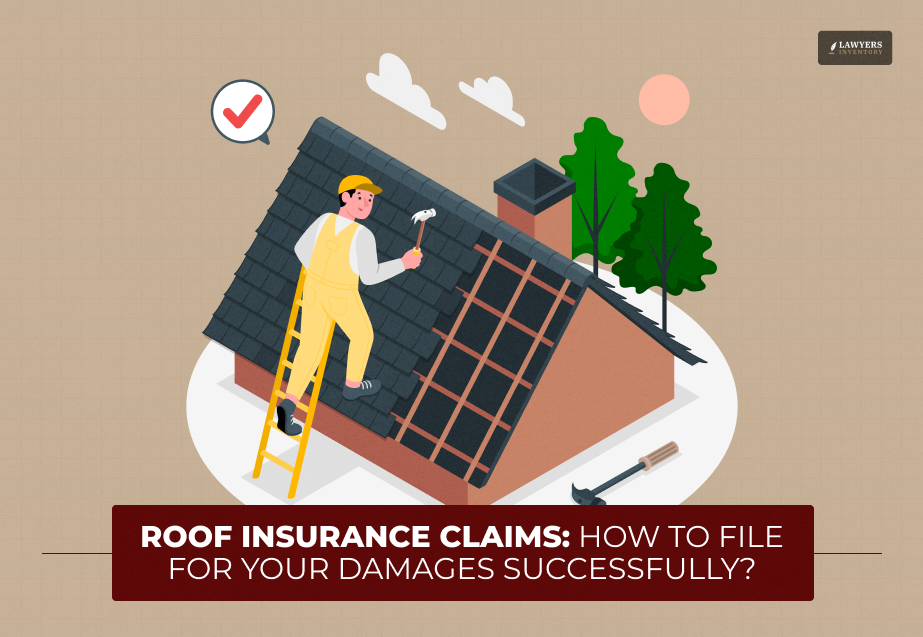
Today’s topic: roof insurance claims.
Having your roof damaged by a storm is already quite stressful, and having to deal with an insurance claim only adds to that stress.
In the U.S., the number of roof damage claims, as well as their cost, has been going up. As a result, knowing how to approach your insurance company has a great impact on your claim result.
In 2024, the cost of repairing and replacing roofs alone reached almost $31 billion nationwide, 30% more than in 2022, mainly due to storms that brought hail and strong winds.
If you happen to live in Florida, Texas, or the Carolinas, the so-called convective storms, hit areas, proper preparation, and having a good understanding of your claim process will definitely pave the way to getting insurance compensation.
In this blog, we will be breaking down the following things:
- The importance of documenting early.
- Understanding your roof insurance policy
- How to file for roof insurance claims?
- What to expect during the roof insurance claim process?
- What to do after settling your roof instance claim?
Therefore, if these are a few things that you want to know, keep on reading this blog till the end…
Importance Of Documenting Early
Insurance carriers depend mostly on solid proof when they handle claims. After a storm, roof damage caused by a natural disaster can be difficult to spot, particularly if it is the result of smaller hailstones.
There are some really eye-opening pieces of evidence from the Insurance Institute for Business & Home Safety that reveal that small hail damage might actually be significantly more than what we previously thought. Hence, having a well-documented file is crucial.
Actually, most homeowners do not realize the real extent of damage that can be caused by accidental weather conditions, and therefore, they might face very high costs in repairs.
Being aware of the details, the level of roof damage may give homeowners the opportunity to become more protective of their homes.
The very first thing that you should do after a storm is to look carefully at your roof to check for damage such as missing or broken shingle sections, dents, granule shedding, or water stains inside your house. Reveal the situation by taking pictures and videos from various perspectives.
If you do not feel safe going up your roof, you can always get a professional inspector or a roofer to do the job and give you a written report of the damage.
An experienced inspector can also discover problems that are latent and would not be noticed just by a simple visual check, such as a compromise in the structural integrity or the underlayment, which might become a real problem if they are not fixed on time.
Understanding Your Roof Insurance Policy
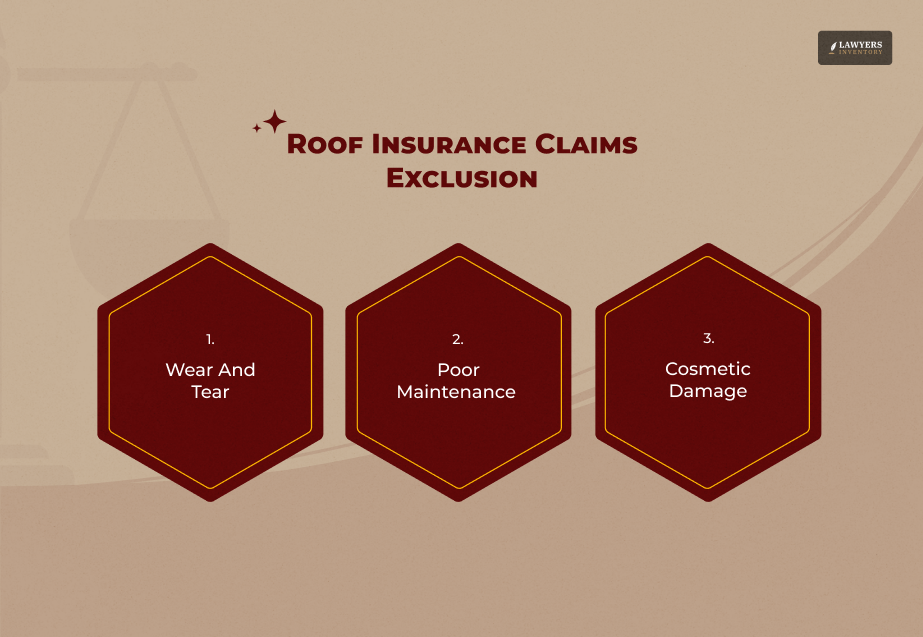
Damage to the roof is not always covered the same way. A roof is most often damaged by wind, hail, or a storm, and that is usually where your standard homeowners’ insurance will come into play.
If the damage comes from normal wear and tear or the house not being taken care of, then insurance most likely won’t cover it.
Look over your policy very carefully. This will give you a clear picture of the following:
- Your deductible.
- The limit of your coverage.
- What the policy does not cover.
For instance, your policy might stipulate different deductibles for wind or hail damage. If you have any doubt about what the roof insurance policy covers, call your insurance agent. Even a lawyer could help you if you need to make sure of the legal wording.
We already know that Florida and Texas are hit by many severe storms. This has been one of the reasons for some companies to limit the acceptance of claims or increase the premiums.
Being aware of how your state’s weather events affect your insurance can be an advantage for you.
Take, for example, Payne Law, which, based on information from Verisk Analytics, mentions that wind and hail were responsible for more than 50% of all residential roofing claims in the year 2024, thus emphasizing the need for having insurance that is focused on these kinds of risks.
Roof Insurance Claims: How To File Successfully?
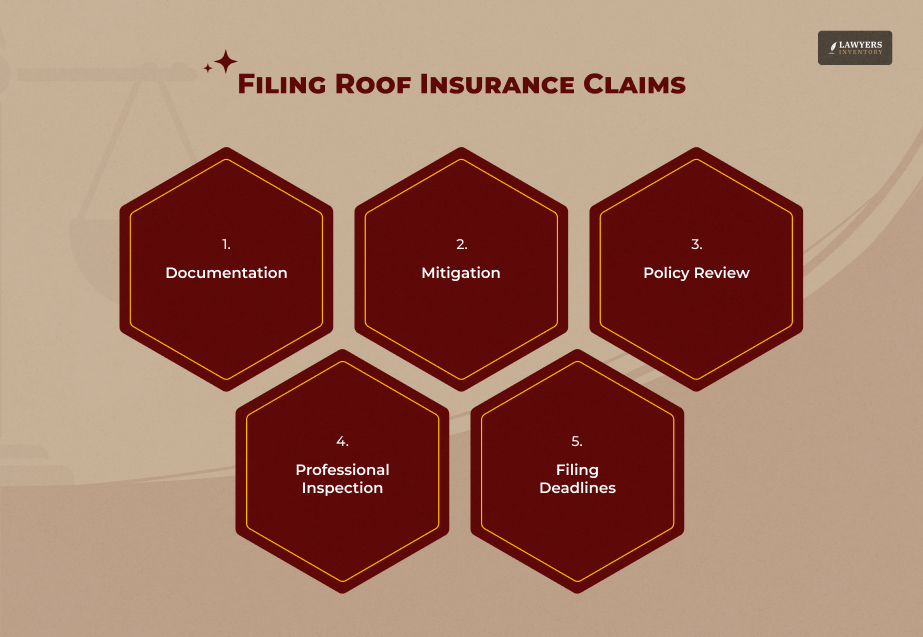
Here are the steps for filing roof insurance claims. Take a look at them for a successful claim process:
1. Document Everything
Firstly, providing receipts, photos, or even a home inventory that confirms the value and description of the roof and exterior damage will be very helpful to the claims process. A licensed roofer can be of great help in identifying the problems.
2. Contact Your Insurer
Secondly, you should inform your insurance company of what has happened. The company’s claims professional is the person who can advise you on several things.
For instance, they can assess whether the damage is covered by your insurance policy. They will also tell you whether you will be able to claim. Additionally, they also guide you about the deadline for the claim submission.
3. Claim And Submit Evidence
In filling out your claim forms, be sure to include the proof of loss form that your insurer has given you. Besides, you can submit a photographic recording of the damage.
4. Make Temporary Repairs
Take precautions so that any holes or damage to the structure of your house cannot be capable of causing damage again. You can call a roofing contractor if you want. Be sure to keep all receipts from repairs.
5. Get Ready For The Inspector
The inspector is supposed to examine the damages, verify the details, and write a report. You can provide receipts, photos, or an inventory of your house to support your claims. A roofing specialist can also accompany the adjuster to explain the details of the damage.
What To Expect During Roof Insurance Claims?
Adjusters evaluate the extent of damage by looking at visible signs and considering what the policy covers.
But, on the other hand, certain damages, like those caused by tiny hail, can be hard to spot right away.
A piece of recent research shows that areas that are densely covered in small hailstones might suffer a level of damage that is quite significant but not necessarily very visible.
If you have a thorough inspection report and a couple of contractor estimates, they are likely to effectively communicate the whole extent of the damages to the adjuster.
It never hurts to be the first one to open the line of communication with the adjuster and if needed, submit additional evidence of damages.
Following the assessor’s review, your insurer will put forward a settlement offer. The figure should be adequate to cover the expenses of fixing or replacing your roof in line with your policy conditions.
In the event that the proposal appears to be unjustifiably low, you are entitled to make a counteroffer. Use your paperwork and contractor estimates to persuade the insurance company.
What Happens After Settling Your Roof Insurance Claims?
Once you have taken care of roof insurance claims, here are a few things that you should be ready for:
Choosing a Roofing Contractor:
After your claim has been approved, you should choose a reputable roofing contractor to carry out the repair work.
Find qualified professionals who have storm damage repair experience and have good customer feedback.
It is advisable to obtain several quotes and make sure that the contractor knows the insurance claim procedures.
Keep Records Of Repairs:
Hang on to copies of contracts, invoices, and warranties for the repair work. These papers may be required in case you have issues later on or if you go for further claims.
Get A Legal Consultation If Necessary:
When you get constant problems with your claim or a settlement, it’s very important to get a lawyer or attorney of your own.
A lawyer can be of help to you in the following ways:
- Interpreting your policy.
- Negotiating with the insurance companies.
- Defending your rights in the whole process.
Ways Of Reducing Risks Of Roof Damage:
Storms are becoming more frequent and severe, especially in states like Florida and Texas. Therefore, taking preventive measures can result in less damage and less trouble with insurance.
For instance, some practical measures that can be taken to achieve this are:
- Regular roof maintenance.
- Installing impact-resistant shingles.
- Trimming overhanging branches.
Look Over And Renew Your Insurance Policy:
Finally, after you have made a claim, it makes good sense to check your insurance policy to find out if it is still suitable for your needs.
Additionally, consider the alterations in the coverage or the specific hail and wind damage endorsements.
Basically, if you have the correct information on policy provisions, you may save yourself from unnecessary time and expense when another storm comes.
Read Also: How To Handle Insurance Companies In Personal Injury Cases?
Homeowners’ Rights In Roof Insurance Claims
Homeowners are protected under an implied covenant of good faith and fair dealing that, among other things, legally requires insurers to carry out quick and fair investigations.
According to FGC Attorneys, here are some major rights of homeowners when it comes to filing roof insurance claims:
- Right to Independent Choice: You have the full right to select your own licensed roofing contractor. You don’t have to use one suggested by your insurer.
- Right to Appeal: In case your claim has been completely denied or just undervalued, you have a right to submit a formal appeal. This could lead to a re-inspection by a different adjuster or a roofing specialist.
- Fair Investigation: Insurers have the right to furnish a clear, detailed explanation of the reasons for denial. If they fail to act reasonably, potentially your case could be a “bad faith” legal claim.
- Public Adjusters & Legal Counsel: You are entitled to engage a public adjuster (who is working for you and not the insurer) or an attorney to represent your interests in complicated negotiations.
Getting to know your rights well can totally assist you in the process and spare you quite a bit of trouble!
Frequently Asked Questions (FAQs):
Now that you are aware of what roof insurance claims are and how to file for one, here are some questions you might want to take a look at. These are what people who are searching about the same topic often want to know about roof insurance claims:
If a leak is a result of storm damage to your roof, then your home insurance may cover you. In the case of a storm damaging your roof, the most obvious sign would be damage to the exterior. These can include a large number of missing tiles. If this is so, your home insurance should cover you.
In cases where a new roof is absolutely necessary, and the damage cannot be remedied by repairs only, the insurance company could pick up the entire cost of a replacement.
Normal home insurance does not cover damages resulting from floods, earthquakes, termites, mold, or the deterioration of the property due to regular use and time.
You are not limited to the number of times you can make claims through your home insurance during the period that your policy is valid. Nevertheless, you should keep in mind that it is only possible to claim for each particular loss one time.
Leave A Reply







Hung Jury vs. Mistrial: What Is The Difference And Why It Matters
Read More
NarodniyDimUkraina: An Overview Of The Kyiv-Based Brand Preserving Ukrainian Craftsmanship
Read More
What Is A Mistrial? Legal Definition, Causes, And What Happens Next
Read More
What Is A Sequestered Jury? Legal Definition, Process, And Everything You Need To Know
Read More
What Is A Hung Jury? Legal Definition, Causes, And What Happens Next
Read More
1 Reply
How To Choose A Houston Property Damage Attorney?
September 3, 2026 at 12:34 pm
[…] damage behind walls, under floors, or in roofing systems is often ignored or […]
Reply