Today’s topic: Ana Reyes misconduct complaint dismissal.
You may have come across many news articles dealing with the “Ana Reyes misconduct complaint dismissal“.
The dismissal of the misconduct complaint against Ana Reyes marks a very important point between executive power and judicial independence.
Towards the end of 2025, this high-profile misconduct case against a serving judge came to an end.
The Ana Reyes misconduct complaint dismissal actually deals with procedural constraints.
These constraints usually protect judges from misconduct complaints if they arise from the line of questioning happening during the proceeding.
In this article, we will elaborate on the following:
- The specific courtroom interactions that led to the DOJ’s rare disciplinary filing.
- The legal reasoning behind Chief Judge Srinivasan to toss the complaint.
- How a motion for recusal differs from a judicial misconduct claim.
- The broader impact this case has on the separation of powers in the United States.
The Case Timeline And Resolution
As of early 2026, Ana Reyes’ misconduct complaint dismissal has gained a prominent position in the arena of judicial ethics.
The Ana Reyes misconduct complaint dismissal proceeding started in February 2025. There was an intensive hearing in which the Judge, Hon’ble Reyes, asked government attorneys to provide policy rationales.
Right after this, the DOJ filed a complaint. After this, the D.C. Circuit Court reviewed it. Lastly, the final ruling came from Chief Judge Sri Srinivasan in November 2025.
Who Is Ana Reyes?
Ana Reyes, from the Ana Reyes misconduct complaint dismissal, is a U.S. District Judge for the District of Columbia.
President Joe Biden appointed her. Next, her appointment was confirmed by the Senate, and she began serving on the federal bench in early 2023.
Professional Background And Career
Let’s find out a bit more about Ana Reyes Misconduct Complaint Dismissal. Before Ana Reyes became a Judge, she was a Partner at a big law firm.
She was well-versed in matters of international litigation. She then became the first Hispanic and LGBTQ+ individual to hold the position.
Current Judicial Standing
However, despite the controversy, the dismissal of the Ana Reyes misconduct complaint further solidified her position on the bench.
She remains to preside over a wide array of cases that include administrative law and civil rights cases.
Ana Reyes is recognized for being strict and intellectually demanding inside the courtroom.
What Triggered The Misconduct Complaint?
The Ana Reyes misconduct complaint dismissal actually began as a legal battle. The matter at controversy was deciding the rights of transgender military personnel.
According to the DOJ’s complaint, they had a problem with her line of questioning during a critical evidentiary hearing.
Department Of Justice Misconduct Allegations
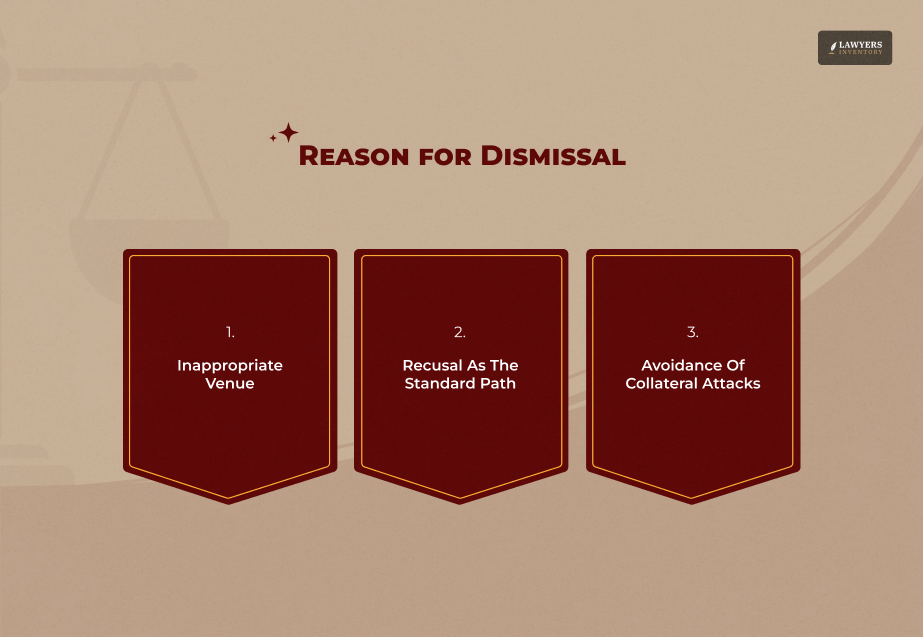
The DOJ accused Judge Reyes. These accusations mostly claimed hostile and egregious misconduct regarding the rights of transgender military personnel to serve in the military.
The allegations stemmed from the religious beliefs of an attorney. Apparently, the rhetorical questions coming from Judge Reyes embarrassed the legal team.
Allegations Made By The Justice Department
The DOJ alleged that Judge Reyes harassed the government attorney by asking about the attorney’s personal religious beliefs.
The DOJ alleged that the rhetorical examples used by Judge Reyes were meant to embarrass the legal team that represented the United States.
In the documents filed in relation to the dismissal of the complaint of misconduct against Judge Ana Reyes, it was noted that the government believed that Judge Reyes went too far in terms of personal bias.
The Transgender Military Ban Litigation
The base “issue” of the argument revolved around the presidential order that restricted transgender people from joining the military.
As a federal judge, Reyes was to deliver a ruling either claiming it was a genuine military necessity or one that came out of a discriminatory tone.
Spectators claim that this is when the dramatic dialogues in the courtroom began. Then, the misconduct charges against Ana Reyes were brought about by the DOJ.
How Judicial Misconduct Complaints Work
The dismissal of the Ana Reyes misconduct complaint follows a specific procedure that ensures that judges are made accountable without compromising their independence.
The screening of the misconduct complaints follows a strict procedure at the circuit level.
Federal Judicial Misconduct Complaint Process
- The complainant has to submit official documents to the clerk of the circuit court where the case belongs.
- The Chief Judge of the circuit assesses the complaint to establish its validity.
- Misconduct complaints that are related to specific legal decisions of the judge are dismissed at this stage.
- A special committee investigates the complaint if it relates to criminal or unethical behavior by the judge.
Review By The Chief Judge
Upon receipt of a complaint, the Chief Judge acts as gatekeeper. The Chief Judge has to assess whether the complaint is based on real misconduct or whether it is simply a difference of opinion regarding the judge’s decision.
In the case of the dismissal of the misconduct complaint against Judge Ana Reyes, the Chief Judge ruled that the complaints of the DOJ were too closely linked to the trial itself.
In some tricky cases, it can actually lead to the judge’s retirement. However, a federal judge enjoys a tenure that lasts for a very long time. Only through impeachment by Congress can they be removed from their position.
Many hold that the dismissal of the misconduct complaint against Judge Ana Reyes was the possible result from the start.
Read Also: The Trey Reed Case Investigation, Findings, and Controversies
Why The Complaint Against Ana Reyes Was Dismissed
The dismissal of the Ana Reyes misconduct complaint was based on a procedural technicality and not on the merits of the case.
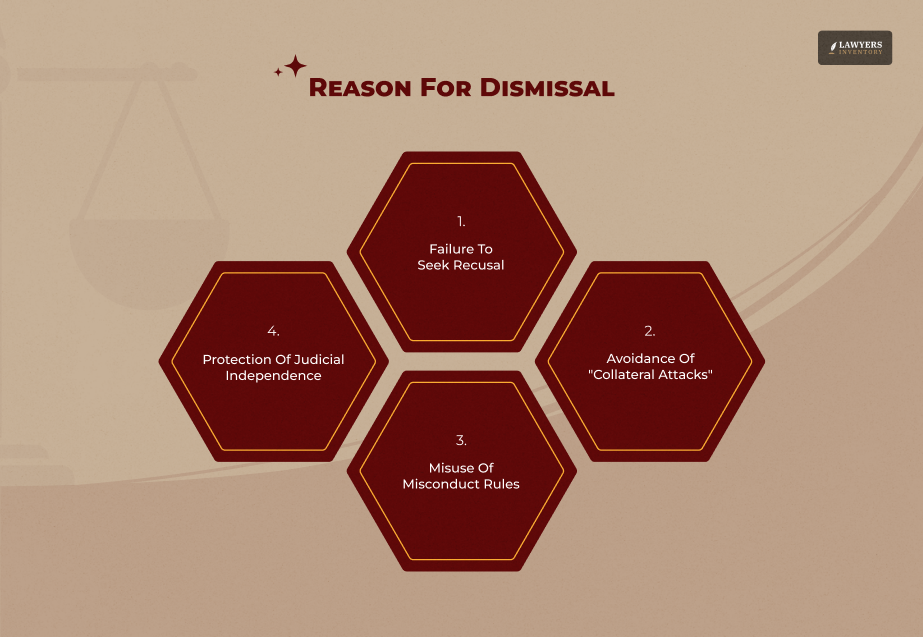
Chief Judge Sri Srinivasan explained that the procedure for misconduct cannot be used as a substitute for a typical recusal motion.
Legal Basis For Dismissal Of The Complaint
- The court ruled that the procedure for misconduct cannot substitute a typical recusal motion.
- The court ruled that the complaint was directly related to the merits of the case.
- Rules of misconduct provide that the procedure for misconduct cannot be used to challenge a judge’s specific procedural rulings.
- Dismissal of the complaint indicates that typical courtroom questioning is not subject to disciplinary actions.
Recusal Vs. Misconduct Complaint
The ruling said that if the DOJ believed the judge was biased, they should have moved for recusal of the judge.
Recusal of a judge is a motion filed with the judge to recuse himself from a specific case. The DOJ filed a complaint for misconduct when they could have filed a motion for recusal of the judge for being biased in a specific case.
Protecting Judicial Independence
The dismissal of the misconduct complaint against Ana Reyes prevents the executive branch from “bullying” judges.
If every hard question asked by judges resulted in a misconduct complaint, judges would be bullied into not holding the government accountable.
The appellate court emphasized that disputes over courtroom demeanor should be reflected in the case record, not in the misconduct complaint file.
Case Details: In Re: Complaint Of Judicial Misconduct
In order to understand the dismissal of the misconduct charge filed against Ana Reyes, it is important to understand the case in terms of the parties involved and the court. This was a unique case since the Department of Justice directly filed charges against a judge who was still serving.
Case Information:
- Plaintiff (Complainant): United States Department of Justice (DOJ).
- How the Complaint Began: The DOJ filed a complaint following a hearing in the case of Doe v. Austin, claiming that Judge Reyes was unprofessional.
- Court: United States Court of Appeals for the District of Columbia Circuit.
- Case Number: No. 25-90012.
- Decision: The complaint was dismissed as it was “directly related to the merits of a decision or procedural ruling” and was not the proper legal action.
- Judge: Chief Judge Sri Srinivasan (Issued the dismissal ruling).
Federal And State Laws Regarding Judicial Misconduct
The dismissal of the misconduct complaint against Ana Reyes is governed by the Judicial Conduct and Disability Act of 1980.
This is a federal statute that outlines the guidelines under which a complaint against a federal judge can be filed by a citizen or the government.
Judicial Conduct And Disability Act
This statute provides that any person who feels that the judge has conducted himself in a manner that is prejudicial to the “effective and expeditious administration of the business of the courts” can file a complaint against the judge.
The complaint cannot be merely against the judge’s decision. The dismissal of the misconduct complaint against Ana Reyes is in accordance with this provision.
State Standards Vs. Federal Rules
The state court judges are more closely watched by the judicial conduct commissions. But in the federal courts, the judges are appointed for life.
Therefore, the dismissal of the misconduct complaint against Ana Reyes is important. It shows that only extreme and non-judicial conduct qualifies for punishment in the federal courts.
Read Also: ROC Nation Kansas City Police Lawsuit: Exposing Police Misconduct And Corruption
FAQs – Addressing Judicial Misconduct Concerns
The issue of judicial misconduct is a concern for many citizens in the wake of the dismissal of the misconduct complaint against Judge Ana Reyes. The questions and answers below are intended to inform citizens on the limits of the law.
Yes, the DOJ can submit an appeal to the Judicial Council of the D.C. Circuit. If that fails, too, there is always the option to appeal to the Supreme Court.
No, the dismissal of the misconduct complaint against Judge Ana Reyes does not automatically make the questions appropriate. After the dismissal, no “right” or “wrong” ethical stance was taken by higher authorities.
The process in state courts is more transparent to the public. Most states have an independent commission that has the authority to remove the judge for bias.
As opposed to Ana Reyes dismissal of misconduct complaints in the federal system, the process is public and does not require as much evidence to sanction the judge.
Leave A Reply






Hung Jury vs. Mistrial: What Is The Difference And Why It Matters
Read More
NarodniyDimUkraina: An Overview Of The Kyiv-Based Brand Preserving Ukrainian Craftsmanship
Read More
What Is A Mistrial? Legal Definition, Causes, And What Happens Next
Read More
What Is A Sequestered Jury? Legal Definition, Process, And Everything You Need To Know
Read More
What Is A Hung Jury? Legal Definition, Causes, And What Happens Next
Read More
0 Reply
No comments yet.