Summarize using AI





Prompt copied. Paste it into Gemini.
Listen to this article
Quick Answer: Do You Have To Have A Law Degree To Be A Judge?

No, it isn’t necessary to have a law degree to become a Judge. While federal and upper-level state courts require an extensive legal background, many state laws will allow non-lawyers to become lay judges in local municipal/town courts after completing compulsory state certification courses.
A common question amongst many citizens and aspiring legal professionals is: do you have to have a law degree to be a judge?
Surprisingly enough, while high-level appellate courts require significant legal training, there are many intricate factors at play that allow non-legal professionals to hold judicial roles. This creates an interesting dynamic in the United States judicial system.
There are many aspects to consider in relation to lawyers and non-legal judges working together to deliver justice to the local community.
Constitutional Frameworks And Federal Bench Qualifications

The structure of the legal system in the United States allows for some interesting opportunities for alternative legal careers.
Although many legal professionals will follow their career into alternative areas using their logical skills, there are no formal credentials required to become a judge in the highest courts of the United States.
Under the United States Constitution, there are no requirements for education or legal qualifications needed to become an Article III judge.
The President can nominate anyone to become a judge of the United States Supreme Court, a Federal Court of Appeals, or a Federal District Court, as long as they receive confirmation from the Senate.
Historically, there were some judges in the early days of the Federal Courts who did not have any formal qualifications.
They would learn the law through self-study and apprenticeships. While the Senate now requires the nominee to have extensive legal knowledge, there is no mention of academic requirements in the Constitution.
Technically, the country’s highest courts do not require a law degree to become a judge.
When individuals consider what you can do with a law degree, they often view judgeship as the ultimate peak of an active courtroom career.
However, at a Federal level, there are no academic requirements. Political appointments and confirmation from the legislature are the real barriers.
Do You Have To Have A Law Degree To Be A Judge?
When looking at the judicial system from a local perspective, there are specific requirements in place regarding education.
There are thousands of non-legal professionals acting as judges in local courts, as reported by the National Conference of State Legislatures (NCSL).
According to Columbia Law Review, “a surprising number of states and jurisdictions permit people with no legal training to serve as local-court judges.”
These non-legal professionals, often known as lay judges, have a large amount of power in town, village, and municipal courts.
They will set bail, issue arrest warrants, and hold trials for minor misdemeanors relating to traffic. This shows that many states have requirements in place that value the local aspect.
| State Jurisdiction | Specific Court Type | Law Degree Requirement | Core Statutory Condition / Oversight |
| New York | Town and Village Courts | No | Must complete a mandatory certification course via the Office of Court Administration. |
| Texas | Constitutional County Courts | No | Must be “well informed in the law” but requires no formal legal degree or license. |
| South Carolina | Summary Courts (Magistrates) | No | Requires a two-year associate degree or equivalent work experience plus state training. |
The Constitutional Boundary Of North v. Russell
The reason that non-legal professionals are allowed to become judges comes from a landmark ruling by the Supreme Court of the United States.
In the case of North v. Russell (427 U.S. 328) in 1976, the Court examined whether lay judges could legally hold criminal trials. [Source: Justia]
It was argued that this would breach the defendant’s right to a fair trial under the Fourteenth Amendment.
The Supreme Court ruled that lay judges could hold trials. This is an important ruling for state courts.
It was ruled that a two-tier system is acceptable as long as the defendant has an absolute right to a retrial (known as trial de novo) by a lawyer judge when appealing:
“Under Kentucky’s two-tier court system, police courts (the first tier) have jurisdiction of misdemeanor cases, but an accused has an appeal of right from a police judge’s decision to the circuit court (the second tier), where there is a trial de novo.”
This requirement ensures that lay judges will not be challenged on constitutional grounds.
The New York And Texas Operational Realities
The way in which lay judges are used in practice varies depending on the state.
In New York, there are over 2000 town and village justices, managed by the Office of Court Administration.
According to the New York State Association of Criminal Defense Lawyers,
“There are more than 1,200 Town and Village justice courts in the State of New York. These courts are presided over by more than 1,800 justices of which more than 1,000 are not attorneys. New York is one of only 8 states that still allow lay justices to preside over criminal proceedings.”
Non-legal justices must complete a strict training course, sit an exam, and complete annual continuing education courses.
Texas has a unique setup. The Texas Constitution states that the county judge must be well informed in the law. This is interpreted as a general intelligence requirement.
They deal with minor criminal cases but act as the head executive officer for the county. They will manage the millions of pounds of local budgets.
Standard Requirements For Lawyer Judges
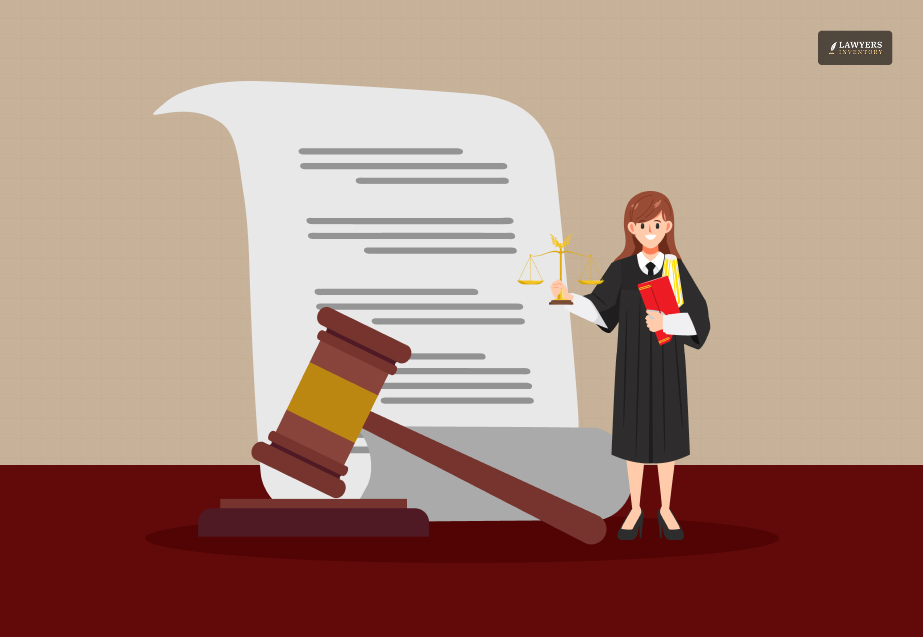
While lay judges are used for local disputes, those wishing to become judges in higher state trial courts or appellate panels must have standard legal qualifications.
This ensures that judges have an understanding of constitutional law when presiding over felony trials and complex civil cases.
Let’s look at what is required to become a standard judge. According to the analysis of EARLY v. BECERRA (2020) by FindLaw, those wanting to become a standard judge will have:
- Spent years working as a trial lawyer, prosecutor, or public defender.
- Completed several academic milestones.
- Must pass through highly competitive entry points.
Academic Requirements
To become a lawyer, a judge takes a huge amount of time and money to complete. Those applying will often calculate how long it takes to get a law degree.
They will usually complete 4 years of undergraduate study and then 3 years in an accredited J.D. program.
Throughout their studies, they will also calculate how much law school costs. Private institutions often charge over $50,000 per year.
| Career Preparation Stage | Core Target Milestone | Expected Duration | Key Focus Area |
| Undergraduate Phase | Earn a high cumulative GPA and complete a bachelor’s degree. | 4 Years | Critical reading and communication skills |
| Standardized Entrance | Master rigorous logic frameworks and clear the admissions exam. | 3–12 Months | Analytical reasoning and arguments |
| Professional Legal Track | Complete an accredited J.D. program and earn a law degree. | 3 Years | Substantive legal doctrine and legal writing |
| Practical Courtroom Era | Build a strong reputation through trial litigation or public service. | 5–10 Years | Gaining deep courtroom or analytical experience |
To reduce the financial burden on those applying to become a judge, the top applicants will put a lot of effort into receiving a competitive scholarship to law school.
Law schools award merit-based scholarships based on a weighted scoring system. This takes into account the applicants’ undergraduate grades and standardized test scores.
Having less debt gives more flexibility in your career. Graduates will often enter roles such as prosecutors or public defenders, which are very important to gaining a future judgeship.
Preparing For The Law School Admission Test
The main barrier to getting into an accredited law school is passing a rigorous standardized logical test. Aspiring candidates often spend months researching how to study for the LSAT.
Usually, those who succeed will complete numerous timed practice papers, understand how to decipher logical reasoning patterns, and complete logical exercises.
This creates a lot of stress.
Many will debate how hard the LSAT is compared to undergraduate exams. This is because it focuses on quick thinking and logical consistency, rather than factual recall.
The recent addition of the LSAT argumentative writing section adds further pressure. Applicants must write a clear, evidence-based essay.
Top Level Requirements And Alternative Testing Methods
Those wishing to enter the top levels of the legal profession will face very high entry requirements.
Often, those will ask, “what LSAT score do I need to get into Harvard.” The median score tends to be between 170-180.
This puts them in the top 1% of test takers nationally. This gives them direct routes into elite clerkships within the Federal Courts.
However, requirements are changing to allow more diverse talent. A number of law schools without LSAT requirements now accept the GRE.
This helps give a diverse range of legal experts who may one day lead regulatory and corporate courts.
Ultimately, whether looking at lay positions or supreme benches, answering the question – do you have to have a law degree to be a judge – completely depends on your target jurisdiction
Professional Requirements And Bar Exam Changes
Once an attorney has obtained their J.D, they must pass a state licensing exam. This ensures that they have an understanding of key legal principles and trial processes.
For decades, the standardized UBE Bar exam has been used across over 40 states. This tests general common law principles through multiple-choice and essay questions. However, this is changing.
The National Conference of Bar Examiners (NCBE) is implementing the NextGen Bar exam.
This removes the need to memorize information and focuses on practical legal skills, online legal research, and client interaction. This ensures that the next gen of lawyer judges will have practical courtroom skills.
The Institutional Debate: Community Knowledge vs. Legal Expertise
The ongoing use of lay judges means there is an ongoing debate within the legal system. So, do you have to have a law degree to be a judge? Well, the answer will basically depend largely on local values.
Those supporting lay judiciaries believe that town and village courts keep the legal system accessible and rooted in the local community.
They understand the issues faced in the local area better than an outside lawyer from another city.
However, those against lay judiciaries believe that having a law degree is essential to ensure the defendant’s constitutional rights.
Complex laws, changing rules of evidence, and hidden liabilities mean that legal professionals must have expert knowledge.
As states continue to update their court guidelines, the debate will continue to center around balancing local representation with professional legal knowledge.
Disclaimer: The information provided in this article is for general informational purposes only. It does not, and is not intended to, constitute legal advice.
Source:
- National Conference of State Legislatures (NCSL)
- North v. Russell, 1976, Justia Law.
- Criminal Justice Programs
- Eric P. EARLY v. Xavier BECERRA, FindLaw
- Memo Of Support RE: Town & Village Court Justices, New York State Association of Criminal Defense Lawyers
- Reddit r/Lawyertalk
- Reddit r/LawSchool
Leave A Reply






What Is The True Cost Of A JD: Tuition Sticker Price Vs. Hidden Living And Interest Traps
Read More
How To Use A Law Degree Outside The Courtroom [Top High Earning Alternatives]
Read More
How To Build A World-Class Law Firm Intake Engine: The Definitive Platform Guide
Read More
Legal Case Management Software Explained: How To Choose, What To Avoid, And The Best Tools In 2026
Read More
Logikcull Review 2026: The eDiscovery Tool 1,500+ Legal Teams Trust – But Should You?
Read More
0 Reply
No comments yet.